NFL draft weekend didn’t just shake things up — it rewired the rookie board. Landing spots made it obvious who gained real fantasy value and who’s now buried. This two‑round, 1-QB dynasty rookie mock draft ignores consensus and leans on draft capital, projected usage and how these depth charts actually sort out once camp starts.
Backs with clean three‑down paths. Wideouts stepping into immediate volume. Two tight ends who landed in schemes built to fully maximize their athletic traits. These 24 picks show where the real edges are — where talent, opportunity and coaching intent line up — so you can attack your rookie draft and walk away with the value.
- Dynasty Fantasy Football Rankings
- Best Fantasy Football Tools
- Dynasty Rookie Mock Drafts
- Fantasy Football Mock Draft Simulator
Dynasty Rookie Mock Draft
Round 1
1.01: Jeremiyah Love (RB – ARI)
Jeremiyah Love is the type of definitive three-down workhorse that dynasty managers wait years to draft. Blending verified 4.36 speed with elite contact balance and receiving skills that should deliver immediate high-value usage.
Arizona didn’t draft him third overall to ease him in. Love is stepping into one of the clearest Day 1 workloads we’ve seen in years. Despite Arizona’s offensive questions, his draft capital and three-down skill set should lock in goal-line work and passing downs.
This will give him legit RB1 upside right away. Love is the safest floor‑plus‑ceiling bet in the class and a legitimate long‑term RB1 anchor.
1.02: Carnell Tate (WR – TEN)
After Jeremyiah Love leaves the board, Carnell Tate is the definitive selection here. Backed by top-five draft capital and an alpha perimeter frame.
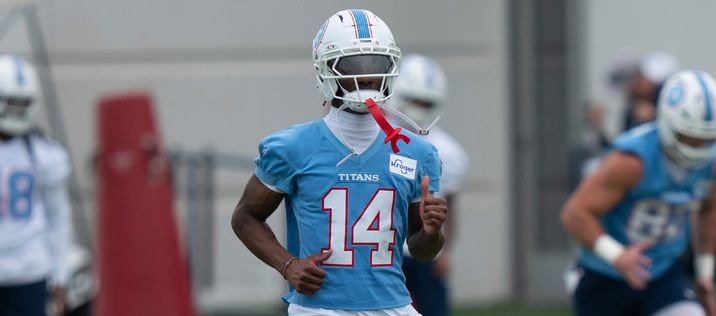
Tennessee gives Tate an immediate chance to become Cam Ward’s top target thanks to his polished routes, elite ball skills and a thin receiver room. He offers a rock-solid weekly WR2 volume floor with immense vertical playmaking upside. Tate is a reliable, high-floor franchise cornerstone with a realistic shot at a fantasy WR1 ceiling.
1.03: Jordyn Tyson (WR – NO)
Jordyn Tyson was an easy pick here because the Saints invested top-10 draft capital in a receiver. He can immediately add explosive plays to their offense.
Tyson’s speed, route polish and yards after the catch (YAC) ability give him a clear path to command targets opposite Chris Olave. He’s a high-upside WR2 out of the gate despite his collegiate injury history.
1.04: Makai Lemon (WR – PHI)
Makai Lemon combines one of the safest projection profiles in the class with real long‑term upside. Philadelphia’s top-20 investment signals an immediate role.
Now that A.J. Brown has finally been moved, Lemon has a real shot to eventually become the focal point of the passing game. His polished routes, inside-outside versatility and reliable hands let him thrive in one of the league’s most efficient offenses. Lemon is a high-floor PPR asset with WR1 upside.
1.05: Jadarian Price (RB – SEA)
Seattle lands a physical inside runner with home‑run juice and receiving chops to command a massive three‑down workload. Kenneth Walker III is gone, and Zach Charbonnet can’t stay healthy.
Jadarian Price should immediately see early-down work and high-value targets in this revamped offense. Don’t overthink the depth chart — his explosive upside and clear path to 150+ touches make him an elite value.
1.06: KC Concepcion (WR – CLE)
KC Concepcion brings instant opportunity, and the kind of YAC creativity that tends to force its way into volume early. His versatility and contested‑catch ability give him a chance to become a primary target in the Browns’ offense.
Even with Cleveland’s quarterback questions, Concepcion’s draft capital and custom-made scheme fit secure a steady weekly floor with plenty of upside.
1.07: Kenyon Sadiq (TE – NYJ)
Kenyon Sadiq enters the league as the consensus TE1 after posting rare athletic testing numbers, including blazing 4.39 speed. The Jets drafted him in the first round, expecting him to quickly become a featured part of the passing game.
Expect some early bumps as the offense develops around its new quarterback. In a thin tight end class, however, Sadiq has the athletic ceiling and opportunity to develop into a top-12 dynasty option sooner rather than later.
1.08: Eli Stowers (TE – PHI)
Eli Stowers looks more like a jumbo wideout than a traditional tight end. The Eagles’ offense gives him plenty of room to maximize his physical traits.
With some evaluators actually ranking Stowers over Kenyon Sadiq, Dallas Goedert’s uncertain future opens a massive door. That mix of size, athleticism and a clear path to the starting job makes him one of the cleanest upside plays at tight end.
1.09: Fernando Mendoza (QB – LV)
Fernando Mendoza is the unquestioned QB1 of this class, pairing Heisman Trophy‑level accuracy and size. He also possesses enough mobility to add real fantasy value beyond the pocket.
As the Raiders’ hand‑picked franchise quarterback, he benefits from a strong young core headlined by Brock Bowers and Ashton Jeanty, giving him one of the safest long‑term profiles in the class. His value naturally dips in 1-QB formats, which is why he slides behind the elite skill players, but he remains a high‑floor dynasty investment.
1.10: Omar Cooper Jr. (WR – NYJ)
The Jets secured one of the class’s most refined technicians by spending late first-round draft capital on Omar Cooper Jr. His combination of size, route-running ability and a 7.28 YAC average gives him plenty of big-play potential.
The target competition may keep his rookie production in check, but Cooper has the talent to develop into a reliable dynasty WR2 over time.
1.11: Jonah Coleman (RB – DEN)
Jonah Coleman brings the power, contact balance and athleticism that dynasty managers look for in a long-term starter. Denver’s backfield remains far from settled, with RJ Harvey struggling for efficiency as a rookie and J.K. Dobbins missing 43 games across five NFL seasons due to multiple major injuries.
If Coleman develops as expected, he has a legitimate chance to lead this backfield by the end of 2026, which helps explain why he’s consistently selected as the RB3 in this rookie class.
1.12: Antonio Williams (WR – WSH)
Antonio Williams projects as an early contributor in Washington thanks to his reliable hands, physical play style and polished ability to find soft spots in zone coverage.
With a clear path to snaps opposite Terry McLaurin and a skill set that naturally fits Jayden Daniels’ tendencies, he offers immediate PPR appeal and a stable target floor. Williams won’t blow you away with explosive vertical plays, but his reliable target floor makes him a plug-and-play WR3 or FLEX option for years.

Round 2
2.01: Denzel Boston (WR – CLE)
Denzel Boston’s size-speed combination and second-round draft capital position him to handle immediate red-zone targets across from first-round counterpart KC Concepcion.
2.02: Chris Bell (WR – MIA)
Chris Bell possesses an immediate opportunity to secure snaps in Miami’s thin receiver room, but medical concerns keep him in round two.
2.03: Nicholas Singleton (RB – TEN)
Nicholas Singleton’s rare size-speed profile offers the kind of big-play upside that should command early touches and goal-line work in Tennessee’s rebuilding offense.
2.04: Ty Simpson (QB – LAR)
Ty Simpson brings the pedigree, anticipation and live arm you want in a developmental quarterback, and with a clean apprenticeship behind Matthew Stafford. He is the round two stash you sit on now and cash in on when the Rams eventually shift to their next era.
2.05: Ted Hurst (WR – TB)
Ted Hurst brings elite deep explosiveness and a legit shot at outside plus red-zone work in Tampa’s thin receiver room. He’s a high-upside bench stash who could blow up in dynasty value if Chris Godwin departs.
2.06: De’Zhaun Stribling (WR – SF)
De’Zhaun Stribling is a big, efficient boundary receiver whose refined footwork, physicality and willingness to block make him a natural fit in San Francisco’s scheme. Stribling is well-positioned to climb an unsettled depth chart and earn snaps sooner than expected.
2.07: Germie Bernard (WR – PIT)
Germie Bernard’s physical slot presence and run-after-the-catch traits give him a direct line to Pittsburgh’s No. 3 WR role. His toughness, blocking and versatility could earn him earlier snaps and make him a reliable target for Aaron Rodgers.
2.08: Malachi Fields (WR – NYG)
Quietly overlooked in rookie drafts, Malachi Fields combines a dominant 47% collegiate contested-catch rate with impressive YAC ability, giving him intriguing upside behind Malik Nabers. Fields becomes a high-volume target hog if Nabers ever misses time
2.09: Emmett Johnson (RB – KC)
Emmett Johnson is a sharp, disciplined runner with the vision and elusiveness to make plays in open space. Landing in Kansas City’s high-powered offense gives him strong handcuff appeal and spike-week potential. He is a solid value pick in dynasty drafts if the lead role ever opens up.
2.10: Elijah Sarratt (WR – BAL)
Elijah Sarrat’s physical edge makes him a premier second-round dynasty sleeper, especially since Isaiah Likely’s departure leaves a massive void in Baltimore’s passing game. Sarratt has an immediate path to inherit high-value red-zone looks and carve out a heavy share of targets behind Zay Flowers.
2.11: Skyler Bell (WR – BUF)
With Buffalo’s depth chart wide open behind DJ Moore and Khalil Shakir, Skyler Bell projects as a highly efficient chain-mover who should secure early targets.
2.12: Zachariah Branch (WR – ATL)
With 4.35 speed and serious YAC juice, Zachariah Branch is exactly the dynamic weapon Atlanta has been missing. He’s a high-ceiling splash player and an incredible value at the tail end of rookie drafts.

Dennis Sosic is a featured writer at FantasyPros. For more from Dennis, check out his archive & follow him @THE_S0S8