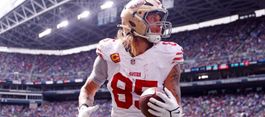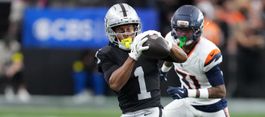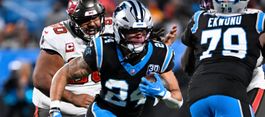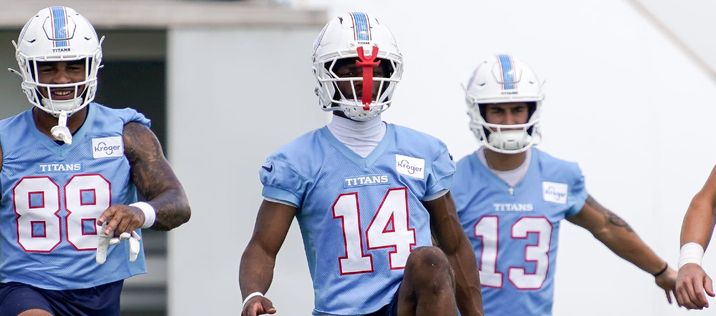
Not every rookie worth targeting needs to be a top-10 draft pick or a first-round fantasy football price. Our analyst picked four rookies he believes can help win a league in year one, each carrying real risk that’s already priced into their current cost, with upside that isn’t.
- 2026 Fantasy Football Expert Rankings
- Fantasy Football Dynasty Rankings
- Fantasy Football Trade Analyzer
- Best Fantasy Football Rankings

4 Must-Have Rookies Experts Love to Draft: Fantasy Football League Winners
Jadarian Price (RB – SEA)
Price is currently going around RB26 or RB27, a price that’s already fallen since this list was put together, and the case here is that all of the risk is baked in while the upside isn’t. If he ends up simply matching what a similar committee back did last year but sees more red-zone work, he clears his current cost easily. Skeptics point to his limited receiving production in college, just 13 targets over his final two collegiate seasons, but his tape shows real pass-catching ability, and his rushing profile at Notre Dame was elite, ranking top 25 nationally in yards after contact per attempt and top 31 in breakaway run rate across his final two seasons.
The bigger driver of his value is the timeline for the presumed veteran ahead of him, whose surgery didn’t happen until February because doctors needed swelling to go down first. That makes an early return highly unlikely despite optimistic camp chatter, with a more realistic recovery window landing closer to late October, and even then, a gradual re-integration with an eye toward being ready for the playoffs rather than an immediate return to a full workload. If Price plays well over the first month of the season while that veteran is out, there’s a real scenario where he seizes the backfield outright and doesn’t let go, even after the veteran eventually returns. It’s also worth noting that while the current coaching staff inherited the other backs on this roster from the previous regime, Price is the running back this new staff specifically chose to go out and draft themselves, a signal of real investment from the decision-makers now in charge.
Carnell Tate (WR – TEN)
Tate is going as the WR31, 71st overall, a price that doesn’t reflect a receiver with a real chance at a rookie season on par with some of the better first-year wide receiver breakouts in recent memory. His draft capital was strong, going a few spots earlier than a similarly hyped receiver prospect did in a previous draft class, and the doubts currently circulating about his game, that he’s not a complete route runner or can’t separate at a high level, echo the exact same narratives that were wrongly applied to other highly drafted receivers in recent years before they proved doubters wrong.
His college production supports the optimism. He ranked 10th in yards per route run last year and graded as the fourth-best receiver nationally among players with 50 or more targets. He’s a genuine three-level threat who posted zero drops in his final college season despite a high average depth of target, and he wins at the catch point too, posting a contested catch rate near 69% in his final season. The idea that his production was simply a product of playing alongside a more famous teammate doesn’t hold up, since targets and production have to be earned regardless of who else is on the field. A defensible floor case here is a low-end wide receiver two, and the ceiling, if things break right, puts him in the same tier as receivers currently going in the low 20s at the position.
Jordyn Tyson (WR – NO)
Tyson sits at WR38, 87th overall, sandwiched between two more established veterans, but there’s real belief he’s being underpriced. He wasn’t the most polished route runner in college, similar to a couple of past receiver prospects who weren’t fully refined coming out but hit the ground running as pros anyway. With a sharp new play caller expected to scheme around his specific skill set, and real belief in a second-year leap from his starting quarterback, the situational case is strong. His college production over his final two seasons ranked top 15 nationally in yards per route run and receiving grade in one of those years, and top 60 and top 11 respectively across the two-year sample.
The volume case is what stands out most. When this offense was clicking late last season, coinciding with its rookie quarterback’s own breakout stretch, the passing attack ranked fifth in the league in neutral passing rate and 11th in pass rate over expectation. If that identity carries over this year with more weapons in place, this offense could rank inside the top 10 in overall passing volume, putting Tyson in position for a real shot at 120 or more targets as a rookie. He’s already reported to be practicing at full health entering camp, removing one of the bigger lingering questions about him. There’s also added receiving volume available if a specific veteran teammate’s own health situation limits his snaps, adding a further path to more targets for Tyson specifically.
Denzel Boston (WR – CLE)
Boston is going as the WR61, 158th overall, far later than the other names on this list, and the case for him centers on a perceived ADP gap that doesn’t fully make sense. A rookie teammate is widely viewed as this team’s clear presumptive top receiver, and while there’s nothing wrong with drafting both, the gap between the two in current ADP feels larger than it should be. The idea that Boston can’t separate or wins purely as a big, straight-line target doesn’t hold up on tape, which shows real high-end route running and true three-level ability. He was a genuine ball winner at the catch point in college, ranking fifth in contested catch rate and eighth in PFF receiving grade among qualifying receivers, and he graded in the 79th percentile or higher in college target share and overall production dominance. The idea that a bigger receiver with strong but not blazing timed speed is automatically limited as a separator has been proven wrong by several past NFL receivers who carried that same label into the league.
Given how late he’s currently going, he’s framed as an ideal target for a final-round pick in formats that allow skipping a backup kicker or second defense, a near-zero-cost swing that could pay off significantly if he breaks out during the preseason. It’s also worth noting that the same quarterback uncertainty being held against Boston and his rookie teammate isn’t being applied nearly as harshly to a different rookie standout at tight end on the same roster, an inconsistency worth keeping in mind when weighing how much weight to put on that concern. Given a direct choice between Boston and a similarly priced Chargers receiver as a final draft pick, Boston is the preferred pick, given more confidence in how Cleveland’s new offensive play caller settles the receiver rotation compared to real uncertainty about exactly who plays alongside the top two receivers in the Chargers’ two-receiver sets.
View the Best Fantasy Football Team Names 
Fantasy Football Draft Rankings
Check out the consensus 2026 fantasy football draft rankings from our experts.

Subscribe: Apple Podcasts | Spotify | SoundCloud | iHeartRadio