
Can Edwin Diaz already be considered a top tier closer?
Ah, saves. They can be a fickle mistress. Between injury and ineffectiveness, somewhere between a third and half of all closing situations will have some turnover this season. Finding the right guy or guys can seriously make your season.
Of course, we’re looking for talented relievers who will perform well. But, more than any other position, a successful fantasy closer depends on his situation. How good is the team on which he pitches? How effective is the guy behind him in the bullpen? What’s the likelihood that he’s going to be dealt in the middle of the season?
So, with that in mind, let’s take a look at the closing situations around MLB for fantasy purposes. These are obviously subject to change, as teams continue to augment their bullpen pieces and more news comes out about the pecking order as we get closer to the season. But, for now, here is your closing situation breakdown, ranked from least to most desirable for fantasy purposes.
Prepare for your fantasy baseball draft using our Draft Simulator tool 
30. Brewers (projected closer: Committee)
I can’t even give you guys a name, man. We just really don’t know at this point whether it’s going to be Corey Knebel or the recently-signed Neftali Feliz. Knebel has the stuff, for sure, and took over eighth-inning duties after Tyler Thornburg assumed the closer’s duties. But he has major control issues, with an 11% walk rate, which is pretty much the worst thing for a closer. Neftali Feliz had a decent season with the Pirates in 2015, but is far from a sure thing. Still, Feliz assuming the closer’s role might be an easy way to bring Knebel along slowly. My guess is that, considering that the Brewers are rebuilding, they’ll give Knebel the shot early, but it’s far from a sure thing. It’s certainly not a situation to target at this stage of the game.
29. Twins (projected closer: Glen Perkins)
Perkins missed almost all of 2016 after succumbing to a shoulder injury. The Twins hope he’ll be ready for Spring Training, but shoulder injuries can be tricky, especially for pitchers entering their age-34 season. Brandon Kintzler filled in admirably for Perkins last season, and Trevor May is likely the closer of the future. But it would be a huge surprise if the Twins didn’t give a healthy Perkins the ninth-inning role. Whether Perkins will be healthy and/or effective remains to be seen, of course, leaving him a very unappealing option for saves.
28. Phillies (projected closer: Joaquin Benoit)
Benoit has quietly been pretty awesome over the last several years, with an ERA above 3.00 just once over his last seven seasons. He’ll now join the Phillies on a one-year deal, presumably to be their closer. But Jeanmar Gomez did an adequate job last season before floundering late, and Hector Neris is a rising star. Still, the Phillies looked like they wanted Andrew Bailey to have the role last year before he got injured, so it seems like they’d prefer a veteran presence to run the show. Even so, it will be a shock if Benoit doesn’t get dealt at the trade deadline, so while Benoit should be fine (assuming he gets the job), he’ll likely only be in the role for about a half season, at most.
27. Angels (projected closer: Huston Street)
You know what’s bad? A 6.41 FIP. You know what’s worse? When that 6.41 FIP is lower than your ERA. It’s fair to say that Huston Street had an abysmal season in 2016, pitching to an awful ERA and WHIP with terrible velocity, and missing the majority of the season to oblique and knee injuries. With Andrew Bailey and the rising Cam Bedrosian ready to take the role, it’s possible that Street has seen his last save opportunity for the Angels. But Mike Scioscia is old school, and my guess is he gives Street the first opportunity to run with the job. Prior to last season, Street hadn’t finished a year with an ERA higher than 3.00 since 2011, so it’s fair to give him a bit of a pass last season. But with all the uncertainty, at this early stage, it’s impossible to feel comfortable drafting anyone from this bullpen.
26. Reds (projected closer: Drew Storen)
Welcome to your last situation where we think we have an idea who will be closing for the team on Opening Day. The Reds bullpen was somewhere between a disaster and . . . a really big disaster last season. J.J. Hoover started as the closer before everyone remembered he was J.J. Hoover. Tony Cingrani somehow did well as the closer despite being a lefty that relies on deception, and the Reds insisted on keeping Raisel Iglesias in that weird multi-inning, swing-man role. They’ve now signed Drew Storen, and clearly want him to be the closer, but he’s just never recovered from the Jonathan Papelbon signing back in 2015, pitching to a 5.23 ERA last year between the Blue Jays and the Mariners. Storen will be the guy if he can hold the role (until he’s traded mid-season), but that’s very up in the air, and Michael Lorenzen is waiting to take the job if Storen slips up. At this point, my confidence level in this situation is a Blutarsky-like 0.0.
25. Braves (projected closer: Jim Johnson)
Johnson had a quietly solid season or the Braves last year, nailing down 20 saves with a 3.06 ERA and 1.19 WHIP and striking out more than a batter per inning. Despite it being a rebuilding year, the Braves just refused to give Mauricio Cabrera an extended look in the closer’s role. Now, the Braves are on the rise, and will be looking to win as many games as possible. Johnson should get the first opportunity, but he’s obviously struggled at several points in his career. He’s one of those guys that you draft because he’s got the job, you turn off the television every time he’s on, and you hope at the end of the day that he’s still standing. Far from a ringing endorsement, but what do you want when we’re this far down the list?
24. Diamondbacks (projected closer: Fernando Rodney)
Rodney was a first half Fantasy All-Star last season, as he exceled with the Padres, converting all 17 of his save chances and dominating to the tune of a 0.31 ERA and a 0.87 WHIP. He was then traded to the Marlins, where he remembered he was Fernando Rodney, and was generally terrible. It appears that the Diamondbacks intend to make him their closer, but he’s incredibly unlikely to hold the job all year, either because of ineffectiveness or because he’ll be traded. Jake Barrett is probably next in line, but Rodney’s shaky status is more about his likely poor performance rather than a strong option behind him.
23. Padres (projected closer: Brandon Maurer)
Although most fantasy pundits expected Ryan Buchter to get the first shot at closing after the Padres dealt Fernando Rodney last season, Brandon Maurer got the job and ran with it, piling up 13 saves. But Maurer simply has not been reliable throughout his career, and has always had trouble keep runners off the bases. Buchter has certainly been less of a roller coaster in his brief career, though he similarly struggles with his control. Maurer has earned the opportunity to be the closer, and is actually several years younger than Buchter, which should work in his favor as the Padres are not expected to be in contention. But he’s far from a sure thing.
22. Athletics (projected closer: Ryan Madson)
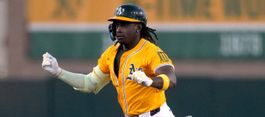
Um, I guess? Ryan Madson held down the closer’s role for almost all of 2016, and is under control for two more years, so he’s a better option than the hodgepodge we’re about to get to. But the A’s just signed ex-Giants closer Santiago Casilla to a two-year deal, have former closer Sean Doolittle under control for five more seasons, and have an unhittable youngster in Ryan Dull just waiting for his opportunity. So, the odds on Madson holding the job all season are slim. But, we all said the same thing last year, and somehow that dude was still standing at the end of the season. So, he’s not the worst option if you’re searching for saves. But, with all the other options behind him in that A’s bullpen, he’s kind of close.
21. Nationals (projected closer: Shawn Kelley)
There’s no way that the Nationals will rank this low if I re-do this article closer to the start of the season, as they will almost certainly fill their closer’s role with an established name or at least give fantasy owners some more clarity. But for now, with Mark Melancon and Jonathan Papelbon both gone, it’s a little unsettled. Shawn Kelley is coming off two fine seasons and had seven saves last year, so he’ll likely get the first crack at the job, with Blake Treinen the main threat. If Kelley has the role all year, he’d make a fine option, but there’s just too much uncertainty for him to rank higher at this stage.
20. Rockies (projected closer: Adam Ottavino)
Ottavino was primed to run with the closer’s role in 2015 before tearing the UCL in his elbow and going down with Tommy John surgery. He returned last year and was protected, before taking over the closer’s role in the final third of the season and doing well with it. Ottavino is no kid (he’s 31 years old), but he’s the type of hard-throwing, low-WHIP, high-strikeout pitcher that can be successful in Colorado. Jake McGee should be a fine set-up man, and Carlos Estevez, Jason Motte, and Chad Qualls should provide some decent bullpen depth. But this is Ottavino’s job if he can hold it and, if healthy, he should. Obviously, Colorado is not a place to go for a ton of save chances, but any closer with job security and adequate performance has decent value.
19. Pirates (projected closer: Tony Watson)
Watson had a bit of a down season in 2016, though he did rack up 15 saves once Mark Melancon was traded to the Nationals at the deadline. He’s a bit of a mixed bag as a closer, as he doesn’t miss bats at a typical closer rate, but he limits baserunners with the best of them. The Pirates signed Daniel Hudson to a two-year deal and do have a bevy of solid relief pitchers, so it’s possible they look to deal Watson before the season begins. But for now, Watson is slated to be the closer on a team that should be in contention and win a lot of close games. That’s a good place to look for saves.
18. Rangers (projected closer: Sam Dyson)
Dyson did a great job last season once he took over the closer’s role from Shawn Tolleson, notching 38 saves with a 2.43 ERA. That should earn him the role to start the season. But there are a few troubling signs. First, Dyson really doesn’t profile as a closer, since he’s a ground-ball pitcher with a mediocre strikeout rate and a 1.28 career WHIP. Second, the Rangers have a built-in replacement should Dyson falter in Jeremy Jeffress, who was fantastic closing for the Brewers in 2016 before the trade to the Rangers. Finally, they have Matt Bush, who profiles as a closer and has the fastest slider known to man (other than Noah Syndergaard, of course). In other words, there are a lot of threats to Dyson’s job. But Dyson has earned some slack and plays on a good team, so there are still plenty of worse options.
17. Tigers (projected closer: Francisco Rodriguez)
It’s amazing that K-Rod is still getting it done, now with 430 saves and counting. He had another fine season in 2016, totaling 44 saves and pitching to a 3.24 ERA. But his walks were up and his strikeout rate was the worst of his career. Now 35 years old with a ton of mileage on his arm, the end may come quickly. He’s also in the final year of his contract, and the Tigers aren’t expected to be very good, making K-Rod a prime trade candidate. Still, he’s an established closer who definitely has the job to start the season, and safety is half the battle. I doubt Rodriguez racks up another 40 saves, but he should be a fine, lower-tier closer for most of the season.
16. Marlins (projected closer: A.J. Ramos)
Look, I like A.J. Ramos, but when you lose your job to Fernando Rodney, I can’t fully trust you, ok? Ramos did rack up 40 saves last year and had what looked like his usual stellar season, but his WHIP ballooned to 1.36, and his walk rate has always been too high for a closer anyway. From Kyle Barraclough (pronounced “Bearclaw” – best name ever) to Brad Ziegler (pronounced “Zig-ler” – no bearing on anything but why leave him out?), there are plenty of reliable options if Ramos falters. So, decent but not elite closer + solid options behind him = meh, I’m a little nervous. But, at the same time, Ramos is the guy for now, so he remains above that class of truly messy closer situations, which we are rapidly approaching.
15. Astros (projected closer: Ken Giles)
What a crazy year for the Astros bullpen, huh? The team gives up a king’s ransom in a trade for Giles, then Luke Gregerson wins the job out of spring training, only to lose it to Will Harris, who then finally gives it to Giles. Weird. Giles looked like he figured things out at the end of the season, and will be the presumptive closer. A.J. Hinch has to know that swapping closers in and out is a losing strategy, so expect Giles to have a little bit of a leash this season. Given his uneven performance and obvious competition for the job, Giles is not the safest pick, but he carries as much or more potential than almost any other closer.
14. Indians (projected closer: Cody Allen)
This is a weird one, because the Indians bullpen is borderline elite. And late last season and in the playoffs, it became clear that Andrew Miller and Bryan Shaw would pitch in the late innings and Allen would shut the door. That’s all well and good if it holds, but if you’ve followed Allen over the last two seasons, you know that he has a tendency to hit major rough patches, finishing six months out of his last 12 with an ERA of 5.00 or greater. He’s also coming off a career high in innings. Plus, Terry Francona won’t hesitate to hold Miller back for the ninth inning if there are tough lefties on the slate even if Allen is going well. Allen should be a solid closer this season, but there’s enough doubt and enough threats to his job to move him down the list.
13. Mets (projected closer: Jeurys Familia)
Familia’s performance dipped a bit last season, but he’s racked up 94 saves over the past two seasons with decent peripherals, making him a top option. More than his performance, the issue is obviously Familia’s arrest for domestic violence this offseason. Although the charges have been dropped, he will undoubtedly be suspended for some length of time. That uncertainty would ordinarily drop Familia far lower in the ranks, but his incredible amount of opportunities and the certainty of his backup (Addison Reed) allows you to guarantee a lock down of the Mets’ closer’s role for the entire season if you so choose. Given the Mets’ lack of offense and incredible pitching, guaranteeing yourself the Mets closer should lead to 50-plus saves.
12. White Sox (projected closer: David Robertson)
Robertson really struggled last year, seeing a drop in strikeouts, a rise in walks, and a massive jump in WHIP. Entering his age-32 season, it’s possible that Robertson is truly entering his decline phase. Add to this that the White Sox are obviously in rebuilding mode, and there’s a better than average chance that Robertson is not with the White Sox all year. The good news is that, other than Nate Jones, there doesn’t appear to be much of a threat to Robertson’s job, and he’s getting paid closer money, that’s for sure. So, until and unless he gets dealt, he’s very safe. Robertson is your classic mid-tier closer, but just don’t think of him as that sure-fire strikeout artist that we’ve come to know.
11. Rays (projected closer: Alex Colome)
Given the opportunity after Brad Boxberger hurt his oblique in Spring Training, Colome emerged from the dreaded closer-by-committee situation early and never looked back. He was one of the true breakout stars of 2016, pitching to a 1.91 ERA and a 1.02 WHIP, and racking up 37 saves and 71 strikeouts in 56 2/3 innings. Boxberger at his best isn’t as good as Colome, so there shouldn’t be much threat to Colome’s role. The only minor worry is that Colome will be arbitration-eligible after this season, and remaining in the closer’s role this year will make him more expensive for the notoriously stingy Rays. But, more likely, the Rays will attempt to compete and worry about how to handle the costs later. Colome should be in for a very solid season once again.
10. Mariners (projected closer: Edwin Diaz)
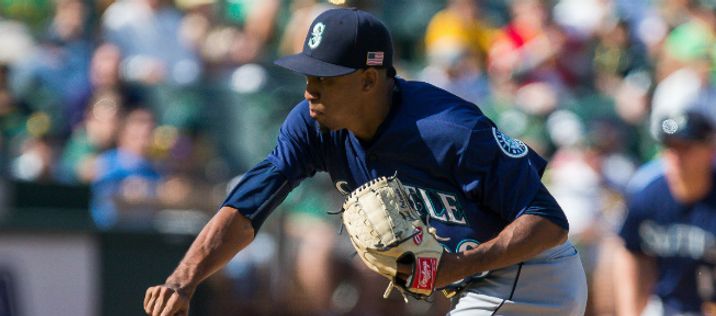
I can’t tell if this ranking is way too high or way too low. If there’s one reliever who could be the next Chapman or Jansen, here’s your guy. Diaz was dynamite last season after taking over for Steve Cishek, with 18 saves and an incredible 15.3 strikeouts per nine innings. There are few complaints about his performance, but two things keep me from pushing him up this list: his age (will be just 23 years old this season) and the presence of Cishek and Tony Zych, both of whom are ready to step in if Diaz slips up. But Diaz is one of the few guys who can affect your strikeout numbers, and he has the potential to be a top 5 closer. The massive upside outweighs the risks.
9. Royals (projected closer: Kelvin Herrera)
Freed from the enormous shadows of Greg Holland and Wade Davis last season, Herrera showed what he could do in the ninth inning, locking down 12 saves and striking out nearly 11 batters per nine innings. Now, with some experience as the closer and only a well-past-his-prime Joakim Soria as competition, expect Herrera to have the closer’s role and pile up the saves on a team that will provide him with plenty of chances. Absent an injury, it would be pretty shocking if he does not finish the year as a top 10 closer.
8. Cardinals (projected closer: Seung-Hwan Oh)
The Final Boss was a dominant closer in South Korea and Japan before coming over to MLB last year, and he didn’t disappoint once he took over for the ineffective Trevor Rosenthal. Oh has everything you want in a closer – a lot of strikeouts, few baserunners, and nerves of steel. Still, prior to last season’s disaster, Rosenthal was a borderline elite closer (which shows you the volatility of relievers, by the way), and there’s at least some shot he regains his command and tries to win the job back, despite the rumors that he’s moving to a multi-inning role. But Oh has earned the job for now, and he’s done nothing to make you think he’ll lose it going forward. He should be plenty safe.
7. Red Sox (projected closer: Craig Kimbrel)
This is called a pitcher in decline, kids. Three straight years of an increase in ERA and WHIP for Kimbrel (it’s actually five straight years, but I’m not killing the guy when his ERA goes from 1.01 to 1.21, you know?), and he battled injury last year. Plus, most concerning of all for any closer, he saw a spike in his walk rate in 2016. So, add it all up and it’s not great. But a declining Craig Kimbrel is still better than the vast majority of relievers, and he is still one of the few closers capable of making a dent in your season strikeout totals. He’s also pitching for a team that should win a preposterous amount of games, leading to a ton of save chances. But it’s worth noting that the Red Sox now have an extremely capable backup closer in Tyler Thornburg waiting to take over if Kimbrel slips, and that makes the Red Sox situation a little dicey. Still, Kimbrel is solid enough and has enough job security to be a pretty comfortable pick.
6. Blue Jays (projected closer: Roberto Osuna)
One of 2016’s biggest draft day bargains, Osuna was surprisingly named the closer over Drew Storen just before the season started, and man, did he deliver. He had nearly a carbon copy stat line to his 2015 season (2015 stat line of 2.58 ERA, 0.92 WHIP, 9.7 K/9; 2016 stat line of 2.68 ERA, 0.93 WHIP, 10 K/9). The only difference was that he held the closer’s role all season, and so went from 20 saves in 2015 to 36 saves in 2016. There should be more of the same for the youngster this year, with no real threat (I love you, Jason Grilli, you maniac, but you’re not taking this job) and pitching for a team that should again be competitive. He’s an outstanding option.
5. Chicago Cubs (projected closer: Wade Davis)
Davis had another fine season for the Royals last year, and although his ERA rose almost a full point (to a still absurdly low 1.87), he had an identical FIP to 2015, showing that it was mostly bad luck. But he battled forearm injuries all season, and forearm injuries are often precursors to elbow injuries which are often precursors to “Oh no, my closer needs Tommy John surgery.” The Cubs have obviously done their diligence, and Davis will surely have a clean bill of health coming into the season. There are plenty of options behind Davis if he falters (Carl Edwards, Hector Rondon, Koji Uehara), but he’s an elite reliever and should be fine. The health concerns drop him to the second tier of relievers, but, for now, he should still be considered an excellent option.
4. Giants (projected closer: Mark Melancon)
In probably the most predictable signing of the winter, the Giants inked Melancon to a then-record (and now ho-hum) deal for $62 million over four years. It’s a perfect deal for the Giants, who desperately needed relief help, and an equally great deal for Melancon, who remains in the NL with a great team and in a fantastic park. The only thing that separates Melancon from the truly elite closers is his strikeout rate, but he’s otherwise as good as you can get. Expect 40-plus saves, fantastic ratios, and zero concern about job security once again.
3. Dodgers (projected closer: Kenley Jansen)
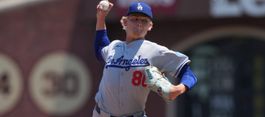
Remember that year that Jansen had a strikeout rate of less than 13.0 per nine innings? Me neither. Jansen may have gained some fame in the regular baseball community with his impressive post-season, but fantasy players have known how good he is for years. The best part is that his talent is put to good use for fantasy purposes, as he has converted 44, 36, and 47 saves the last three seasons. With miniscule ratios and enormous strikeout numbers and playing on a competitive team, Jansen is simply everything you want in a closer.
2. Yankees (projected closer: Aroldis Chapman)
Joe Maddon’s weird deployment of Chapman in the World Series notwithstanding, it was business as usual for the big lefty in 2016, as he racked up 36 saves (despite missing a month with a suspension) with monster strikeout totals and a miniscule WHIP. Now back with the Yankees on a long-term deal, Chapman should garner every save opportunity, with Dellin Betances returning to his eighth-inning role. Chapman is nearly as good as it gets for a fantasy closer, and checks in just behind Britton.
1. Orioles (projected closer: Zach Britton)
The secret is now out on Britton, who was quietly one of the top closers in the league from 2014-2015 but never quite got his due in the fantasy community. Now, after a season in which he gave up just SEVEN earned runs the entire season and was maddeningly left on the bench in the AL Wild Card Game, Britton is going to be one of the first relievers drafted, if not the top choice. And he definitely should be. Brad Brach and Darren O’Day are fine, but Britton will need to completely implode to lose his job, and the Orioles should provide him with plenty of saves, as usual. He may not have quite the strikeout numbers of the guys ranked behind him, but he also wasn’t seriously overworked in the playoffs last year. So, he’s the top choice in my book.
Subscribe: iTunes | Stitcher | SoundCloud | Google Play | TuneIn | RSS
Dan Harris is a correspondent with FantasyPros. For more from Dan, check out his archive or follow him on Twitter at @danharris80.