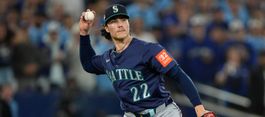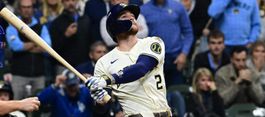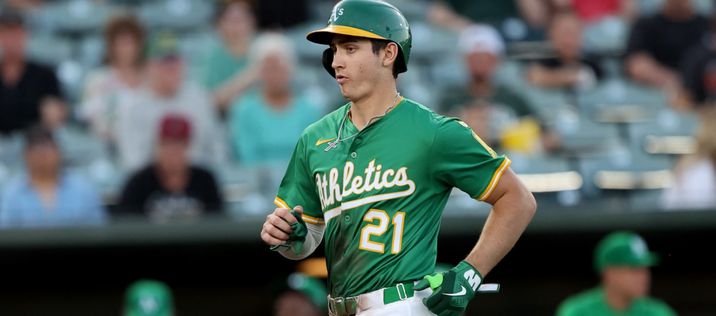
Every draft season produces a handful of players who check every box fantasy managers want at their cost. They aren’t always the biggest names, but they combine role security, skills growth, and category impact in a way that consistently beats ADP. In the FantasyPros Ultimate First Base Guide, two players stood out clearly in that “must-have” category for 2026 drafts: Tyler Soderstrom and Ben Rice.
- Fantasy Baseball Draft Rankings
- Fantasy Baseball Research & Advice
- Fantasy Baseball Average Draft Position (ADP)
- Fantasy Baseball Mock Draft Simulator

Fantasy Baseball Must-Have Draft Targets
Here are two first basemen our fantasy baseball analysts are targeting everywhere.
Soderstrom is one of the most misunderstood hitters in fantasy right now. The perception around him is that he exploded early last season, then faded once pitchers adjusted. The podcast pushed back hard on that narrative, and the numbers back it up.
Yes, Soderstrom went nuclear in April. But while the home run pace slowed later, his overall offensive quality actually improved in the second half. He hit over .300 after the break with an OPS north of .850, showing real growth as a hitter rather than a one-month heater.
That growth matters because Soderstrom isn’t just a power bat. He contributes across the board. Last season he delivered 25 homers, over 90 RBI, chipped in steals, and hit for a strong average. That’s rare for a first baseman being drafted outside the elite tier.
Another key point from the show was context. Oakland’s ballpark remains extremely friendly for left-handed power, and Soderstrom gets another full season to take advantage of it. He also brings positional flexibility, which quietly adds value over the grind of a long fantasy season.
The most important takeaway is safety. Soderstrom’s profile doesn’t require a leap to pay off. Even modest growth makes him a strong starter. If the power ticks back up while the batting average holds, you’re looking at a top-five outcome at a fraction of the cost.
Ben Rice is a must-have for a different reason. He breaks roster rules.
Rice is often discussed primarily as a catcher, but the podcast made an important distinction. In many formats, especially single-catcher leagues, Rice doesn’t need catcher eligibility to be valuable. His bat plays at first base. Period.
The underlying metrics are elite. Rice posted a hard-hit rate north of 55 percent, paired with a barrel rate that puts him among the best hitters at the position. He elevates the ball, doesn’t strike out excessively, and consistently does damage when he connects. That’s not catcher-only production. That’s middle-of-the-order production.
What makes Rice special is flexibility. In two-catcher formats, he’s a massive edge because you’re getting first-base caliber offense from a catcher slot. In single-catcher leagues, he allows you to wait on the position entirely or deploy him at first base or corner infield while grabbing value later behind the plate.
There’s also room for growth. Rice isn’t a finished product, but the baseline is already strong. A season in the mid-20s for home runs with solid batting average support is well within reach, and the Yankees lineup gives him ample run and RBI opportunities whenever he’s in the lineup.
Drafting Rice isn’t just about projection. It’s about unlocking options. He lets you respond to the board instead of forcing picks.
Why These Two Are Must-Haves
The podcast repeatedly emphasized that first base is deep, but not infinite. There’s a point where the position shifts from comfortable to fragile, and Soderstrom and Rice sit right before that drop-off.
Soderstrom gives you category balance without forcing you to spend early capital. Rice gives you lineup flexibility and elite batted-ball quality at a position most managers treat as replaceable.
Both players also share another trait common among league winners. Their cost doesn’t reflect their upside or floor. You’re not drafting them at their ceiling. You’re drafting them at a price that assumes minimal growth, which creates profit if anything breaks right.
How to Draft Around Them
Soderstrom works beautifully as your primary first baseman if you load up elsewhere early. Rice pairs perfectly with either an early first baseman or as part of a wait-and-see approach where flexibility is key.
The mistake would be treating them like fallback options. The correct move is targeting them intentionally.
Fantasy Baseball Takeaways
- Tyler Soderstrom‘s second-half performance shows real hitter growth, not regression.
- His multi-category profile makes him one of the safest non-elite first basemen.
- Ben Rice‘s bat plays at first base, not just catcher.
- Rice’s elite batted-ball data creates value in any format.
- Both players offer strong floors with realistic paths to top-tier production.
- Must-have players aren’t about hype. They’re about leverage.
In a season where first base offers multiple draft paths, Soderstrom and Rice are the players who keep your options open and your roster ahead of the curve.

Subscribe: YouTube | Spotify | Apple Podcasts | iHeart | Castbox | Amazon Music | Podcast Addict | SoundCloud | TuneIn