As fantasy baseball trade deadlines begin to creep closer, the best managers are already looking for ways to gain an edge.
The key isn’t simply identifying good players. It’s finding the gap between perception and reality. Some players are struggling badly enough that managers are ready to move on. Others are producing at a level that may not be sustainable for the second half.
That’s where buying low and selling high becomes a powerful strategy.
- Fantasy Baseball Trade Analyzer
- Best Fantasy Baseball Waiver Wire Tools
- Fantasy Baseball Lineup Assistant
- MLB Prop Bet Cheat Sheet

4 Fantasy Baseball Trades to Make Before Your League’s Deadline
In a recent FantasyPros discussion, Joey P and The Welsh highlighted four players whose trade value may not accurately reflect their rest-of-season outlook. Two are targets worth acquiring before the market adjusts. Two are players fantasy managers should consider moving before regression catches up. Let’s break them down.
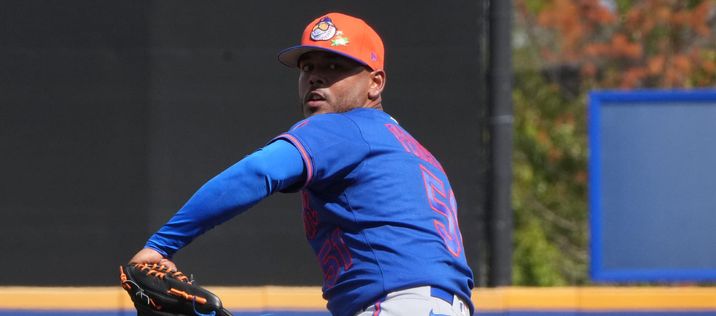
Freddy Peralta (SP – NYM)
Sometimes the best buy-low opportunities appear immediately after disaster strikes.
That’s exactly the case with Freddy Peralta.
Coming off one of the worst starts of his season, Peralta’s fantasy value may be at its lowest point all year. Joey P believes that’s exactly why fantasy managers should be sending trade offers right now.
The season-long numbers haven’t been pretty. A bloated ERA has frustrated managers who drafted Peralta expecting front-of-the-rotation production. However, the underlying indicators paint a much more encouraging picture.
The discussion highlighted an expected ERA that sits nearly a full run lower than his actual mark. While Peralta hasn’t pitched like an ace, the metrics suggest he also hasn’t been nearly as bad as the surface numbers indicate.
The strikeout production has dipped compared to previous seasons, but it’s still respectable. More importantly, there wasn’t anything in the underlying profile that suggested complete collapse.
The conversation also pointed to a potential trade scenario. If the Mets become sellers, Peralta could find himself pitching for a contender later this season, creating a possible boost to both his environment and fantasy value.
For fantasy managers willing to bet on regression and talent, this may be the cheapest Peralta will ever be.
Trevor Rogers (SP – BAL)
Trevor Rogers is the type of player whose season-long stats may scare away potential buyers.
That’s exactly why The Welsh likes him as a trade target.
At first glance, the profile looks ugly. The ERA sits above five, the WHIP is elevated, and the strikeout numbers have taken a noticeable step backward compared to last season.
Dig a little deeper, though, and the story changes.
The discussion focused heavily on Rogers’ recent performance. During June, he has looked like a completely different pitcher, posting a strong run of starts while consistently working deep enough into games to provide fantasy value.
One outing in particular stood out: a seven-inning, one-hit performance against the Dodgers that showcased what Rogers is capable of when everything is working.
The expected ERA also supports some optimism. While not elite, it’s substantially lower than his current ERA, suggesting the season-long results may be overstating the struggles.
The strikeouts remain a concern, but The Welsh pointed out that Rogers has continued limiting walks while showing encouraging trends in contact management.
Because many managers will focus on the overall stat line rather than the recent improvement, Rogers could remain surprisingly affordable.
TJ Rumfield (1B – COL)
Not every breakout is built to last.
Joey P believes T.J. Rumfield may be one of the better sell-high candidates in fantasy baseball right now.
To be clear, Rumfield has earned attention.
He followed an impressive May with another productive stretch in June, providing power, run production, and strong batting-average contributions. Fantasy managers who scooped him up off waivers have already benefited.
The concern is sustainability.
The discussion repeatedly returned to the underlying metrics, which don’t fully support the level of production Rumfield has delivered. His quality-of-contact numbers remain underwhelming, with below-average marks in several key Statcast categories.
There are also platoon concerns. Rumfield has struggled against left-handed pitching, limiting his overall ceiling and creating some risk if opposing teams begin exploiting that weakness more aggressively.
The biggest warning sign may be the expected batting average, which sits well below his current average.
That doesn’t mean a collapse is guaranteed.
It simply means fantasy managers may have an opportunity to cash in while the production remains fresh in everyone’s mind.
Henry Bolte (OF – ATH)
Henry Bolte has become one of the more interesting surprise contributors in fantasy baseball.
He’s hitting for average, stealing bases, and helping fantasy managers in multiple categories. On the surface, it looks like a breakout.
The Welsh isn’t convinced it will last.
The central argument revolves around one number: BABIP.
According to the discussion, Bolte currently owns the highest BABIP among hitters with at least 100 plate appearances, and it isn’t particularly close. That’s a major red flag when evaluating future production.
There are additional concerns.
Bolte carries a strikeout rate approaching 30%, which creates a difficult foundation for sustaining a high batting average. His expected batting average sits dramatically lower than his actual average, suggesting significant regression could be coming.
The profile also lacks some of the underlying power indicators fantasy managers typically want to see from a long-term breakout.
To Bolte’s credit, he hits the ball hard and possesses enough speed to support a higher-than-average BABIP.
The problem is that his current level appears difficult to maintain.
For fantasy managers looking to maximize value, this may be the perfect time to see what Bolte can bring back in a trade.
Why Timing Matters More Than Talent
One of the biggest themes from this discussion wasn’t necessarily about the players themselves.
It was about timing.
Peralta and Rogers are players whose market value is being dragged down by disappointing season-long numbers despite encouraging signs underneath the surface.
Rumfield and Bolte are benefiting from recent production that may be outpacing their underlying skill indicators.
That’s often where fantasy managers find the best trade opportunities.
Buying before the rebound and selling before the regression is easier said than done, but it’s often the difference between winning and losing a league.
Fantasy Baseball Takeaways
- Freddy Peralta (SP – NYM) is a strong buy-low candidate after a disastrous outing further depressed his value.
- Trevor Rogers (SP – BAL) has quietly improved in June and may be available at a discount because of ugly season-long numbers.
- TJ Rumfield (1B – COL) has been productive, but several underlying metrics suggest his current pace may be difficult to sustain.
- Henry Bolte (OF – ATH) is producing now, but an inflated BABIP and high strikeout rate create significant regression concerns.
- Peralta offers the highest upside among the buy-low targets discussed.
- Rogers may be one of the more affordable pitching trade targets available right now.
- Rumfield and Bolte both profile as players whose market value could be higher today than it will be later in the season.
- Fantasy managers approaching trade deadlines should focus on underlying trends rather than simply reacting to recent box scores.

Subscribe: YouTube | Spotify | Apple Podcasts | iHeart | Castbox | Amazon Music | Podcast Addict | SoundCloud | TuneIn
Ben Rosener is a fantasy baseball writer whose work has appeared on the digital pages of FantasyPros, Pitcher List and Bleacher Report. He also writes weekly fantasy baseball columns and provides weekly dynasty (top 700) and redraft (top 500) rankings updates for his own Substack page, Ben Rosener’s Fantasy Baseball Help Substack. He only refers to himself in the third person for bios.