The fantasy baseball trade market shifts quickly after the All-Star break. A strong first half can inflate a player’s value, while a slow start can create buying opportunities before the rest of your league catches on. The challenge is figuring out which performances are sustainable and which are likely to regress.
- Fantasy Baseball Trade Analyzer
- Best Fantasy Baseball Rankings
- Best Fantasy Baseball Waiver Wire Tools
- MLB Prop Bet Cheat Sheet

Fantasy Baseball Buy or Sell? Breaking Down Four Polarizing Trade Targets for the Second Half
In a recent FantasyPros discussion, Joe Orrico and Chris Welsh broke down four players whose fantasy values are generating plenty of debate. From established stars to surprising first-half performers, here’s how they approached each case.
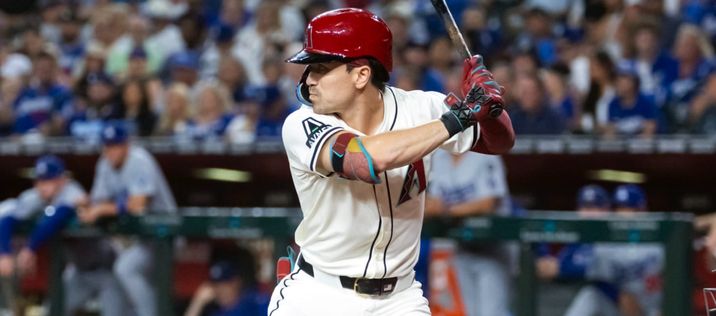
Corbin Carroll (OF – ARI)
Corbin Carroll‘s first half sparked one of the more interesting conversations in the episode.
Rather than focusing strictly on his traditional numbers, the discussion centered on whether fantasy managers should expect even more during the second half.
Joe Orrico argued that Carroll’s profile remains one of the safest among elite fantasy hitters because he contributes across every category. Even if the home run pace fluctuates, his speed and ability to score runs provide a strong weekly floor.
Chris Welsh agreed that Carroll remains an elite fantasy asset but noted that fantasy managers should recognize how much value is already baked into his current market price. He’s not actively looking to move Carroll, but if another manager is willing to pay for the No. 1 overall player in fantasy baseball, it’s at least worth having the conversation.
The takeaway wasn’t to sell Carroll.
It was to appreciate just how valuable his complete fantasy profile has become.
Rafael Devers (DH – SF)
Rafael Devers was evaluated from a much different angle.
The discussion focused on separating recent production from long-term expectations.
Joe emphasized Devers’ established track record, arguing that his fantasy value is still built around elite power and run production, even if the season has included frustrating cold stretches.
Welsh agreed, pointing out that fantasy managers can become overly focused on short-term slumps while forgetting the type of offensive ceiling Devers still possesses.
Neither host viewed him as someone fantasy managers should panic over.
Instead, they encouraged looking at the larger sample of work rather than reacting to a few quiet weeks.
Robbie Ray (SP – SF)
Robbie Ray remained one of the clearest sell-high candidates discussed on the show.
The concern wasn’t that Ray has pitched poorly.
It was that his results have outperformed the underlying indicators.
Joe pointed to Ray’s declining strikeout production compared to previous seasons, while Welsh noted that several expected metrics suggest regression could be coming.
The conversation also highlighted how Ray’s profile has changed. Rather than relying on overwhelming swing-and-miss stuff, he’s found success by managing contact and benefiting from favorable outcomes.
That formula has worked so far.
The question is whether it remains sustainable over the remainder of the season.
If another fantasy manager values Ray as a true fantasy ace, both hosts believe this is an appropriate time to see what the trade market offers.
Eduardo Rodriguez (SP – ARI)
Eduardo Rodriguez generated the strongest consensus sell recommendation of the episode.
Welsh repeatedly pointed to Rodriguez’s underlying metrics, arguing they don’t fully support his excellent ERA. His expected numbers paint a much different picture, and the quality of contact he’s allowing raises legitimate concerns about regression.
Joe echoed those thoughts, adding that Rodriguez has consistently walked a fine line between productive outings and starts that could quickly unravel.
For fantasy managers looking to maximize trade value, Rodriguez fits the profile of a player worth shopping while his traditional statistics remain appealing.
The recommendation isn’t about questioning his talent.
It’s about capitalizing on peak market value.
Process Over Results
One of the biggest themes throughout the conversation was avoiding decisions based solely on surface-level statistics.
Carroll’s complete fantasy profile makes him a player worth holding unless another manager overwhelms you with an offer.
Devers’ long-term resume still warrants patience.
Ray and Rodriguez, meanwhile, have produced excellent results that Joe Orrico and Chris Welsh believe may not be fully supported by the underlying metrics discussed in the episode.
Recognizing those differences can help fantasy managers make smarter trade decisions before the rest of the league catches up.
Fantasy Baseball Takeaways
- Corbin Carroll (OF – ARI) remains one of fantasy baseball’s safest elite assets because of his five-category production.
- Rafael Devers (DH – SF) is still worth trusting despite recent inconsistencies thanks to his proven offensive track record.
- Robbie Ray (SP – SF) profiles as a sell-high candidate because his underlying metrics don’t completely match his surface production.
- Eduardo Rodriguez (SP – ARI) received the strongest sell recommendation due to significant regression concerns.
- Carroll is only worth moving if another manager pays a premium.
- Devers’ long-term production outweighs short-term frustration.
- Ray’s declining strikeout profile makes him a worthwhile trade candidate while his value remains elevated.
- Rodriguez’s current market value may be the highest it gets this season.

Subscribe: YouTube | Spotify | Apple Podcasts | iHeart | Castbox | Amazon Music | Podcast Addict | SoundCloud | TuneIn
If you want to dive deeper into fantasy baseball, be sure to check out our award-winning slate of Fantasy Baseball Tools as you navigate your season. From our Lineup Assistant – which provides your optimal lineup, based on accurate consensus projections – to our Waiver Wire Assistant – that allows you to quickly see which available players will improve your team, and by how much – we’ve got you covered this fantasy baseball season.