Fantasy baseball trade season is heating up, and this week’s buy-low and sell-high discussion centered around four players whose values may be shifting quickly. The focus here is simple: identify where the market perception no longer matches the underlying performance.
- Fantasy Baseball Trade Analyzer
- Best Fantasy Baseball Rankings
- Best Fantasy Baseball Waiver Wire Tools
- MLB Prop Bet Cheat Sheet

Fantasy Baseball Buy Low, Sell High Trade Targets
These are not long-term projections pulled from models or outside reports. This analysis comes directly from the discussion in the podcast transcript.
Kyle Stowers (OF – MIA)
Kyle Stowers is starting to show signs of life after a slow beginning to the season, and the belief here is that fantasy managers still have a chance to buy before the market fully catches up.
The key point from the discussion was timing and health. Stowers dealt with an injury early in the year, and the argument is that he simply needed time to get healthy and rediscover his rhythm at the plate. Over a recent stretch, his at-bats reportedly looked sharper, highlighted by a three-hit game with a home run on May 9.
The optimism around Stowers also ties back to expectations entering the season. There was never an assumption he would completely replicate last year’s breakout, but there was confidence he would still provide useful outfield production at a reasonable fantasy cost. The recent improvement in timing may signal that rebound is starting now.
For fantasy managers waiting on injured outfielders or looking for inexpensive offense, Stowers was presented as a worthwhile trade target before another hot streak drives the acquisition cost higher.
Emmet Sheehan (SP – LAD)
Emmet Sheehan may carry an ugly surface stat profile right now, but the underlying indicators discussed in the podcast suggest better days could be ahead.
The headline numbers are not impressive. Sheehan currently owns a 4.79 ERA and 1.35 WHIP. But the conversation focused heavily on the gap between those results and the indicators beneath them. His expected ERA sits at 4.12, nearly a full run lower.
The strikeout and walk profile was the biggest selling point. Over his last four starts, Sheehan posted seven or more strikeouts in three outings while walking no more than one batter in each of those appearances. Overall, he holds a 28 percent strikeout rate paired with just a six percent walk rate.
The discussion also pointed toward an adjustment period. Sheehan is reportedly throwing fewer fastballs because of decreased velocity, leaning more heavily on secondary pitches instead. The slider, in particular, has generated strong results with opponents hitting under .200 against it.
There is still contact being allowed, but the belief is that the swing-and-miss skills and improved command are encouraging enough to buy into before the ERA corrects itself. The upside here is framed as a potential top-30 starting pitcher if the adjustments continue trending positively.
Sonny Gray (SP – STL)
Sonny Gray was identified as a clear sell-high candidate, especially with the possibility that his perceived value rises after returning from injury.
The concern starts with the strikeouts. Through six starts before the injury, Gray’s strikeout rate cratered to 4.8 K/9, far below expectations. His walk rate also climbed above where it sat during the previous two seasons.
Even more concerning are the underlying run prevention metrics. While Gray owns a respectable 3.54 ERA, the expected ERA was cited at 5.45, one of the largest gaps in baseball according to the discussion. Additional indicators like FIP and xFIP also painted a much less favorable picture.
Age also entered the conversation. At 36 years old, there is concern that Gray may simply be entering the decline phase of his career. The idea was not that every veteran pitcher ages gracefully, and this could be the point where the drop-off arrives faster than expected.
The recommendation was to explore the trade market now while Gray still carries the appeal of a proven veteran starter returning from injury.
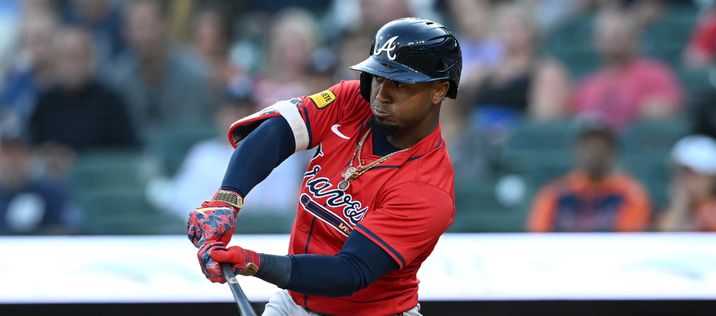
Ozzie Albies (2B – ATL)
Ozzie Albies is producing like an elite fantasy second baseman right now, which is exactly why the recommendation was to sell.
On the surface, the production looks fantastic. Albies is hitting .300 with eight home runs, strong run production, and improved on-base numbers.
The skepticism comes from the quality-of-contact data discussed in the episode. Albies reportedly owns an expected batting average around .253, roughly 50 points below his actual mark. His barrel rate was described as the lowest of his career at 4.3 percent, while his hard-hit rate sat below 30 percent.
There was acknowledgment that Albies has succeeded before without elite hard-contact metrics, but the argument here is more about market value than complete collapse. If fantasy managers can sell him as a top-tier second baseman while he is hitting .300 with strong counting stats, that may be the ideal window.
The expectation is not that Albies becomes unusable. Instead, the belief is that he settles closer to the middle tier of second basemen once the batting average and power pace cool off.
Fantasy Baseball Takeaways
- Kyle Stowers (OF – MIA) is viewed as a buy-low outfielder whose recent improvement may signal a healthier and more productive stretch ahead.
- Emmet Sheehan (SP – LAD) has concerning surface stats, but the strikeout rate, walk rate, and expected ERA suggest positive regression could be coming.
- Sonny Gray (SP – STL) carries major warning signs beneath the ERA, including declining strikeouts and poor expected metrics.
- Ozzie Albies (2B – ATL) is producing at an elite level now, but the underlying contact quality suggests regression may eventually hit.
- Selling veterans or overperforming hitters at peak market value remains one of the best ways to reshape a fantasy roster before midseason trends stabilize.
- Pitchers with strong strikeout and command profiles, even with inflated ERAs, can become valuable trade targets before public perception changes.

Subscribe: YouTube | Spotify | Apple Podcasts | iHeart | Castbox | Amazon Music | Podcast Addict | SoundCloud | TuneIn
If you want to dive deeper into fantasy baseball, be sure to check out our award-winning slate of Fantasy Baseball Tools as you navigate your season. From our Lineup Assistant – which provides your optimal lineup, based on accurate consensus projections – to our Waiver Wire Assistant – that allows you to quickly see which available players will improve your team, and by how much – we’ve got you covered this fantasy baseball season.