Every season leaves a handful of players with a sour taste in fantasy football managers’ mouths, and that usually creates a discount the following draft season. Our analysts broke down six bounce-back candidates worth targeting at their current price, from a contract-year wide receiver to a tight end some are ready to write off.
- 2026 Fantasy Football Expert Rankings
- Fantasy Football Dynasty Rankings
- Fantasy Football Trade Analyzer
- Best Fantasy Football Rankings

Fantasy Football Values You Need to Draft: Bounce-Back Players to Target (2026)
Here are players our fantasy football experts expect to bounce back in 2026.
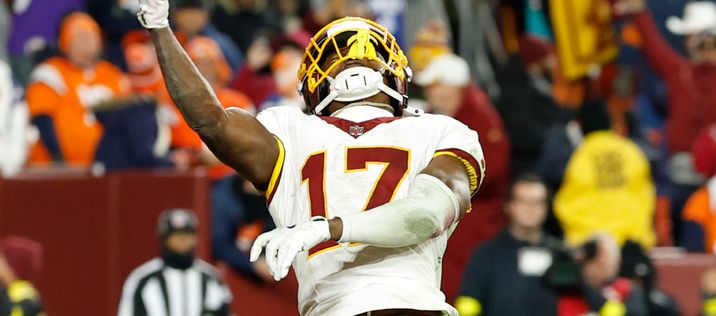
Terry McLaurin (WR – WSH)
McLaurin’s 2025 season was derailed almost from the jump by a training camp holdout that eventually turned into a three-year, $96 million contract extension. That kind of disruption tends to torpedo a season, and it did here too. The result is a discount this year, with McLaurin currently going as a backend wide receiver two in both ADP and ECR.
The case for a bounce back centers on a simple question: who is actually threatening his spot at the top of Washington’s target hierarchy? The team didn’t add a major new receiving weapon, and key names from a year ago, including Deebo Samuel and Zach Ertz, are gone. A new offensive play caller is also stepping in, and the previous coordinator’s offense was known for being static, rarely motioning receivers or moving them around the formation, which tends to reward a receiver who simply wins his matchup and earns targets, exactly McLaurin’s game.
The underlying numbers back up the belief that he’s still an elite receiver even in a down year. He finished fourth in first downs per route run last season despite everything going on around him, and 13th in yards per route run. One analyst has him ranked as a top-15 wide receiver overall. His 2024 season, when he finished as the WR14 in fantasy points per game with 82 catches, nearly 1,300 receiving yards, and 13 touchdowns, is viewed as more repeatable than people think, especially if the quarterback continues to develop and the offense’s overall passing volume grows. Even without matching last year’s touchdown total, a career high in targets is firmly in play.
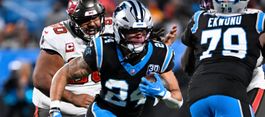
Bucky Irving (RB – TB)
Few players split our analysts more than Irving. One is fully in, and pushed back hard against using advanced efficiency metrics like rushing yards over expected in isolation. Irving finished dead last in that metric among qualifying running backs last season, which sounds damning, but he ranked sixth in the same metric in 2024. The difference is the offensive line: Tampa Bay’s line ranked second in adjusted line yards during Irving’s rookie season and collapsed to 22nd last year due to injuries. That context matters when evaluating whether the decline reflects Irving himself or the blocking in front of him.
The receiving profile also supports him. Irving has averaged 1.56 yards per route run for his career, well ahead of new addition Kenny Gainwell‘s 1.19, and he caught 47 passes as a rookie despite limited early-season usage. The new offensive coordinator has publicly compared Irving’s passing-game skill set and versatility across run concepts to Bijan Robinson, whom he previously coached in Atlanta. Even in an injury-marred 2025 season, Irving still averaged 20.3 touches per game.
The skepticism centers on a few things. Irving faced a stacked defensive front on just 3.5% of his carries last year, one of the lowest rates among qualifying backs, likely a byproduct of playing next to a dangerous deep threat. With that receiver now gone, defenses could respect the deep passing game less and stack the box more often, which could keep his per-carry efficiency down. There’s also a durability concern: Irving dealt with a foot sprain and shoulder issues last season, and hip, back, toe, and hamstring problems in 2024, some of which trace back to college. His splits are also scheme-sensitive. Even in his strong 2024 season, he averaged just 3.66 yards per carry on zone-blocking concepts compared to 6.5 on man or gap concepts, and if the new coordinator leans heavily on outside zone the way he did in Atlanta, that could work against Irving. Kenny Gainwell also isn’t expected to sit on the bench after signing his contract, and if he ends up playing an elevated version of the complementary back role Rachaad White filled the last two seasons, that could meaningfully cut into Irving’s workload.
When pressed on direct comparisons, both analysts preferred Javonte Williams over Irving given his more locked-in volume, were mixed on Cam Skattebo, and preferred Irving over both Quinshon Judkins and a Kamara-blocked backfield situation elsewhere.
Ricky Pearsall (WR – SF)
Presented blind by ranking alone, Pearsall’s profile from last season reads like a clear top-24 wide receiver: 23rd in yards per route run, third in route win rate, and eighth in separation score among 109 qualifying receivers. Against man coverage specifically, he ranked 20th in yards per route run and sixth in route win rate, and against zone coverage he graded top three in both separation and route win rate. Every meaningful efficiency metric places him as either elite or comfortably above average.
The hesitation from the market traces back to durability. Pearsall was shot during a robbery attempt as a rookie and dealt with a PCL sprain last season, and both incidents have limited his snaps and derailed momentum at different points. Still, the flashes have been real: 14 catches for 210 yards and two touchdowns over his final two regular season games as a rookie, and last season, over 100 receiving yards in two of his first three games before the PCL injury slowed him down, followed by an 11-catch, 181-yard finish over his final two games back. He’s currently going as the WR44, 102nd overall. In four of the nine games he played last year while managing that PCL injury, he finished as a top-24 wide receiver in weekly scoring. There’s also a real red-zone opportunity opening up, since one of the team’s two players who ranked inside the top 10 in red-zone targets last season is no longer on the roster.
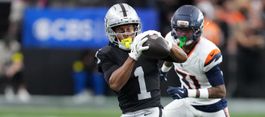
Xavier Worthy (WR – KC)
Worthy is currently going as the WR49 in both ADP and ECR, a number one analyst called flatly wrong. A first-round pick in 2024 with 4.21 speed, Worthy strung together a strong 10-game stretch as a rookie after a teammate’s season-ending knee injury, averaging 5.8 catches, 67.9 receiving yards, and posting six touchdowns over that span, excluding the meaningless season finale when starters sat. That production pace projects to somewhere in the neighborhood of 950 receiving yards and 10 touchdowns over a full 17-game season.
Last year didn’t go to plan. In the season opener, Worthy dislocated his shoulder colliding with a teammate on a crossing route. He missed only a couple of games, but wasn’t the same player upon return, and the team’s coaching staff has acknowledged the injury limited how they could deploy him the rest of the way. The bull case is that his teammate is now the presumed target leader, but has played just 12 games in each of the last two seasons, and Kansas City didn’t add another proven receiving weapon this offseason, leaving real target volume on the table. Worthy’s big-play speed also means he doesn’t need huge target totals to be fantasy relevant.
The skeptical view points to his separation and route win rate numbers, which have been mediocre across his two NFL seasons, and questions what specific role actually gets him consistent targets once accounting for the other established pass catchers already occupying the underneath and deep portions of the route tree. Both takes at least agree the answer may come down to how the new offensive playcaller chooses to deploy him.
Jalen Hurts (QB – PHI)
Hurts disappointed relative to expectations and ADP last season and is currently going as the QB7, around pick 60 overall, a range one analyst views as a buying opportunity. The case leans on Hurts’ track record of proving doubters wrong: he improved as a passer every year in college, faced real skepticism entering his second season as a starter, then broke out, earned a massive contract, and reached multiple Super Bowls, winning MVP in one of them. That all happened under offensive coordinators who haven’t gone on to get head coaching or play-calling opportunities elsewhere, which is viewed as a sign those systems leaned heavily on explosive plays rather than fully developing the offense around him. With new weapons in the receiving room this year and a new play caller, there’s a belief another leap is possible. The comparison drawn is to the relative lack of market skepticism toward another star quarterback also getting a new play caller this year, despite that quarterback finishing last season on one of the worst stretches of his career.
The more measured view is less about aggressively drafting Hurts and more about accepting the discount when it’s there in the moment of a live draft. The clearest path to a bounce back is rushing volume: Hurts topped 600 rushing yards in each of the two seasons before last year, then dropped to 421, and his rushing touchdown total fell to eight after previously reaching double digits. The passing numbers were never expected to be special, since this offense isn’t built around high-volume dropback passing, but more called quarterback runs, including short-yardage sneaks, could push his rushing production and touchdown total back toward his earlier norms.
Mark Andrews (TE – BAL)
Andrews is a name one analyst would only draft after missing out on the top tier of tight ends, and it’s fair to acknowledge his 2025 season looked rough on the surface: 48 catches, 422 yards, five touchdowns, 8.8 yards per catch, 6.0 yards per target, and just 1.23 yards per route run. Context matters here too. Baltimore’s passing offense struggled with its quarterback missing time and not being fully healthy for large stretches, and the receiver room behind the team’s top wideout remains unproven.
The historical signal is strong. Across the starting quarterback’s seven full seasons in Baltimore, the team’s tight ends have ranked first, fifth, first, first, tenth, fourth, and fourth in share of team targets, a remarkably consistent trend toward heavy tight end usage. With the team’s other pass-catching tight end now gone, Andrews is set up to receive the lion’s share of those targets. The team’s other offseason tight end additions include a blocking specialist and a rookie whose college production wasn’t especially exciting, meaning there’s no real competition for touches.
Andrews is currently going around TE14, making him viewed as one of the best punt options at the position: cheap enough to cut early if he’s genuinely declined, but with real mid-range TE1 upside if the opportunity and track record hold. He ran a route on just 62.9% of dropbacks last season, ranking 22nd among tight ends in route share, a number both analysts expect to climb significantly now that the other pass-catching tight end is gone. The deeper efficiency numbers also support that he isn’t finished: among 40 qualifying tight ends last season, Andrews ranked 11th in separation score and sixth in route win rate.
FAQ: 2026 Fantasy Football Bounce-Back Values
Is Terry McLaurin a good value in 2026 fantasy drafts?
Yes. Despite a disrupted 2025 season tied to a contract holdout, McLaurin is currently going as a backend wide receiver two, and there’s no clear internal competition for targets in Washington’s receiver room. He ranked fourth in first downs per route run and 13th in yards per route run last season even with that disruption.
Should you draft Bucky Irving after his disappointing 2025 season?
It’s genuinely split. The bull case points to a shredded offensive line last year masking his talent and a strong receiving profile. The bear case centers on durability concerns, a scheme that may lean into zone-blocking concepts that haven’t suited him as well, and a new backfield addition who could take on an expanded role.
Is Ricky Pearsall worth drafting in 2026?
Yes, based on his efficiency metrics. He graded as a top-24 wide receiver in nearly every meaningful route-running and separation category last season. The hesitation from the market is tied to durability rather than talent.
View the Best Fantasy Football Team Names 
Fantasy Football Draft Rankings
Check out the consensus 2026 fantasy football draft rankings from our experts.

Subscribe: Apple Podcasts | Spotify | SoundCloud | iHeartRadio