The zero running back strategy is implemented with a focus on building an elite roster, outside of the running back position, through the first five rounds. The idea is to wait until at least the sixth round to being drafting running backs, as we often see early running backs get injured or burn fantasy managers when they fail to live up to expectations, while many league winners come from the late round running back group. In doing so, the payoff from this approach comes when managers identify running backs with the upside to perform well above their draft position. With that in mind, let’s look at the best running backs to target when building a zero running back team.
- Fantasy Football Draft Kit
- 2025 Fantasy Football Expert Rankings
- Fantasy Football ADP
- Fantasy Football Trade Tools

Fantasy Draft Targets in Zero RB Strategy
RJ Harvey (RB – DEN)
There’s no doubt that RJ Harvey’s stock rose more than any other running back following the NFL Draft when he was selected in the second round by the Broncos. The second-round draft capital was surprising to some, but in Sean Payton we trust. The Harvey stock took a hit when Denver inked JK Dobbins, making the rookie far more affordable than anticipated. While the backfield projects to be a nearly even split, we are targeting upside with this group, and Harvey checks that box.
On the smaller side at 5’8″ and 205 pounds, Harvey is built like a brick with a strong lower half. That helped him produce .30 missed tackles forced in his final season at UCF, landing him in the 86th percentile among running backs in the draft, along with 3.88 yards after contact, good for the 80th percentile. Forcing missed tackles and yards after contact are metrics that generally project well at the next level, particularly when combined with contact balance, which Harvey has. He was a very productive receiver at UCF but needs some work in pass protection. Although his vision has been questioned at times, he feels like an ideal fit for Payton who loves to target his running backs and mismatch them in space. With Harvey, he seems to offer a relatively safe floor but tons of upside if he clicks with Payton and/or Dobbins suffers another injury.
Isiah Pacheco (RB – KC)
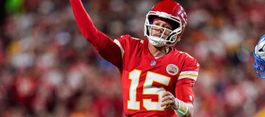
On the surface, it may not seem like Isiah Pacheco has tons of upside, but let’s take another look. In his second season, Pacheco was the RB14 in average PPR points per game and was RB16 in the first two weeks of last season before suffering a broken fibula. Prior to last season, the Chiefs starting running back was being drafted in the second round at RB10. After missing nine games due to injury and playing at less than 100% through the end of the season, Pacheco is being drafted in the sixth round at RB24.
The Chiefs brought back Kareem Hunt, signed Elijah Mitchell, and drafted Brashard Smith in the seventh round of the draft. Overall, that’s a group with minimal investment behind Pacheco. It’s easy to overlook how injured he was last season, but in 2023, Pacheco tallied the 12th most yards created among running backs. He saw the eighth highest opportunity share and the seventh most red zone touches and is likely to approach those marks again this season in a Chiefs offense that is expected to be much improved on last season.
Tyrone Tracy Jr. (RB – NYG)
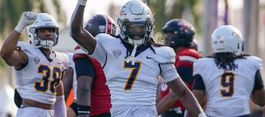
A six-year college career typically spells doom for a running back entering the NFL Draft, but Tyrone Tracy is not a typical running back. After spending four years at Iowa as a wide receiver, Tracy transitioned to running back in his final two seasons at Purdue. Despite being an older prospect, Tracy is still refining his game as a running back but you wouldn’t know that based on his rookie season.
Tracy took over the Giants backfield in Week 5 following an injury to Devin Singletary. In Weeks 5-10, Tracy was the RB10 in fantasy points and was highly efficient with Daniel Jones under center, averaging 5.5 yards per carry. The offense struggled as Tommy DeVito took over at quarterback after the team’s Week 11 bye, leading to diminished results for Tracy, but he continued to look the part of a quality starting running back. His ability to find positive yardage in dire situations while possessing big play ability was as strong as it gets. Tracy recorded a 93.2% rate of avoiding negative yards last season, good for the third-best mark among running backs. He also produced a run of 30 or more yards in 25% of his starts, the fifth-best rate among running backs, per PFF.
Tracy’s ADP this summer reflects a belief that he will be sharing the backfield with fourth round pick Cam Skattebo but reports out of New York suggest Tracy has been the clear RB1 through training camp and preseason. Skattebo’s hamstring injury created further separation and while he appears to be healthy now, his reps were limited during preseason as he worked to get healthy. If Tracy can maintain a stranglehold on the job and dominate touches in an improved offense, he has enough upside to make a zero running back build worthwhile.

Jordan Mason (RB – MIN)
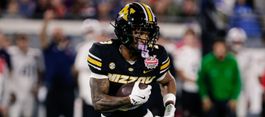
The Vikings new “1B” running back, Jordan Mason, is an ideal zero running back target for his stand-alone value, and potential upside. Prior to an AC joint sprain which limited Mason’s workload, he was the RB8 in Weeks 1-6 as the 49ers primary running back. As a result, Minnesota made him a “massive part of their plan” this offseason, according to Head Coach Kevin O’Connell. Not only did the Vikings give up draft capital for Mason, but they also extended him on a two-year deal worth up to $12 million.
It’s become clear that Aaron Jones is at his best when sharing the backfield with a more physical runner, allowing Mason to soak up many of the early down and goal line carries. There’s value in that alone, particularly as Minnesota looks to complement its young quarterback with a consistent rushing attack, but Jones will turn 31 in December and has played a full season in just three of his eight years in the league. He’s appeared on the injury report 13 times in his career, including a hamstring strain in each of the last two seasons and four separate times in total. I’m not here to predict injuries and Jones will certainly garner a good chunk of the receiving work, but he’s far more valuable to the Vikings late in the season and into the playoffs than he is in the middle of the season. Translation: it makes a whole lot of sense for the Vikings to limit Jones’ workload and turn Mason loose, but in the event of an injury, Mason has league-winning upside.
Among running backs with 50 or more carries last season, Mason’s 5.16 yards per carry was good for sixth best while his 3.35 yards after contact per attempt was 10th best. With an ADP of RB32 and going in the ninth round, Mason is being drafted close to his floor while offering one of the highest ceilings on the board.
Ollie Gordon (RB – MIA)
After being recognized as the top running back in college football with the Doak Walker award in 2023, Ollie Gordon’s production plummeted in 2024, as did his NFL Draft stock. Gordon rushed for 1,732 yards and 21 touchdowns in his sophomore campaign before falling back down to earth in his junior year, tallying just 880 rushing yards and 13 touchdowns. The Dolphins reaped the rewards of his slide, selecting Gordon in the sixth round of the NFL Draft.
At the start of training camp, Gordon would need many things to break his way in order to carve out a role this season in a deep Dolphins backfield. Spoiler alert: things are breaking Gordon’s way as we approach Week 1. Veteran running back Alexander Mattison was placed on season ending injured reserve following a preseason neck injury, opening a path for Gordon as Miami’s RB3. Fast forward a few weeks and Jaylen Wright is doubtful for Week 1 with a leg injury while De’Von Achane is nursing a calf injury. If that wasn’t enough, Gordon toted the rock 26 times in the preseason, tallying 126 rushing yards and a touchdown, adding three receptions for 48 yards. His 4.8 yards per carry are over 3 yards better than Wright’s 1.5, who carried the ball 13 times for 19 yards and one touchdown.
Achane is the definitive starter for the Dolphins, but he’s undersized and consistently banged up while Gordon offers something that the rest of the backfield lacks: size and strength. At 6’1″ and 226 pounds, Gordon is a load to bring down and is surprisingly nimble and patient with an elite jump-cut. He consistently falls forward at the end of runs and has the ability to run through or around defenders. The Dolphins have notoriously struggled in short yardage situations and near the goal line, and I’d expect Gordon to see some early opportunities in those situations, with room for more. Things are breaking his way, and if he starts games for the fish at some point this season, he will offer a massive return on investment.
Dylan Sampson (RB – CLE)
With Quinshon Judkins still unsigned and expected to serve a suspension at some point, Dylan Sampson got the starting nod in the Browns’ final preseason game and is expected to share the workload with Jerome Ford. Sampson, the 2024 SEC Offensive Player of the Year, was drafted in the fourth round, two rounds behind Judkins. Many draft analysts, however, preferred Sampson to Judkins as a prospect and it’s easy to see why.
Sampson is a versatile back who excels at adjusting his speed and tempo, combining a blend of power and quickness. He shows patience and anticipation at the line of scrimmage and offers upside in the passing game. He certainly has the upside of an every down back in the NFL and will have an opportunity to run away with the job before Judkins ever dons a Cleveland Browns uniform. While the Browns’ offense will likely settle in somewhere between nauseating and unsatisfactory, Sampson has the potential to be one of the bright spots and lift the unit. His profile is deserving of a much higher draft slot than RB58 and 204 overall.

Subscribe: YouTube | Spotify | Apple Podcasts | iHeart | Castbox | Amazon Music | Podcast Addict | TuneIn