Joey P, Kelly Kirby, and The Welsh ran a 12-team head-to-head fantasy baseball mock draft with two key twists:
- OBP instead of batting average
- Quality Starts instead of Wins
They also drafted side-by-side (Joey at 1.04, Kelly at 1.05, Welsh at 1.06), which made the snipes feel personal fast.
- Fantasy Baseball Draft Rankings
- Fantasy Baseball Research & Advice
- Fantasy Baseball Average Draft Position (ADP)
- 2026 Fantasy Baseball Draft Kit
Fantasy Baseball Mock Draft
Below is the strategy that mattered most, the picks that shaped each build, and the player archetypes that get a real bump in this format. You can also check out the full mock draft video.
Why OBP Changes the First Few Rounds
OBP doesn’t totally reinvent the wheel, but it rewards a specific kind of hitter: walk-heavy sluggers and patient stars.
Kelly’s point was simple: batting average usually correlates with getting on base, but OBP opens the door wider for hitters who:
- strike out a ton,
- still walk a ton,
- and keep their OBP afloat even when the average dips.
That’s why you saw early love for “bankable OBP” anchors, even when speed/power profiles were similar.
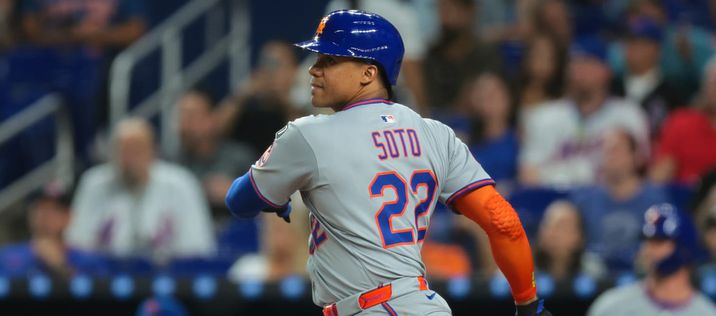
Joey’s first pick at 1.04 was all about format leverage. Soto’s OBP profile is exactly what you want to build around, and the room also acknowledged the bonus: if the steals stick (they referenced 37), Soto’s case as a top-2 player in OBP is very real.
Kelly landing Ramirez at 1.05 was a best-of-both-worlds pick. The OBP isn’t Soto-level, but it’s strong enough, and the 30/30 path always exists. In formats like this, you’re basically buying category insulation.
Welsh took Acuna at 1.06 and leaned into the “health + running” bet. The show’s takeaway: you probably aren’t getting the 70-steal peak again, but a 30-steal season is very much on the table if the legs cooperate. OBP helps too, since he’s not a batting average-dependent star.
Quality Starts: More Useful Than People Think
Switching from Wins to QS doesn’t flip pitching values as dramatically as OBP does for hitters, but it does two things:
- It boosts pitchers who consistently work deep, even on mediocre teams.
- It reduces the “bullpen luck” problem that can wreck Wins.
Welsh framed it well: the guys who struggle to “get wins” due to offense/bullpen can still rack QS if they reliably hit six innings.
Welsh went pitcher early here and called out the key QS trait: innings. He cited a projection for 18 QS and basically treated Brown as a format-specific target.
Woo was the big snipe point. Welsh jumped on him specifically because QS formats love his profile: strong run prevention, good bullpen support, and a path to consistent six-inning outings.
Round 2-5 Themes: Power OBP, Scarcity, and “Safe” Aces
Once the first round OBP anchors were gone, the room split into three lanes:
- OBP power monsters
- scarcity picks (2B especially)
- QS-friendly starters
Welsh’s second-round pick was a perfect OBP format example. Schwarber’s value is loud in this setup because his walks keep his OBP valuable even if he hits .225. Add 40+ homers and it plays.
Kelly’s Kurtz pick was the clearest “OBP changed my board” moment. She basically said she’d normally lean Vlad for average, but in OBP she was happy to swing for a different profile and lineup bet.
Joey grabbed Marte largely because second base thins out quickly. That’s a real-life draft-room lesson: in OBP leagues, you can still lose the position battle even if your overall hitting is strong.
Joey found a comfortable landing spot for Betts in the fourth. The appeal wasn’t complicated: multi-position flexibility plus strong category coverage without having to chase OBP later.
Kelly opening her pitching with Kirby was on-brand and honestly clean process. In QS leagues, stable innings + control plays up, and he’s one of the better “set it and forget it” starters.
Joey’s first pitcher was a bet on strikeouts and starts over fragile upside (he passed Jacob deGrom). In QS leagues, volume still matters, and Peralta fits the “I don’t want to sweat every outing” mindset.

The OBP Targets They Kept Circling
A few names kept popping up as “this guy jumps in OBP.”
Welsh made the case that Perdomo’s breakout OBP skill is real because it’s built on plate discipline (low chase, low whiff, lots of contact). Even if the power/speed settles, the OBP plus lineup spot keeps him fantasy-relevant.
Welsh leaned hard into dominating OBP early and Seager fits the plan. If you’re building an OBP advantage, you want at least one middle infielder who doesn’t drag it down. Seager’s that, plus legit power.
This was the “you’re going to get booed for it” pick, and Welsh did it anyway. In OBP leagues, Trout’s value can look better than his market price because he can still post a strong OBP even when the batting average is ugly. The risk is obvious, but the format does help.
Late-Round Decision Points: Closers and Cheap Saves
With two mandatory RP slots, the room eventually had to address saves, even if nobody wanted to.
- Joey tried to lock one secure closer and “slum” the second slot.
- Welsh waited, then double-tapped what he believed were role-stable options.
- Kelly patched it late with job-based choices, even if ratios weren’t guaranteed.
Joey made this the “one closer I feel good about” selection. In mandatory RP builds, having at least one reliable saves source matters a lot.
Welsh’s closer approach was more speculative, but clear: get pitchers he believes the team trusts, then live with the variance.
Fantasy Baseball Takeaways
- OBP leagues reward patience. Walk-heavy power bats (think Schwarber types) become safer weekly plays than they look in AVG formats.
- Start your build with at least one OBP anchor. Soto/Ramirez/Acuna-style picks let you take controlled risks later.
- Quality Starts elevates innings. Prioritize starters with a real path to six innings, not just “good stuff.”
- Middle infield OBP matters more than ever. Seager/Perdomo types help you win OBP without sacrificing power or speed.
- Don’t leave closers too late if RP is mandatory. It’s fine to be creative, but you still need jobs, not just good relievers.
- Use OBP cushion to take one risk. If you’ve built a category edge, you can afford a Trout-style swing without tanking the build.

Subscribe: YouTube | Spotify | Apple Podcasts | iHeart | Castbox | Amazon Music | Podcast Addict | SoundCloud | TuneIn