When preparing for your fantasy football drafts, knowing which players to target and others to avoid is important. The amount of information available can be overwhelming, so a great way to condense the data and determine players to draft and others to leave for your leaguemates is to use our expert consensus fantasy football rankings compared to fantasy football average draft position (ADP). In this way, you can identify players the experts are willing to reach for at ADP and others they are not drafting until much later than average. Let’s dive into a few running backs to target when deploying Zero RB fantasy football draft strategy.

Fantasy Football Draft Advice: Zero RB Running Backs
Learn more about Zero RB fantasy football draft strategy, and then dive into running backs we love to target when deploying Zero RB fantasy football draft strategy.
What is Zero RB Fantasy Football Draft Strategy?
How does Zero RB strategy work? You don’t avoid running backs during the entire draft, just the first handful of hands. Typically, you wait until the fifth or sixth round to draft your first running back using this strategy.
Instead of targeting running backs early in your draft, you want to load up at other positions. Ideally, you want to secure a stud wide receiver, an elite tight end, and a top-tier quarterback. The point of this strategy is to sacrifice at running back to have a star-studded lineup at other positions.
Learn more about Zero RB Fantasy Football Draft Strategy 
Running Backs to Draft
RJ Harvey (DEN)
Harvey is set to explode in his rookie season. The runway is clear for takeoff. Sean Payton just put second-round capital behind a back that enters a room with Audric Estime, Jaleel McLaughlin, and J.K. Dobbins. No, I’m not worried about Estime or McLaughlin when they couldn’t carve out consistent roles last year with only the ghost of Javonte Williams standing in their way. Dobbins will assist Harvey on early downs so Denver doesn’t run their talented rookie into the ground, but I don’t project him taking away passing down work or high-leverage opportunities. It’s hard not to love a player like Harvey, who has ranked inside the top 20 among FBS running backs in each of the last two seasons in breakaway percentage and elusive rating (per PFF). Add in Payton’s running back usage, and Harvey looks primed to smash. Over the last two years, Payton has ranked fifth and first in running back target share. Harvey is a strong RB2 who could finish as an RB1 this season.
– Derek Brown
Kaleb Johnson (PIT)
Rookie Kaleb Johnson is expected to replace Najee Harris as the Steelers’ primary early-down back. Johnson was a committee back his first two years at Iowa, then broke out with 240-1,537-21 rushing last fall. He’s a powerful downhill runner who’s hard to bring down if you hit him high. It’s easy to envision him being an effective goal-line back in the NFL. A good fit for offensive coordinator Arthur Smith’s zone-running scheme in Pittsburgh, Johnson is a patient runner who reads his blocks well. He doesn’t have great long speed, doesn’t change speeds often or make sharp cuts. Still, Johnson landed in a favorable spot and could make a big impact right away.
– Pat Fitzmaurice
Tony Pollard (TEN)
Pollard had a strong 2024 season as the Titans’ workhorse starter. He ranked ninth in snap share, opportunity, and weighted opportunities. Pollard finished as the RB22 in fantasy points per game while ranking 18th in explosive run rate and sixth in yards after contact per attempt (per Fantasy Points Data). The pitiful nature of the Titans’ offense last year outside of Pollard crushed his season. He was only 22nd in red zone touches and was the RB15 in expected fantasy points per game. If Cam Ward can elevate this offensive ecosystem and Pollard can retain this awesome role, he could finish as a high-end RB2 this season.
– Derek Brown
Isiah Pacheco (KC)
Isiah Pacheco fractured fibula early last season and was back in roughly two and a half months. Upon his return, he wasn’t the same player and was unable to reclaim the lead RB role from Kareem Hunt. But it’s hard to imagine Pacheco was anything close to 100% after coming back from a broken leg in under three months. Pacheco was being drafted in the mid to late second round last year , and now you can get him in the seventh round in most drafts. In a backfield that includes Hunt, Elijah Mitchell and Brashard Smith, I still think Pacheco is the best lead-RB candidate the Chiefs have. Pacheco looks like a draft value.
– Pat Fitzmaurice
Cam Skattebo (NYG)
The Giants added Cam Skattebo to the backfield via the fourth round of the NFL Draft. He should be considered the early favorite to be the team’s workhorse after Tyrone Tracy‘s inconsistent rookie season and the team shelving any thought of Devin Singletary as their leading back. Skattebo was a volume monster during his final season in college and a true three-down back. He ranked 21st in yards after contact per attempt and 11th in elusive rating while also sitting inside the top ten in receiving grade and yards per route run (per PFF). It could take some time for Skattebo to wrestle 60-65% of the snaps away from the other players in this backfield, but it does feel like the eventual reality. Skattebo is a strong RB3/flex who could easily vault into an every-week top 15 running back.
– Derek Brown
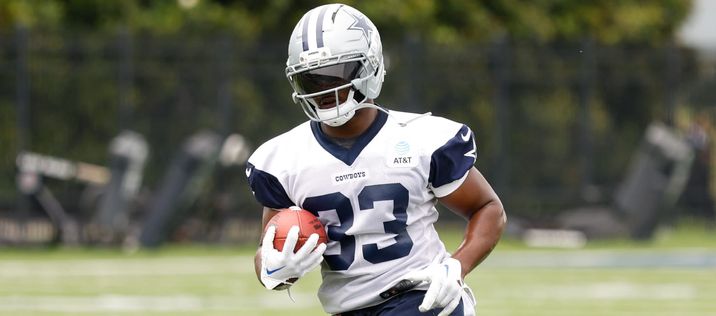
Javonte Williams (DAL)
Last year, it was tough to watch Javonte Williams. The injuries have seemingly robbed him of his special tackle-breaking sauce. The Broncos kept trotting him out there weekly without a better option to take his place. Williams finished as the RB36 in fantasy points per game. He will be in the conversation, if not the favorite, to be the Cowboys’ starting back this season, with only Miles Sanders and Jaydon Blue realistically competing with him for the job. I don’t know if Williams has the juice anymore to hold off those players, but he will be given the opportunity to do so. Last year, Williams ranked outside the top 34 backs in explosive run rate, missed tackles forced per attempt, and yards after contact per attempt (per Fantasy Points Data). Williams makes the most sense with Zero RB builds this season, as he could buy time for a fantasy star to emerge from your bench to take his place in your starting lineup.
– Derek Brown
Jordan Mason (MIN)
When the Vikings traded for Jordan Mason in the offseason, they immediately gave him a two-year deal that includes more than $7 million in guaranteed money, suggesting that they have plans for him. With Christian McCaffrey sidelined at the start of the 2024 season, Mason averaged 107 rushing yards for the 49ers over the first five games of the season (before getting hurt himself), 120 scrimmage yards per game, and 5.1 yards per carry. The Vikings’ running scheme uses a lot of outside zone, which is right up Mason’s alley. Mason could have some stand-alone value this season, and he’d become immensely valuable if anything happened to 30-year-old Vikings RB Aaron Jones.
– Pat Fitzmaurice
Isaac Guerendo (SF)
Guerendo assumes the direct handcuff role for the 49ers in 2025 after Jordan Mason and Elijah Mitchell were jettisoned this offseason. Guerenedo earned this role last year when he was asked to assume the starting job. Guerendo had four games last year where he played at least 55% of the snaps, and he averaged 16.7 touches and 101 total yards. In weekly fantasy scoring in those outings, he finished as the RB10, RB2, RB25, and RB11. Guerendo was also an explosive player on a per-touch basis. Among 70 qualifying backs, he ranked sixth in explosive run rate and seventh in missed tackles forced per attempt (per Fantasy Points Data). Guerendo is arguably the most valuable handcuff in fantasy football because if Christian McCaffrey were to miss any time, we know what we’d be getting weekly, and that’s RB1 production.
– Derek Brown
Subscribe: Apple Podcasts | Spotify | SoundCloud | iHeartRadio