The fantasy football season may be over, but the real edge often gets built in January: identifying uncertain situations before ADP hardens. In this episode of the FantasyPros Football Podcast, Ryan, DBro, and Fitz used Week 18 matchups as a springboard into the offseason—spotlighting player values, landing spots, and depth chart dominoes that will shape 2026 fantasy football drafts.
Below are the biggest questions they raised, and why each one matters for redraft + dynasty fantasy football planning.

Fantasy Football Burning Questions
Let’s dive into 15 burning fantasy football questions for 2026. Check out the full episode below.
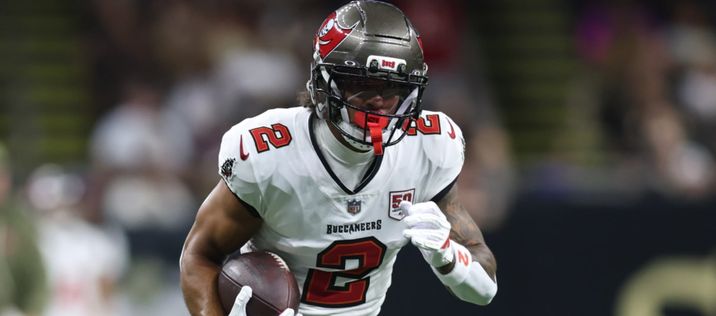
1) What do we do with Emeka Egbuka after the weirdest rookie season ever?
Egbuka’s season split is the story: he was a fantasy WR3 in points per game from Weeks 1-5, then essentially unplayable from Weeks 6-17—falling to roughly WR50 territory as his role and efficiency cratered.
The key hinge: Mike Evans‘s future. Brown basically framed Egbuka’s 2026 range as “WR2 if Evans leaves, murkier WR2/WR3 if Evans stays,” especially with other mouths (and routes) emerging late. Fitz noted Baker Mayfield‘s own efficiency drop as a major driver—suggesting Egbuka’s early-season ceiling still counts, but the floor is now part of the evaluation.
Draft takeaway: Egbuka will be one of the most landing-spot/role-dependent WRs on the board. If Evans stays and the late-season usage trends stick, Egbuka could become a classic “name value vs. weekly usability” trap.
2) Is Travis Hunter actually more volatile than we want to admit?
Hunter’s ranking debate popped up as a proxy for something bigger: is Jacksonville committed to him as an offensive centerpiece long-term, or does he tilt back toward full-time CB? Brown even floated the idea that a humming offense plus secondary needs could push Hunter toward defense in 2026.
Draft takeaway: If the market prices Hunter as a stable offensive weapon and the team doesn’t treat him that way, you’re buying risk at a premium.
3) Will the Seahawks finally untangle the Kenneth Walker III / Zach Charbonnet mess?
Walker is an unrestricted free agent, and both hosts leaned toward Walker leaving (no tag), which would make Charbonnet the lead—but not necessarily a bell cow. Brown expects Seattle to add another back (draft or cheap vet), keeping a split (something like 65/35 or 60/40).
Draft takeaway: Even if Walker leaves, don’t assume Charbonnet becomes a 20-touch workhorse. Seattle can still create a new committee in one weekend.
4) Has Tyler Shough done enough to be the Saints’ QB of the future?
Brown (a Saints fan, but still citing real metrics) argued Shough has earned 2026: strong completion rate, solid passing production, and top-10-ish efficiency markers in the second half—while acknowledging the schedule helped.
Fitz agreed with the practical takeaway: Shough has done enough that New Orleans doesn’t have to pay up for another QB for 2026. More interestingly, Fitz positioned Shough as a potential mid-round QB value archetype—the kind of player who wins leagues when he beats his draft cost.
Draft takeaway: If Shough’s ADP stays modest, he’s the exact profile to target in “wait on QB” builds—especially if the Saints add another weapon and the offense plays faster.
5) Will Shedeur Sanders be the Browns’ Week 1 starter?
Fitz said “true,” mostly because Cleveland’s draft slot/cap situation makes a big QB acquisition tricky—and because the Browns may spend resources on infrastructure instead. Brown agreed with the broad shape of the problem: elite-ish defense, offense lagging, and an O-line needing serious work.
The spiciest note: Fitz also said there’s a nonzero chance Deshaun Watson starts Week 1, depending on health and how the organization behaves.
Draft takeaway: This is a “wait for clarity” offense. If Cleveland goes into camp with a genuine QB competition (or worse, uncertainty), it suppresses pass-catcher ceilings and creates ADP bargains only if you’re comfortable embracing volatility.
6) Who starts for the Colts in Week 1—and is Malik Willis the answer?
Brown planted a flag: Malik Willis to Indy makes too much sense (cap space, mobility, fit with Shane Steichen). Fitz pushed back slightly: the Colts already have a hyper-athletic QB on the roster (Anthony Richardson), and Daniel Jones isn’t even under contract for 2026 yet—so the team may not want to spend again.
Draft takeaway: If Willis actually lands in Indy, he instantly becomes one of the most important “rushing QB vs. ADP” conversations of the summer.
7) Is Trevor Lawrence‘s late-season surge “real”… or just a heater?
Fitz ranked Lawrence around QB12 and pointed out a key driver: rushing TDs (nine!) doing heavy lifting. Brown expects the market to “steam” Lawrence into the QB7-ish range by August once offseason narratives take over (Liam Coen, offensive momentum, weapons, etc.), and he split the difference by ranking him closer to QB9.
Draft takeaway: You’ll be choosing between two bets:
Price-sensitive buyer: Lawrence as a back-end QB1 if ADP stays reasonable
Skeptic of TD volatility: fade if he gets pushed into the elite tier based on unsustainable rushing scores
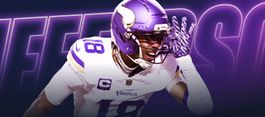
8) Is Justin Jefferson a buy-low… or a red flag?
Both analysts were firmly back in. Brown called 2025 a “one-off down year” and framed this as exactly how you get values—because managers remember being burned by weekly underperformance more than injuries. Fitz said Jefferson’s historical efficiency is too strong to repeat a true collapse and ranked him as an early second-round type.
Draft takeaway: This is a classic “talent + volume wins long term” rebound profile—especially if Minnesota stabilizes QB play (Fitz expects investment in backup QB insurance).
9) Where does George Pickens play in 2026—and what does that do to his ceiling?
Both Brown and Fitz predicted Dallas tags him and runs it back with Dak and CeeDee, and both liked that outcome. Brown even called Dallas “the Bengals of Texas,” basically saying: give us an elite duo and let fantasy cook.
Draft takeaway: If Pickens stays tethered to Dak with a stable role, he’s one of the cleaner “WR1 weeks are coming” bets—just know the weekly volatility won’t disappear.
10) Where does Breece Hall land, and can he still be a difference-maker?
They were strongly out on a Jets return. The favorite fits: Commanders and Texans, with Brown tossing in Arizona as a dark horse (cap space + run-heavy preference + James Conner contract flexibility).
Draft takeaway: Hall’s value could swing wildly based on team context:
On a contender with receiving usage: potential league-winner
On a muddled committee team: frustrating RB1/2 border
11) How high does the Luther Burden hype train go?
Brown has Burden around WR26 but expects him to be drafted much higher—possibly as high as Round 3 in certain formats—driven by Year 2 leap narratives, efficiency stats, and likely changes in Chicago’s WR room. Fitz likes Burden too, but thinks surface stats + competition (Rome Odunze, Colston Loveland, run-heavy tendencies) might cap the rise closer to Round 4.
Draft takeaway: If Burden’s ADP jumps multiple rounds, you’ll need to decide if you’re buying role certainty or projection + narrative.
12) Is R.J. Harvey the Broncos’ clear RB1—or the lead of a committee?
Both agreed: mostly Harvey, but Denver will add another back. Brown’s bullish case centers on pass-game usage and the archetype of Sean Payton backs—Harvey’s receiving profile makes him fantasy-relevant even without 20 carries.
Draft takeaway: Harvey looks like a “PPR-friendly lead back” rather than a pure rushing-volume bet—valuable, but not necessarily a true bell cow.
13) What do we do with Marvin Harrison Jr. now?
Fitz was extremely cautious—ranking him around WR37 and basically saying he won’t draft him at market. Brown was even harsher: he wants a change of scenery, and he’s fading again unless something major changes.
Draft takeaway: MHJ is shaping up as one of the summer’s biggest ADP standoffs. If camp buzz tries to “reset” the narrative, you’ll need real evidence (role, separation, usage) to justify paying up.
14) How do the Chiefs fix the offense: RB, X-receiver, or both?
Both prioritized the same two needs:
- A legitimate RB
- A big-bodied X receiver who can beat man coverage
Fitz said if they can only do one, he’d choose the X receiver—because Kansas City’s current group struggles vs man and lacks a true answer outside of a diminished Kelce.
Draft takeaway: A single offseason move (true X or true RB) could unlock major fantasy rebounds for Mahomes and the entire offense.
15) Will TreVeyon Henderson be a clear RB1 in New England, or more workload headaches?
They’re both ranking Henderson as an RB2-ish piece (mid-RB1/RB2 range). Brown’s key note: the path to true RB1 outcomes is passing-down trust—Rhamondre still handles pass pro/routes. Fitz framed Henderson more like a “Gibbs-style” explosive committee back who can still win leagues on 10-15 high-value touches.
Draft takeaway: Henderson doesn’t need 20 touches to matter—but if his passing-down role grows, his ceiling changes dramatically.

Subscribe: YouTube | Spotify | Apple Podcasts | iHeart | Castbox | Amazon Music | Podcast Addict | TuneIn