Analyzing NFL air yards for fantasy football is a valuable exercise for prognosticating what might be coming for certain receivers. If a wide receiver saw a tremendous number of air yards but fell entirely short on receiving yards and receptions, we could make an assumption that will regress in his favor in future games. Conversely, if a player saw a huge spike in receiving yards but did not see the corresponding air yards, that could mean a tremendous number of yards after the catch, which could always vary from week to week.
Looking at a player’s intended usage and not just the surface-level outcomes is a way to more accurately value players in fantasy football. I hope you will join me every Wednesday during the regular season for our breakdown of the week that was in fantasy football air yards.
- Fantasy Football Waiver Wire Pickups
- Weekly Fantasy Football Expert Rankings
- Fantasy Football Start/Sit Advice
- Fantasy Football Trade Tools

NFL Air Yards Analysis & Fantasy Football Takeaways
Below we have a chart representing air yards and receiving data courtesy of the 4for4 Air Yards App. Air yards is a tool that is now freely accessible everywhere, and you can find the site or format that works best for you.
This list represents the top 50 wide receivers from most to fewest air yards. From CeeDee Lamb‘s 182 air yards all the way down to rookie Travis Hunter‘s 59 air yards. Also included in this list are each player’s targets, receptions, average depth of target (aDOT), target share and share of the team’s air yards.
Showcasing all these pieces of data together provides an opportunity for a quick review of this chart and yields a significant number of takeaways after Week 1. In this weekly piece of analysis, we will dig into the four biggest things that jump out to me from this dataset.
Week 1 Air Yards and Air Yards% Data
Top Takeaways From Week 1 Air Yards Data
Jaxon Smith-Njigba Elite Season Incoming
In the four years I have been analyzing air yards, I am quite confident that I have never seen a player receive 59% of the targets and 90% of a team’s air yards in one game. This is just unbelievable usage from Seahawks wide receiver Jaxon Smith-Njigba, after all of the questions about how he would be used following the departure of DK Metcalf, Tyler Lockett and Noah Fant. Is his target rate and air yards rate likely to remain this high all season? Of course not, but that doesn’t mean he will be any less valuable.
The Seahawks were in a neutral game script and in control of the contest against San Francisco for most of the game. Sam Darnold only threw 23 times for 150 yards. Imagine if Seattle finds itself in games where Darnold has to throw 35 times and he goes over 300 yards. Even if we scale Smith-Njigba back to a 35% target share and 60% of the air yards, he would still likely be over 10 targets and over 100 yards.
This is an elite first step for Smith-Njigba, and I am already regretting that I don’t have him on more fantasy football teams.
Add Elic Ayomanor
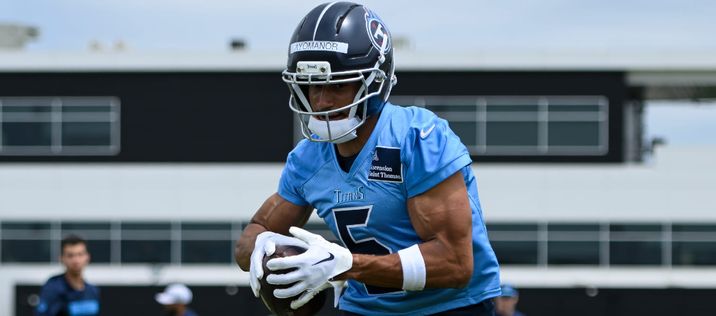
One of the most valuable things about air yards is that it makes it easy to identify who should have had a much bigger week than they did when you pair those air yards up against actual receiving yards. There is no player in the NFL with a bigger discrepancy between expected production and actual production than rookie receiver Elic Ayomanor. Against a very tough Denver defense, Ayomanor managed seven targets and 133 air yards (fifth), but only caught two balls for 13 yards.
Part of this can be attributed to the defense. Part of it is attributable to Cam Ward‘s first-ever NFL start. But it is very encouraging to see a rookie with this kind of usage. A 28% target share and a 28% air yards share are very healthy numbers. His aDOT of 19 yards might need to come down for Ayomanor to be able to catch more of these passes, but better production should be coming.
Brian Thomas Jr. Will Have Better Days
Speaking of better production coming in the weeks ahead, Brian Thomas Jr. really couldn’t catch a break (or a pass) on Sunday. He was in the top 30 in air yards, had a 24% target share and a 40% air yards share, but only managed one pass for 11 yards. This is more of a fluke than anything else, and not an indication of some regression of skills.
In a game that has more offensive flow (don’t forget about the hour-long lightning delay), this Jacksonville offense should be more efficient, and Trevor Lawrence should be more accurate. Thomas was a league-winner in 2024, and the usage is certainly off to a good start in 2025, even if the box score statistics don’t reflect it. Thomas had almost 40 more air yards on fewer targets than teammate Travis Hunter. It seems as though Thomas is going to be the longer-field threat on this offense.
Michael Penix Jr. Needs to Air it Out to Drake London
Drake London cracked the top 20 in wide receiver air yards this last week, but only because of his 15 targets and a 35% target share, and not because of how he was targeted downfield. In fact, London’s aDOT was the second lowest of all 50 of these wide receivers in Week 1 (only Marquise Brown was lower). This is quite a deviation from the way Michael Penix Jr. played last season and how he was using London in the three games they were on the field together at the end of 2024.
Overall in 2024, London’s yards per reception were 12.7, and that number jumps to 16 yards per reception in the three games with Penix. On Sunday, that number was down to just 6.9 yards per reception. This might have been a specific game plan, or it might have been a product of Penix and London taking what the defense was giving them. But if London can combine this elite usage with more downfield throws, we could be talking about a potential top-five season for London when all is said and done.

Subscribe: YouTube | Spotify | Apple Podcasts | iHeart | Castbox | Amazon Music | Podcast Addict | TuneIn