Several of our experts recently completed a fantasy baseball mock draft. You can check out the full draft below on YouTube. We also dive into some of the top picks and strategeis that were discussed during the fantasy baseball mock draft for H2H leagues.
- Fantasy Baseball Draft Rankings
- Fantasy Baseball Research & Advice
- Fantasy Baseball Average Draft Position (ADP)
- Fantasy Baseball Mock Draft Simulator

Fantasy Baseball Mock Draft
The FantasyPros’ crew jumped into a 12-team, 5×5 head-to-head categories mock and it played out the way competitive home leagues usually do: early elites, a couple of “I hate this position” reaches, closers starting a mini-run earlier than expected, and one brutal piece of injury news that hit mid-draft.
A few quick format notes that shaped the room: four OF spots, CI/MI, and two RP slots. That combination puts stress on outfield volume, forces you to make choices at ugly infield positions, and makes it harder to fully punt saves without at least a contingency plan.
Here are the picks and strategies that mattered most, plus what you can steal for your own 2026 H2H builds.
Shohei Ohtani (DH/SP – LAD) and the “split player” conversation
The draft opened the way many 2026 rooms will: Ohtani at 1.01, then Aaron Judge. The hosts even touched the key debate for platforms that split Ohtani into two players. The takeaway is simple: even if you lose the “two-way cheat code,” the bat still belongs in the 1.01 discussion because you’re buying category dominance without having to thread the needle on steals later.
In H2H formats especially, banked production matters. Ohtani and Judge give you weekly stability. It’s not exciting strategy, but it wins matchups in May.
Bobby Witt Jr. (SS – KC) vs. Jose Ramirez (3B – CLE): Upside vs. aging curve
Kelly Kirby went Witt over Ramirez, basically betting on one more leap from a cornerstone who can impact every category. Joe Orrico happily scooped Ramirez right after and framed it the way most sharp drafters do: if you can solve third base early with a 30/30 profile, you stop worrying about an increasingly thin position pool.
This is the first theme of the mock: positional scar tissue drives picks. In a vacuum you might prefer “best player available,” but in real H2H rooms, solving 3B (or 2B) early changes everything about how calmly you draft rounds 6 through 12.
Vladimir Guerrero Jr. (1B – TOR) and the “corner infield gets dark fast” build
Joey P took a very specific swing from the 12 spot: lock up corner infield early with power, then backfill speed later. That’s a viable plan in this format because CI/1B/3B dries up quickly once you get past the early tier. You wind up staring at part-timers, batting-average drains, or “hope he gets eligibility” types.
If you draft from the turn, don’t be afraid to lean into structure. The bigger mistake is leaving rounds 1-4 without a clear path to filling CI.
Jackson Chourio (OF – MIL) as a round-two ceiling pick
Orrico’s round-two Chourio pick was classic H2H logic: chase a player who can change your weekly stolen base math without punting power. The Brewers stack that formed later (including Bryce Turang) wasn’t planned, but it points to something useful.
If you’re going to “accidentally stack,” do it with a lineup that creates runs and gives you everyday volume. Orrico leaned heavily on the idea that Milwaukee bats play, run, and fill categories even when the room is lukewarm about them.
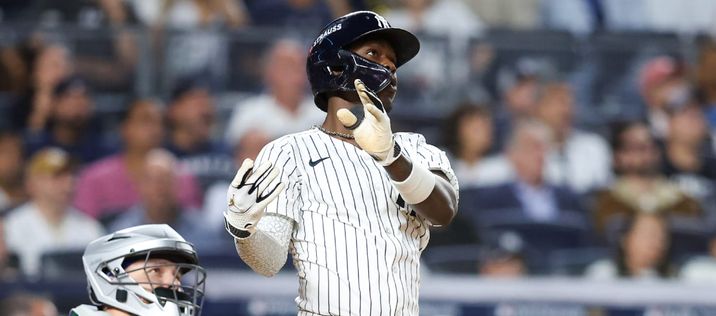
Jazz Chisholm Jr. (2B – NYY) and the two-position escape hatch
Kirby called it “volatile,” and that’s the right word. But her reasoning was sharper than the player take: 2B and 3B can both get gross in 12-team formats with MI/CI. A multi-eligible bat with 30/30 upside is a roster construction tool, not just a stat line.
In H2H, flexibility also helps you stream hitters based on schedule without sacrificing starts at scarce positions.
Cole Ragans (SP – KC) as the “skills over ERA” ace
Orrico planted a flag on Ragans as one of his most drafted pitchers, pointing to underlying indicators that suggested the surface ERA didn’t tell the story. Whether you agree on the exact pitcher or not, the strategy is evergreen:
In H2H, chase strikeout-minus-walk skill and role security. Wins fluctuate week to week. K-BB skill usually doesn’t.
Austin Riley (3B – ATL) as a bounceback bet you can actually price in
Kirby wanted Rafael Devers, missed, and pivoted to Riley as a bounceback. That’s a real-draft moment worth copying: don’t let the room force you into a bad tier just because your preferred name went one pick earlier. Have a “bounceback bucket” ready at positions that thin out.
Also, in H2H, a bounceback bat matters more than a “safe but bland” bat. Weekly ceiling wins matchups.
Brice Turang (2B – MIL): when a reach is really a category plan
Turang sparked a debate: did the power gains hold, and can the speed return? The more actionable takeaway isn’t the player projection. It’s this:
If you wait on 2B in this format, you often wind up buying steals with batting average risk. Turang is the kind of pick that either stabilizes your speed plan or forces you to chase it for 15 rounds. If you draft him, you’re committing to a build.
Ben Rice (C/1B – NYY) and catcher as an advantage, not a chore
Orrico’s Rice pick leaned into eligibility and plate skills, and that’s the way to attack catcher in one-catcher leagues: don’t draft “a catcher,” draft a bat you can live with. If Rice’s workload bounces between catching and 1B/DH, the fantasy win is the same: you got above-replacement offense from a spot where most teams are just trying not to bleed.
Devin Williams (RP – NYM) and the case for buying one closer
One of the more important strategic threads was saves. Joey P talked through the annual “math says you can wait” argument, but the room still showed what happens in practice: once the run starts, you either pay up or you play waiver roulette.
Williams signing with the Mets was used as the classic “locked-in saves plus team context” angle. In H2H, one bankable closer can keep you competitive in saves without forcing you to spend every Sunday night FAABing for the new ninth-inning guy.
Spencer Schwellenbach (SP – ATL) injury news is the best argument for depth
The most “2026 draft season” moment happened in real time: news broke that Schwellenbach would open on the 60-day IL, immediately after he was drafted.
That’s not a dunk on the pick. It’s a reminder that pitching plans should assume failure. If you draft two starters you need to stay healthy, you’re one notification away from streaming chaos.
Marcell Ozuna (DH – PIT) as late power glue
Late in the draft, Ozuna came up as a bounceback power target after he signed with the Pirates. This is the kind of boring-late bat that can stabilize a roster that took early speed gambles or chased upside prospects.
In H2H, replacing 25-30 HR pop on waivers is harder than people admit. These “unsexy” veteran DH types matter.
Fantasy Baseball Mock Draft Takeaways
- Solve scarce positions early (3B, 2B, CI) or you’ll pay with batting average risk and ugly platoons later.
- Multi-eligibility is a strategy, not a bonus. Jazz-type profiles let you draft best bat available later.
- Draft at least one closer you trust in 2-RP formats, or be ready to churn waivers all season.
- Pitching plans should assume injuries. Build depth and upside together, because news can flip a draft instantly.
- Late power glue matters. Veterans like Ozuna can quietly fix HR/RBI deficits without costing early picks.

Subscribe: YouTube | Spotify | Apple Podcasts | iHeart | Castbox | Amazon Music | Podcast Addict | SoundCloud | TuneIn