Winning a fantasy football league starts well before week one. It starts with how you approach the draft itself. Our analysts put together 13 rules they live by on draft day, broken into early-round philosophy, middle-to-late-round strategy, and a set of golden rules that guide everything else.
- 2026 Fantasy Football Expert Rankings
- Fantasy Football Dynasty Rankings
- Fantasy Football Trade Analyzer
- Best Fantasy Football Rankings

13 Expert Tips to Win Your 2026 Fantasy Football Draft: Advanced Roster Construction Strategy
Early Round Strategy (Rounds 1-5)
You Can Leave the Early Rounds With Just Two Running Backs
In a year where running back is the premium, sought-after position for most drafters, one analyst pushes back on the idea that you need to leave the first five rounds with three or more backs. Starting with two wide receivers instead is just as viable a build, with a plan to catch up at running back in rounds three through five, or to pivot to a premium tight end. Specific round targets mentioned include Breece Hall and Javonte Williams in round three, and Cam Akers and David Montgomery in round four, with DeAndre Swift as a round five option. The larger point is to stay flexible to how the board falls rather than locking into a predetermined running back-heavy build.
Wide Receiver Isn’t as Deep as Its Reputation
Wide receiver gets talked about as a bottomless position every year, but the actual target-earning talent thins out earlier than the reputation suggests. Elite target share has to be earned, and even a wide receiver in a favorable spot with an offense that falls apart around him is unlikely to command more than an 18 to 20% target share in the best of circumstances. If you want a true target hog, you have to pay for him early. Analysts also pointed to a broader shift over the last two seasons: wide receiver two production has become far more volatile than it used to be, with those players now more frequently posting elite weekly ceilings alongside disappointing weeks, rather than the steady low-teens output that used to define the position. Get your foundational receivers early rather than assuming you can fully replace that certainty later.
Press Your Positional Advantage Early
Replacement value matters when you’re building a roster. If you start a draft by taking two elite wide receivers, or even one true difference maker at the very top, you’ve built in an advantage over most of your league at that position. That advantage disappears if you then wait until round six to take your second starter there. The recommendation is to be intentional about not letting a positional advantage rot on the vine: if you commit to running back early, don’t leave your third running back all the way until round nine, where waiver-wire-quality options are all that’s left if a starter gets hurt or hits a bye week.
Have a Narrow, Deliberate Tight End Strategy
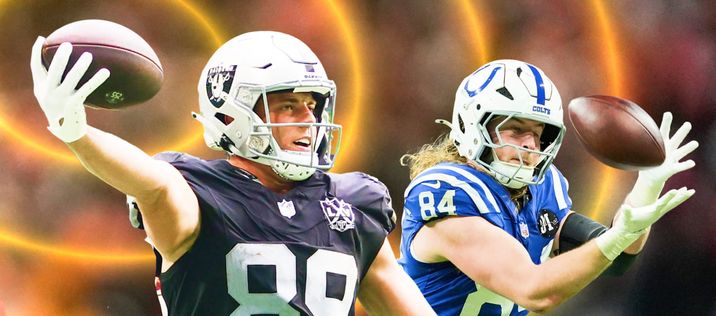
One analyst’s tight end approach this year is intentionally narrow: get Brock Bowers, Colston Loveland, or Tyler Warren if the value is there, or punt the position entirely to the late rounds. That means skipping the middle tier of tight ends, including a rebuilding Tucker Kraft coming off an ACL injury, Kyle Pitts, and Sam LaPorta, in favor of names like Isaiah Likely, Dallas Goedert, Jake Ferguson, Greg Dulcich, Mark Andrews, Chigoziem Okonkwo, and Terrance Ferguson later on. Trey McBride is notably left out of the preferred early tier for one analyst, given how much of his historic season depended on running 160 more routes than any other tight end in a pass-heavy, negative-game-script offense that may not repeat that context this year. The other analyst keeps McBride in his top tier regardless, arguing that even a 20% decline in production would still leave him as a top-three tight end, and prefers to either draft from the true top tier early or wait until the very end of the draft, since the gap between the middle tight end tier and the deep sleepers is often smaller than people assume.
Don’t Be Afraid to Take Your Guy a Round Early
It’s tempting to play the ADP game and wait for a target to fall to your next pick, but with 10 or more picks typically happening between your selections, there’s a real chance that player never makes it back to you. If you’ve identified a player you have real conviction in, especially near the top of a tier you believe in, it’s fine to take him a round earlier than his ADP suggests. Nobody remembers or cares that you reached slightly if the player ends up producing.
Middle to Late Round Strategy (Rounds 6+)
Swing for Upside, Not Floor
In the middle rounds, the goal shifts from finding safe players to finding players who can actually win you your league if their talent and situation come together. Floor is described as something of a fallacy at this stage: a player who quietly beats his ADP by a few spots while still averaging modest weekly points isn’t the difference-maker that wins a championship. Names cited as this type of upside swing include Christian Watson, Bhayshul Tuten, Carnell Tate, and Parker Washington, all players who’ve flashed real talent but haven’t yet strung together a full, consistent season.
Don’t Buy All the Risk
There’s a flip side to chasing upside: don’t pay a premium for a player whose entire value proposition is unproven potential. As the offseason progresses, hype around under-the-radar names compounds through repeated media coverage and analyst groupthink, and a player’s ADP can climb several rounds purely off buzz rather than added certainty. By the time that happens, you’re often paying a price that requires the player to hit his ceiling just to return fair value, which means the only outcomes left on the table are the risk and the downside. The advice is to draft aggressively on players you believe in, but stay aware of when a name has been talked about so much that its price no longer reflects genuine uncertainty.
Target Late-Round Quarterback Value
Quarterback is viewed as unusually deep with upside this year, and one analyst is leaning heavily into a late-round quarterback strategy as a result. Names like Jaxson Dart, Brock Purdy, Bo Nix, Baker Mayfield, Jordan Love, Tyler Shough, and Malik Willis are all going outside the top 90 picks in ADP, and each has either a track record of top-12 quarterback play, real rushing upside, or both. The strategy is to draft two of these later options with the expectation that if even one hits, you’ve captured elite production at a fraction of the draft capital. One analyst also finds it easier to find league-winning upside late at quarterback than at tight end, making it the position he’s more comfortable punting early.
Pay Attention to Other Teams’ Roster Needs
Especially for drafters picking near the turn of each round, tracking what other teams in the draft already have can meaningfully change decision-making. If the picks ahead of you already have a quarterback locked in, you may be able to wait longer on that position and instead address a different roster need. On the flip side, if you know a run at a certain position is likely because several teams behind you are thin there, that’s a signal to secure your target now rather than gamble on him being available later.
When in Doubt, Trust the Quarterback and Play Caller
When you’re torn between two similar players in the middle or late rounds, let the offensive environment be the tiebreaker. Favor the player attached to the better quarterback and the more competent play caller, since that combination raises the odds of consistent scoring opportunities regardless of position. This applies even to running backs who aren’t catching passes from that quarterback, since a good quarterback keeps the offense in more favorable game scripts overall. There’s also no need to worry about being over-invested in a single good offense. Strong, top-five scoring offenses have supported two top-15 wide receivers, or a wide receiver and a tight end both finishing inside the top 20, in the same season more often than people expect, so doubling or tripling up on a great offense is a feature, not a risk, of roster construction.
The Golden Rules
Screw ADP and Get Your Guys
The single rule one analyst has kept at the bottom of his cheat sheet every year: don’t let ADP talk you out of taking a player you believe in. Getting sniped on a target you were planning to take next round, only to watch him break out on someone else’s roster, is one of the most painful outcomes in fantasy football. Nobody looks back at a winning roster and criticizes how many picks early a player was taken.
Draft a Team You Want to Root for All Year
Most fantasy managers only play in a handful of leagues, unlike analysts who might be in 20 at once and can spread their favorite players across multiple rosters. If there’s a player you have genuine conviction in, whether because he’s your favorite player, your favorite team’s player, or just a name you believe the market is wrong about, take him. Passing on a player you believed in because the consensus rankings had him lower, only to watch him break out elsewhere, creates a regret that can hang over an entire season even if your team performs well overall.
Ban Kickers (Stop Wasting Bench Spots on Replacement-Level Players)
This rule is only partly about literal kickers. The bigger idea is to stop using bench spots on players whose ceiling is purely replacement-level value, like a backup quarterback you’ll only ever start in an emergency, or a receiver whose best-case outcome is being a low-end starter. Instead, use those bench spots on players with a real path to a top-20 or top-25 finish at their position if their situation breaks right, even if the more likely outcome is that they get cut in a few weeks. The suggested test: ask whether there’s a credible scenario, an injury ahead of them, a role change, a talent gap closing, where this player becomes a legitimate difference maker. If that scenario doesn’t exist, it’s not worth the roster spot.
A Bonus Note: Don’t Worry About Bye Weeks
As an aside to these 13 core tips, both analysts agreed that bye weeks shouldn’t factor meaningfully into draft decisions at all. Rosters change so much between September and November through injuries, trades, and waiver pickups that optimizing around a static bye-week schedule on draft day rarely pays off. One analyst even shared a season where deliberately stacking several players on the same bye week, and effectively punting that one week, worked out in his favor, though both were careful to frame that as an exception rather than a strategy to copy.
FAQ: 2026 Fantasy Football Draft Strategy
Do you need to draft two or three running backs in the first five rounds of a 2026 fantasy draft?
Not necessarily. Our analysts argue that starting with two wide receivers and catching up on running backs in rounds three through five, or pivoting to a premium tight end, is just as viable a build as a running back-heavy start.
Is wide receiver actually a deep position in 2026 fantasy drafts?
It’s deep in terms of quantity, but true elite target-share earners are still limited. Wide receiver two production has also become more volatile in recent seasons, making it riskier than in the past to wait on securing your top receivers.
Should you prioritize floor or upside in the middle rounds of a fantasy draft?
Upside. A player with a high floor but limited ceiling can’t win you a league on his own, while a player who hits his upside case can be the difference maker that decides a championship.
Is late-round quarterback a good strategy for 2026 fantasy drafts?
Yes, according to our analysts. Quarterback is viewed as unusually deep this year, with several names going outside the top 90 picks who carry real top-12 upside based on rushing production or situational fit.
How much should bye weeks factor into fantasy draft decisions?
Very little, if at all. Rosters typically change enough between September and the fantasy playoffs that optimizing around bye weeks on draft day rarely ends up mattering.
What’s the biggest mistake fantasy managers make with their bench spots?
Filling them with low-ceiling, replacement-level players instead of high-upside names who have a credible path to becoming a top-20 or top-25 option at their position if their situation breaks right.
View the Best Fantasy Football Team Names 
Fantasy Football Draft Rankings
Check out the consensus 2026 fantasy football draft rankings from our experts.

Subscribe: Apple Podcasts | Spotify | SoundCloud | iHeartRadio