Over the last few days, you probably learned something about target share and how to identify those who are due for target regression. While it may not always work out the way history says it will, you don’t want to bet against historic trends. If you missed the wide receiver or running back regression candidates, you can view them at the links below.
We’ll wrap up the series today with the tight end target regression candidates. As stated in the wide receivers and running backs, it could happen due to a variety of factors. Whether it be due to their own talent, the talent getting better around them, a coaching change, or a quarterback change, we’ll take everything into consideration when selecting the players. With that being said, let’s take a look at which tight ends will likely see their targets dip in 2017.
Mock draft vs. experts with our free fantasy football tools 
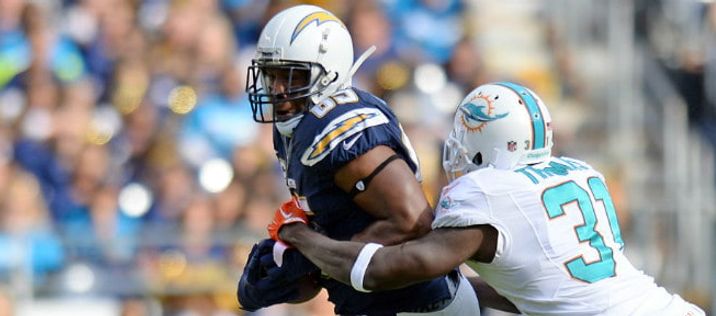
Antonio Gates (LAC – TE) 2016 Targets: 93 (18.7 percent target share)
Had Gates played all 16 games, he would have finished with roughly 106 targets, which would have ranked fifth among tight ends last year. Kind of high for a 36-year-old, right? He’s now 37 years of age and has to compete for targets with Hunter Henry, who showed a lot of promise in his rookie season. On top of that, the offense will get Keenan Allen, Melvin Gordon, and Branden Oliver back from injuries, as well as No. 7 overall pick Mike Williams, provided he doesn’t need season-ending back surgery. Age does matter, as does the talent around you, and Gates has everything going against him to even come close to his target number in 2016. 2017 Prediction: 65 targets
Cameron Brate (TB – TE) 2016 Targets: 81 (14.9 percent target share)
Some have completely written Brate off with the arrival of O.J. Howard, and while that doesn’t seem to be the case (Bucs have said Brate will be involved), Brate is due for a somewhat big decline. The NFL average amount of targets to tight ends is 114.6, and the Bucs were on the low end of that (103) before Howard even arrived. On top of Howard, who has been called the most pro-ready tight end to come out of college in a long time, the Bucs added DeSean Jackson to play opposite Mike Evans, and drafted possession-style receiver Chris Godwin. We don’t even need to get into the pass-catching running backs they have now, as that would just be insult to injury. Even if the tight ends get the same amount of targets as they did last year, and Brate gets half of them, he’s dropping almost 30 targets. 2017 Prediction: 53 targets
Zach Ertz (PHI – TE) 2016 Targets: 106 (19.5 percent target share)
Most seemed to miss the fact that despite missing two full games, Ertz finished with the fifth-most targets at the tight end position. It’s easy to see why, as they lacked any semblance of a threat at the wide receiver position. Even Jordan Matthews put a massive dent in his value, as Ertz totaled much of his success while Matthews was sidelined. Below is his chart in 2016 games with Matthews, as well as those without. After looking at that and knowing about the additions of Alshon Jeffery and Torrey Smith, is there any way you can confidently say that Ertz is worth a top-12 tight end pick? His targets and production are both extremely likely to decline in 2017. 2017 Prediction: 95 targets
| Games | Tgts/gm | Yds/gm | TD/gm | STD Pts | PPR Pts | |
| With Matthews | 12 | 6.3 | 49.8 | 0.1 | 5.48 | 10.18 |
| Without Matthews | 2 | 15.5 | 109.0 | 1.5 | 19.00 | 30.90 |
Kyle Rudolph (MIN – TE) 2016 Targets: 132 (22.5 percent target share)
I wasn’t going to put Rudolph on the list at first, because I didn’t want you to think that just because a player leads the league in targets, it doesn’t automatically mean he’s due for regression. This has more to do with his target share and the sheer volume of the passing game last year. There were just 20 wide receivers with a higher target share than Rudolph last year, a number that’s usually reserved for players like Greg Olsen and Rob Gronkowski. If you take a look at the tight ends at the top of target share report, you can usually understand why, as they don’t have the top tier wide receivers to steal those numbers. In games where Stefon Diggs missed last year, Rudolph totaled 9.7 targets per game compared to the 7.9 targets with him in the lineup. The Vikings have re-worked the offensive line to run the ball, and they reinforced that when they traded up to select Dalvin Cook in the second round of the NFL Draft. They ranked 27th in the NFL last year in rushing attempts, a number that’s sure to go up in 2017, lowering the overall pass attempts. Considering Rudolph should historically be looked at to regress in terms of target share, the lower pass attempts will only lower his bottom line target total. 2017 Prediction: 108 targets
Subscribe: iTunes | Stitcher | SoundCloud | Google Play | TuneIn | RSS
Mike Tagliere is a featured writer at FantasyPros. For more from Mike, check out his archive and follow him @MikeTagliereNFL.