With the calendar shifting over to June, fantasy football managers can celebrate, knowing that there are fewer than 100 days before the start of the 2026 season. Summer months seem to fly by every year. Before you know it, we will be in the heart of draft season.
Many of the major industry league drafts haven’t kicked off yet, but fantasy football rankings and early average draft position (ADP) data have begun to trickle in, allowing us to catch a glimpse of the rankings landscape.
At first glance, there are plenty of players I am equally high on as others — those I feel are in line for a major breakout in 2026, ranked among the top-line producers and bona fide studs. Other players definitely give me pause based upon where they fall amidst our expert consensus rankings (ECR).
- Fantasy Football Research & Advice
- Fantasy Football Expert Rankings
- Fantasy Football Salary Cap Values
- Fantasy Football Trade Analyzer
Fantasy Football Busts to Avoid
Granted, everyone has their own “hot takes” and players they covet. Every manager has their own inherent biases and risk tolerance when it comes to drafting. I’ve been “once bitten, twice shy” with rookies in the past, and am usually more comfortable than others filling out my lineup with veterans in redraft leagues.
I value upside, for sure, but refuse to fully stock my teams with nothing other than “they could be great if these four things fall into place” types of players. Here are a few players I feel are currently overvalued, based on ECR.
Jayden Daniels (QB – WSH) | ECR: QB6 (57 Overall)
Jayden Daniels was a revelation during his rookie season in 2024, finishing as the QB5 in fantasy. We all knew that Daniels was a rushing threat coming out of college, but he demonstrated remarkable poise in the pocket that year, passing for 3,568 yards and 25 touchdowns, in addition to the nearly 900 rushing yards he accumulated.
Sadly, Daniels was unable to replicate that level of success last season or take a step forward during his sophomore campaign, as he was sidelined by elbow, knee and ankle injuries. Even when he was on the field, his yards per attempt (YPA) plummeted from the year prior, as did his completion rate.
Daniels emphasized taking less contact when he scrambled from the pocket (a blessing, to be sure), but his lithe frame could not withstand much contact before breaking down, something analysts were concerned about.
I hate to be the bearer of bad news, but Daniels hasn’t suddenly bulked up to become the next Josh Allen. Those concerns remain, and if Daniels is in the blue medical tent for each game, he isn’t helping his fantasy managers.
Currently ranked as the fantasy QB6, Daniels is ranked way too high. Outside of Terry McLaurin, who else on the Commanders is a proven threat at receiver? Dyami Brown and Van Jefferson have shown flashes in spurts, but are just complementary threats.
Washington selected Antonio Williams from Clemson in the third round of the NFL Draft, but his frame relegates him to being a slot receiver only. Veteran tight end Zach Ertz (who Daniels heavily relied on in the past) suffered a torn ACL in Week 14 last season. Washington is keeping their fingers crossed that Chig Okonkwo (who has never surpassed 570 receiving yards, 60 receptions or three touchdowns in his career) can duplicate Ertz’s success, but I’m highly skeptical.
Call me cynical, but I’d rather pick an option with less bust potential in the second and third tier at quarterback, rather than choosing Daniels sixth off the board at the position.
Veterans like Jalen Hurts or Justin Herbert offer more stability, and others within the same range (notably Caleb Williams and Jaxson Dart) have better supporting casts. I still think that Daniels’ rushing totals balloon his weekly point floor, but it is hard to bank on him being out there for a full season.
Jeremiyah Love (RB – ARI) | ECR: RB13 (29 Overall)
Prior to the draft, I was crossing my fingers that Jeremiyah Love would land anywhere in the top 10 other than Arizona, based upon their already crowded backfield and quarterback carousel. Sadly, I didn’t get my wish.
Now, before I do any sort of a deep dive into Love, I’ll caveat things by saying that I’m a Notre Dame alumnus. I adore Love’s talent and feel that he (alongside Ashton Jeanty) was one of the most talented running backs to come out of college since Saquon Barkley. His last two seasons for the Fighting Irish were otherworldly, and that was in the midst of a timeshare with Jadarian Price (another first-round talent).
Simply put, there are a few things that Love doesn’t excel at. His 6-foot-0, 212-pound frame allows him to run inside and outside the tackles. He possesses breakaway speed in the open field, has good vision to let blocks develop in front of him and has elite hands that make him a threat in the passing game. Love is an offensive weapon that coaching staffs would love to clone and stick all over the field.
With that said.
Even the most optimistic analysts can’t simply dismiss the veteran presence of James Conner (who had consecutive 1,000-yard rushing seasons from 2023-24 before missing last year to injury) and Tyler Allgeier (who was signed to a two-year, $12.25 million contract in early March, and is coming off the best season of his career).
Love is younger and more talented than either option, to be sure, but assuming that he stands to immediately inherit the lion’s share of touches out of the gate is risky. Allgeier and Conner are both more powerfully built players as well, so short-yardage and goal-line work is a major question mark for Love. Head coach Mike LaFleur is expected to operate a run-heavy offense in 2026, but there are ultimately only so many touches to be had each week.
Some analysts will argue that Arizona will “find a way” to have Love on the field as much as possible — his premium draft capital dictates that he find his way into touches, right? Sure, he might run the occasional route as a slot receiver (with Marvin Harrison Jr. and Michael Wilson working on the outside), but short passes will likely be siphoned off to All-Pro tight end Trey McBride instead.
Love could be involved in the designed screen game, but I’m more pessimistic that Arizona will force-feed him pass attempts with so many other weapons on the field. Love is currently ranked as the RB13. If things broke the right way for him in 2026, he has the upside to finish within the top five at the position.
Call me skeptical. Within his own tier, I’d prefer to rely on Josh Jacobs or Kyren Williams instead, who come off the board later.
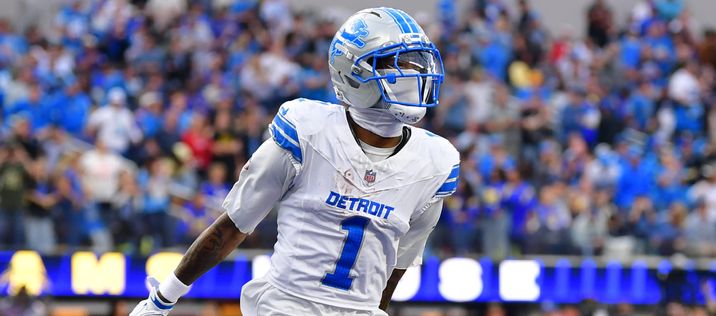
Jameson Williams (WR – DET) | ECR: WR25 (51 Overall)
I’ve always shied away from drafting players like Jameson Williams, the boom-or-bust speedsters that are primarily downfield threats only, rather than more versatile options who can line up at different positions.
Don’t get me wrong, Williams has his place among the elite in best-ball formats, and his value rises in non-PPR formats (though they are less commonly played). I just can’t justify taking him off the board as the WR25.
Proponents of Williams will argue that he is finally starting to blossom into his own, justifying Detroit’s first-round selection in 2022. He is coming off the best finish of his career, with a 65/1,117/7 split, after finally playing a full season for the first time in his career.
However, I still feel like these statistics are a mirage that will lure less-savvy managers into taking Williams as their WR2, rather than sustainable numbers.
Williams’ 2025 season was statistically back-loaded, as he failed to record more than five receptions in eight of the first nine weeks of the season. During that stretch, he had two receptions or fewer five times, with just two touchdown catches prior to the Lions’ bye week.
Following the injury to tight end Sam LaPorta and with head coach Dan Campbell taking over the play-calling duties, Williams was thrust into the limelight, finishing as the WR15 or better in six of the 10 final weeks of the season. When the targets increased, so did Williams’ production — the correlation was easy.
Campbell will cede play-calling duties to new offensive coordinator Drew Petzing, who was the Arizona Cardinals’ offensive coordinator from 2023 to 2025. Remember how those offenses functioned? Expect the tight end to be featured more prevalently than a “go” downfield threat, with Amon-Ra St. Brown still commanding the majority of first-reads.
A healthy LaPorta, coupled with an expected step forward from Isaac TeSlaa and a run-heavy approach, makes it difficult to envision a scenario where Williams comes close to duplicating last season’s success. A middle target share and high volatility have been bearish for Williams.
Harold Fannin Jr. (TE – CLE) | ECR: TE6 (74 Overall)
I’m going to double down on Harold Fannin Jr. as a player I refuse to endorse, after I wrote about avoiding him in late May. I’ve since defended my position to others online, but I wanted to use this as another opportunity to explain why he won’t be a top-10 option at the position in 2026.
First, I’ll admit I’m in the minority on this take. His supporters will point out that Fannin finished as the TE6 during his 2025 rookie season, with a less-than-stellar cast of characters under center throwing him the ball. If he could produce a 72/731/6 split last year without a talented quarterback, why couldn’t he again? And I understand that line of thinking. Truly, I do.
But Deshaun Watson wasn’t the quarterback for Cleveland last season, and he is the clear-cut starter in 2026. Fannin will need to build a brand-new relationship with Watson and start from square one.
Watson’s lucrative contract cements him as the starter if he is breathing and can hold a football, and his tenure with the Browns so far has been less than stellar. If Watson somehow plays poorly enough to be benched in 2026 in favor of either Shedeur Sanders or Dillon Gabriel, he will drag down Fannin with him in the process.
Fannin led all Browns players last year with 107 targets (ahead of even Jerry Jeudy), and I expect a sharp decrease in volume. Cleveland spent a ton of draft capital to bring in wideouts KC Concepcion and Denzel Boston, who will surely be involved out of the gate to help the team move the ball this year.
And that doesn’t even factor in steps forward from Cedric Tillman or Isaiah Bond. Both players performed well in 2025 when targeted.
Oh, and did I mention that Quinshon Judkins will be returning fully healthy, after he missed the final few games of 2025 with an ankle and fibula fracture? Judkins was averaging nearly 20 touches per week during his rookie season and was really coming into his own.
The Browns made it a point to overhaul their offensive line to build a more balanced attack in 2026, and I do expect both Judkins and fellow sophomore Dylan Sampson to be more involved this year.
I don’t want to be Debbie Downer when it comes to Fannin, but all of these variables are just staring me in the face, and I can’t see him replicating a TE6 finish.
Subscribe: YouTube | Spotify | Apple Podcasts | iHeart | Castbox | Amazon Music | Podcast Addict | TuneIn