With the 2026 NFL Draft in the rearview, let’s dive into my updated top 100 superflex dynasty rookie draft rankings and player notes to help you navigate your fantasy football drafts.
- Dynasty Rookie Draft Simulator
- Dynasty Rookie Rankings: Expert Consensus
- Fantasy Football Trade Tools
- DBro’s Dynasty Rookie Draft Primers: QB | RB | WR | TE
Superflex Dynasty Rookie Draft Rankings: Top 100 (Fantasy Football)
Here are my top 100 superflex dynasty rookie draft rankings, starting with picks and player notes for my top 12.
Top 12 Superflex Dynasty Rookie Draft Rankings
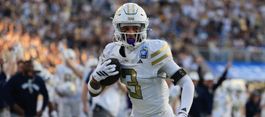
Jeremiyah Love glides across the field. He has instant and easy elite acceleration. Love will monetarily pause after receiving a handoff with some runs before exploding upfield. He has the burst to get away with it. Love also has backbreaking home run speed with the ability to house any carry or screen. Love has an amazing combination of vision, patience, contact balance, and power with his frame. Love has no issues letting blocks set up in front of him before weaving through traffic. With his frame, Love flashes impressive finishing power with runs and interior rushing skill. He won’t be a player that is pulled at the goalline for a bruising power option. He can string together tackle-breaking moves without losing speed with impressive fluidity. Love is a spin move, samurai deploying the move to churn out a few extra yards. He’s made plenty of defenders look silly in the process. His creativity at the second-level can be jaw-dropping with jump cuts, spin moves, and some insane hurdles. Love should be a passing game weapon from Day 1 in the NFL. Since 2024, he has aligned in the slot or out wide with 10.6-16.6% of his snaps. He was tasked with wheels and angle routes in addition to the usual flats and dumpoffs. Love can also align in the slot or on the perimeter. His explosive short-area agility allows him to run routes like a true wide receiver. Love’s pass pro still needs some refinement. He has the play strength and base to be a trusted pass pro option from the jump in the NFL. With many reps, he’ll physically push a defender off course or out of the play path, but he also needs to work on anchoring down or latching onto a defender and driving them into the dirt. His technique will improve with more coaching in the NFL, but he has the skills to become one of the league’s best in this area. Since 2024, he has amassed 118 pass blocking snaps (per PFF), allowing zero sacks or quarterback hits and only four pressures. Dynasty Outlook: Jeremiah Love is headed to Arizona to be their unquestioned bell cow back. Yes, I expect Tyler Allgeier and James Conner to play a role in this backfield. I also wouldn’t rule out a trade for James Conner prior to Week 1. Allgeier could be a thorn in Love’s side in his rookie season, which hurts his absolute ceiling (much like he did in Atlanta), but Love will still lead the way for the Cards’ backfield. Trey Benson hope was extinguished with the selection of Love, though. Don’t overthink this, people. Love remains the CLEAR 1.01 in every rookie draft format and a top-five dynasty back. Arizona will upgrade its quarterback situation at some point. With Love and the other skill players on this roster, that quarterback will be in a good spot to succeed.
Mendoza has an easy, quick release. He has the necessary arm strength to make every throw required in the NFL. His touch and ball placement are strong. He leads his receivers on crossers well and doesn’t limit YAC opportunities while also being able to drop it in the bucket for go routes. He can sling it from multiple arm angles. His pocket presence is excellent. Mendoza doesn’t drift in the pocket. He will climb versus the rush and has no issues standing tall against incoming pressure to deliver the ball to his receivers. While he isn’t an electric athlete, Mendoza is a solid opportunistic scrambler. He can pick up a few yards with his legs when the situation calls for it. Mendoza isn’t an off-script artist, but he can make some plays outside of structure. It’s not a world that he seeks to live in and shouldn’t. There’s something to be said for being a “boring” quarterback that can be trusted to run an offense. He’ll have to adjust to tighter windows in the NFL. It’s not a consistent issue for Mendoza, but he did show some hesitancy pulling the trigger early in 2025 when faced with smaller throwing windows. He would pump and pat the ball at times, but he did improve in this aspect throughout the 2025 season, ripping it more consistently with confidence toward the end of the season. Mendoza didn’t work much under center, which will be a hurdle with his transition to the NFL with footwork, etc. It will help that last year, Klint Kubiak allowed Sam Darnold to work from shotgun on 63.3% of his dropbacks. Don’t be surprised if Kubiak bumps that rate up some for his rookie quarterback in 2026. Dynasty Outlook: After all of the buildup, Fernando Mendoza does land with the Raiders. The talent is real with Mendoza, and he should be at worst the 1.03 in Superflex leagues and a top-ten selection in 1QB formats. With Kirk Cousins in town, it’s up in the air when we see Mendoza under center for Las Vegas. He might get a redshirt season if Cousins can play well in 2026. When Mendoza does hit the field, he should be a mid-range QB2 with QB1 upside if Klint Kubiak can get the Raiders’ offense rolling.
Tate is a fluid mover who looks like he’s gliding down the field at all times. He has easy, effortless acceleration and speed. Tate pulls away from corners on crossing and vertical routes. He has no issues stacking corners. Tate can threaten a defense at all three levels. Tate is a savvy route runner with an in-depth understanding of how to manipulate corners with a variety of pacing variations in his routes, head fakes, and jab steps. He loses little speed when linking these separation tools together. The snap at the top of his stems is crisp and sudden. Tate’s play strength shows up during routes and at the catch point. He has incredible body control to make difficult catches outside of his frame look easy and routine with arrogant hands. He snags the ball away from his body with a litany of sideline catches. Tate finishes college with a 68.8% contested catch rate and a 4% drop rate (including zero drops in his final season). One area that Tate will have to improve upon in the NFL is consistently beating press coverage. He can get hung up at times with physical corners that can get into his body and stall him. It’s not a consistent issue as he has plenty of high-level reps against press where corners flail as they attempt to slow him down, but it’s worth noting. Dynasty Outlook: Carnell Tate lands at the fourth overall pick in the NFL Draft with the Tennessee Titans. He should compete with Wan’Dale Robinson to lead the Titans in targets. Yes, I know Calvin Ridley is still there, but it’s more than fair to question what Ridley has left in the tank at this point. Tate has the upside to be the Titans’ alpha WR1 this season and moving forward. Tate should mesh well with Cam Ward and his propensity to go big play hunting. If Ward is looking to launch it deep, Tate should be on the receiving end of those high-leverage targets. Tate remains my WR1 for this draft class and a top 2-3 pick in every dynasty format. Talent earns targets, and Tate has the talent.
Concepcion has outside/inside versatility. He played in the slot 82.1-92.7% prior to 2025 before transitioning to the perimeter (65.3%) in his final season. Concepcion has the skill set to play either role in the NFL. His speed is immediate and palpable on film (high 4.3/low 4.4 40 speed). Concepcion explodes off the line and can easily stack corners on nine routes. He has good bend in his routes and can change directions without losing speed. Concepcion is a threat at all three levels of a defense. His first step is devastatingly quick, which allows him to earn easy separation on crossers and drag routes. One area that he can improve in his route running is his hip sink and decelerating at the top of his stem. He can be more efficient and sudden at the top of his stem on whip routes and comebacks. He has a varied release package off the line and the upper body strength to handle press. I don’t have any concerns with his ability to separate in the NFL against man and press coverage. Concepcion adds all the little bells and whistles to his routes like jab steps, variations in pacing, head fakes, etc. He sets up corners well and has a strong sense of leverage and route pacing against zone coverage, with the feel of where to sit down in zone. His play strength serves him well during routes and at the catch point. He isn’t knocked off his routes and can play through contact. During his final collegiate season, Concepcion had a 66.7% contested catch rate. He plays bigger than his listed size as a ball winner at the catch point and as a receiver who can make difficult shoestring catches and play above the rim. Concepcion is a YAC threat that can also be utilized in the manufactured touch department and run game. He finished his collegiate career with 431 rushing yards (6.2 yards per carry) while also ranking inside the top 33 in YAC per reception twice in his three collegiate seasons. Drops will be part of the conversation of his eval with a 10.3% drop rate or higher in his final two seasons. I’m not worried about his hands, though. There are far too many occasions in his film where he comes down with an immensely difficult catch, or he secures a pass and immediately is hit and holds onto the ball, that I’m not worried about his hands. Dynasty Outlook: KC Concepcion heads to Cleveland with first-round draft capital in tow. Concepcion has the talent and draft capital attached to his name to be the team’s WR1 from the jump. At this point, we know who Jerry Jeudy is, and that’s an underwhelming volume-dependent ancillary wide receiver. Concepcion’s main competition for leading the team in targets in 2026 is Harold Fannin Jr. Concepcion remains my WR2 of this class and a top-five pick in rookie drafts regardless of format. I’m not worried about the Cleveland quarterback situation. Could that hurt his floor and ceiling in 2026? Sure, but quarterbacks’ situations change quickly in the NFL, and I won’t let that deter me from drafting a talented wide receiver. Bet on talent with your rookie draft picks, especially when hefty draft capital is attached to their names. You’ll be better for it in the long run.
Tyson looks like he’s gliding across the football field. He has effortless and easy acceleration, explosiveness, and fluidity to his movements. His change of direction without losing speed and snap at the top of his stem is fantastic. Tyson has a long medical track record with a horrible knee injury in 2022 (ACL, MCL, PCL), a broken collarbone in 2024, and a hamstring injury in 2025. I’m not concerned about the knee injury as he has since returned to the field and is three years or so past the injury. The collarbone injury is more of a freak thing than something to obsess over. If we want to knock him down because of the hamstring issue, ok, but I’m not. Tyson plays through contact well in his routes, but that type of play strength doesn’t show up consistently in all facets of his game. Tyson isn’t an elite YAC producer or a catch point dominator. He finishes his collegiate career with only 5.1 yards after the catch per reception over the last four years and 13 missed tackles since 2024. Tyson had only a 43.8% contested catch rate in his final collegiate season. He will win the battle for the ball against some corners, but he has to improve his consistency in this area if he wants to hit the top range of his NFL outcomes. Tyson has the raw ability to be the best wide receiver in this class, but he still has areas of growth that have to happen for that to occur. Tyson excels against off coverage with strong spatial awareness against zone. He has an electric first step off the line, which allows him to gain early separation on drag routes and crossers. Tyson can win all day with hitches, ins, and outs. Tyson needs to continue to hone his footwork with releases and at the top of his stem. There’s too much wasted footwork and TikTok qualities at times. His split release is a perfect example of this, as he has the raw athleticism to get away with some inefficient footwork. Tyson also needs to improve his in-route salesmanship with pacing variations, jab steps, etc. He can telegraph his next movements and breaks at times. This is especially evident with the vertical route tree, as he doesn’t consistently stack defenders. Because of his athleticism, he can, however, snap off a nice double move and get back to top speed quickly. Tyson has a big catch radius. He has plenty of diving and sliding catches on his film as he adjusts to low targets and balls outside of his frame. Tyson can also extend for targets above the rim, where he flashes nice late hands. Dynasty Outlook: Jordyn Tyson got the top ten draft capital that was projected late in the process as Tyson heads to New Orleans with the eighth overall pick. Tyson should be the WR2 for New Orleans from the hop. Tyson could be the team’s WR1 if they don’t retain Chris Olave after the 2026 season (UFA in 2027). I’m lower on Tyson than most, but the talent and upside are definitely there. I won’t push back with anyone if they have him as their WR1 or WR2 of this class now, with the landing spot and the draft capital, but I’m willing to bet on Carnell Tate and KC Concepcion over Tyson. Tyson is still a top-five pick in rookie drafts, no matter how you slice it.
Lemon will run the majority of his routes from the slot in the NFL, as he did in college (75.6% slot). His perimeter usage could depend on whether he’s closer to the 2024 or 2025 version of his play. In 2024, Lemon was a more explosive player in all facets (off the line, in route, and after the catch). He wasn’t nearly as twitchy in 2025, which could be related to a preseason injury he sustained or possibly adding some weight prior to the 2025 season. We’ll see what version of Lemon we get in the NFL, but if he’s closer to the 2025 version of himself, he could be a slot-confined receiver. Lemon isn’t a burner regardless of which season you’re discussing. He’s more quick than fast, though. He has the quick-twitch/short-area skills to produce with the ball in his hands after the catch. Lemon displays solid contact balance with the ability to break tackles and churn out yards with the ball. He has good vision in traffic as a runner. Lemon is a zone coverage Ginsu knife. He slices through zone with ease, with a firm understanding of finding space and pacing his routes well. Lemon’s snap at the top of his routes can be good, but not amazing at times, which allows corners to undercut his routes. He has to clean up his technique in this area. Lemon’s raw speed and the limitations in this area, and his route running, could limit him as a perimeter receiver and vertical threat. Lemon doesn’t routinely stack defenders with vertical route concepts as he puts the emphasis upon his ability to win with back shoulder throws and at the catch point. Lemon is strong at the catch point with the ability to high point the ball while flashing late hands. He had a 66.7% contested catch rate in 2025. Lemon isn’t a skyscraper, so despite the fact that he is strong at the catch point, his smaller catch radius could make it tough to live in a world in the NFL where he must dominate at the catch point. His hands are like vice grips, though, with a 2.8% drop rate in college (only four in college across 183 targets). Dynasty Outlook: Makai Lemon is headed to Philly as the team’s replacement for A.J. Brown, who almost assuredly will be moved this summer in a trade. The Eagles selected Lemon with the 20th overall pick in the draft. Lemon should immediately be the team’s starting slot receiver. How much he plays on the boundary in 2026 is up in the air. Last year, Philly was 15th in 11 personnel usage (59.3%). I expect that number to climb this year with a new offensive coordinator and Lemon on the roster. Lemon (at worst) is a top-six selection in every rookie draft and could be viewed as the WR1 to the WR5 of this class. While we can split hairs about who we all want to draft among the first-round wide receivers selected in this class, Lemon shouldn’t fall past the 1.06 in any format. He could have a strong rookie season in Philly, competing for the team lead in targets with DeVonta Smith and Dallas Goedert, but I also wouldn’t be shocked if he is third in that pecking order when it’s all said and done for 2026, with the upside to lead the team in targets in 2027.
Price has easy and immediate acceleration. He doesn’t have a truly elite home run gear, but I won’t be surprised if his runs in the low to mid 4.4s in the 40 with a strong 10-yard split. The strong acceleration makes him appear shot out of a cannon on many runs. He’s a scheme-agnostic runner. Price has the contact balance and lower body strength to handle runs up the A gap while displaying the speed to consistently win the edge with stretch zone plays. Price has an awesome feel for pressing the line and exploding upfield. He can create yards for himself and make defenders look silly when he looks dead to rights with his short-area agility, vision, and decisiveness. Price is an adventure as a pass protector. He has more than a few reps where he was late on blitz pickup. If you’re asking him to redirect incoming rushers or chip a defender, Price looks competent, but tasking him with holding his area of grass and standing up a rusher is more of a tall order. Price has a limited resume as a pass catcher in college with only 18 targets, but when he was asked to catch passes, he displayed soft, dependable hands (zero drops) and looked comfortable doing so. He transitions well from receiver to runner immediately. Dynasty Outlook: Well, it happened. Jadarian Price got first-round draft capital. Did I see that actually happening? Nope, but it did, and it’s wonderful. Price’s NFL projection requires some squint and seeing with a heavy dash of hope, but so did the projection for the back that he is replacing (Kenneth Walker). I expect Price to immediately fill the Walker role in the Seattle offense. Yes, that was disappointing last year, but Price will have the luxury of some extra runway with Zach Charbonnet recovering from a torn ACL. Price has the rushing talent and the faith of the coaching staff and front office (first-round draft capital) to take on more of the backfield work than Walker saw in 2025. Price is a top 6-8 rookie draft pick in Superflex and 1QB formats.
Boston is a prototypical tall, long-striding X receiver. His hips are a tad tight, but he compensates with solid footwork, allowing him to gear down and snap off the top of his stem well. His play strength is evident in his routes and at the catch point. Boston can deal with physical corners. It’s tough to push him off his route, and he has the upper body strength necessary to deal with press flashing, strong hand fighting, club, and rip. Boston’s fluidity above the rim is exquisite. His numbers in 2025 could have been even more robust with better quarterback play. Boston has an enormous catch radius with his combination of velcro hands and body control. He made his quarterback right a ton of times when the throw was wrong. Boston is a ball winner at the catch point with at least a 62.8% contested catch rate over the last two seasons. His hands are sound with 4.5% and 3.1% drop rates in that timeframe. Boston should be a red zone threat in the NFL from Day 1. He has numerous high-end reps near the goal line with fade routes on his 2025 film. Boston doesn’t have elite raw speed, but he’s fast enough to get the job done as a field stretcher with his route running, release package, and quick acceleration, giving him the ability to not only win in the short areas of the field but downfield as well. Boston has a varied release package and a good understanding of route adjustment and leverage. He might struggle to stack corners with elite speed, but he can still win at the catch point and with back shoulder targets. Dynasty Outlook: The Browns pounced on Boston in the second round of the NFL Draft, effectively remaking their wide receiver room with the addition of KC Concepcion in the first round of the NFL Draft. Boston’s skill set complements Concepcion nicely as the X component. The biggest question now becomes how many weapons can the Cleveland starting quarterback (whoever that is) support in 2026? Boston, Concepcion, and Harold Fannin Jr. will all compete for the team lead in targets while Jerry Jeudy slides into a complementary role. I honestly wouldn’t be shocked to see Jeudy traded prior to Week 1, either. Drafting Boston in the late first round of your rookie draft is a wonderful bet on talent that I’ll make every day of the week.
Cooper brings inside/outside versatility to the NFL. He was a full-time slot receiver in his final collegiate season after operating as a perimeter option in the two previous seasons. Cooper could easily operate as a 50/50 perimeter/slot receiver in the NFL. He has good burst off the line and impressive footwork and agility in a phone booth. Cooper is an underrated route runner with a strong release package. He can threaten a defense at all three levels with a nuanced understanding of leverage and route salesmanship with jab steps, pacing variations, etc.. Cooper has a firm understanding of how to attack zone coverage with the ability to drop his hips and deaccelerate quickly. He can be utilized downfield with good ball tracking and the ability to stack corners. Cooper has insane body control. His back of the end zone toe tapper versus Penn State last year will populate collegiate highlight reels for years to come. He has the ability to make a quarterback right when their ball placement is off. His catch radius is huge. Cooper has dependable hands. There are plenty of moments on film where he makes difficult snags or hauls in a reception and then immediately absorbs a big hit and manages to hold onto the ball. Cooper had only five drops in college (4.2% drop rate). Cooper can churn out YAC thanks to his tackle-breaking ability and a strong lower half. He can create odd angles for defenders and slip through the creases. Dynasty Outlook: The Jets were busy in round one of the NFL Draft selecting Omar Cooper Jr. and Kenyon Sadiq to add to their offense. Omar Cooper Jr. should be an option for two wide receiver sets from the start in New York, as Adonai Mitchell could be on the outside looking in. Cooper Jr. has the ability to operate from the slot and play on the perimeter as well. The big question for Cooper Jr. isn’t related to his talent but how many weapons can Geno Smith support in 2026 and who will be the Jets’ starting quarterback in 2027 and moving forward. Cooper finds himself in the late first round mix for dynasty rookie drafts, with the case for selecting him starting at the 1.07.
The big question for Stowers is how much his blocking will hinder him as a full-time player in the NFL. With the NFL moving toward higher usage of 12/13 personnel, is Stowers a player whose receiving ability forces teams to feature him in an every-down role, or will he be capped as a 50-60% route per dropback player? Stowers can function as a passable inline blocking option currently, but his technique has to improve in the NFL. He won’t be a player that an offensive coordinator is expecting to operate as a pulling or lead blocker in the run game, or someone who is holding a pass rusher at bay for 4-5 seconds on a passing play. Stowers plays through contact during routes well and in contested catch situations. He has smooth hips and change-of-direction ability. He has the speed to threaten a defense down the seam while also flashing good ball tracking. Stowers flashes high-end route-running chops at times, but he has to improve his play-to-play consistency in this realm. With some routes, you’ll see the route nuance with jab steps, taking advantage of a defender’s leverage, and sharp footwork at the top of a stem, but he’ll also string together plays where the salesmanship is lacking and inefficient footwork at the top of his stem, where defenders are in his back pocket. Stowers has to continue to improve his release package, hand-fighting, and route running if he’s going to be an option as a mismatch weapon on the perimeter. He can get open against physical zone coverage when dealing with defenders with built-up steam, but corners pressing him at the line can hang him up. He has the athleticism and play strength to improve in this area, but it’s growth that will need to take place in the NFL to actualize his true ceiling. Dynasty Outlook: The Eagles drafted Eli Stowers in the second round of the NFL Draft wth the 54th overall pick. He is the heir apparent to Dallas Goedert, who is back with the team on a one-year deal. Stowers, with this landing spot and strong draft capital, has vaulted to my TE1 in rookie drafts. I’ll look to draft him at the back end of the first round in all formats.
Kenyon Sadiq should be a full-time starter for an NFL team from the jump. Not only does he deliver upside as a receiver, but Sadiq is a difference maker as a blocker. Sadiq can hold his area of grass with a strong anchor and high motor. Sadiq was also utilized as an edge-setting blocker and lead option with the running game for the backs and quarterback-designed runs. Sadiq has fluid hips that allow him to uncover at the top of his stems quickly. He has to improve his route running with the footwork at the top of his stems and his salesmanship during his routes. That isn’t to say that Sadiq is a bad route runner. That’s definitely not the case. He has the raw speed to easily pull away from corners during routes and up the seam. He flashes good ball tracking with downfield seam routes and impressive body control in the air. He has the play strength and above-the-rim skills that play well at the catch point and in the red zone. Sadiq’s catch radius is massive, with the skills to adjust to targets thrown low and behind him. He can operate as a dump-and-run option for an NFL passing attack with the ability to create yards after the catch. Sadiq can break tackles in the open field with strong contact balance and a thick lower half, which is great because he isn’t the twitchiest player with the ball in his hands. Sadiq can snap off a decent whip route, but it won’t blow you out of your shoes. The lack of suddenness in some of his change of direction and route running can improve as he hones his skills as a technician. He has the raw athleticism to improve. Dynasty Outlook: Well, this sucks. This landing spot for Kenyon Sadiq was nightmare fuel. He lands with the Jets, where he could push for the second spot on the target hierarchy, but he’s more likely fighting for scraps as the third or fourth option for the passing attack in 2026. The Jets already have a competent in-line tight end option with their second-round selection last year in Mason Taylor. Sadiq looks like the move piece for this passing attack and easily could see Isaiah Likely type usage where he’s a better weapon for the Jets than an option for us in dynasty and fantasy circles. It’s fair to wonder how many weapons Geno Smith can support in 2026, what the Jets quarterback situation and coaching staff look like in 2027, and what Sadiq’s route and snap shares look like for 2026. This all leaves him as a player whose stock was crushed badly by this landing spot. He’s an option in rookie drafts in the late first round that I’m probably bypassing and looking to trade for during the 2026 season or after it. I don’t see his stock improving in the 2026 season, so he’ll likely be cheaper during the season or after it than he will be during rookie draft season.
Simpson has the arm strength to make every throw required of an NFL quarterback. His ball placement and accuracy are erratic. Simpson will be locked in for a few throws and then sail or dirt an easy checkdown or toss a pass behind a receiver on a crossing route. His accuracy also suffers when he’s on the move. With his accuracy issues on the move and his statue-esque mobility, Simpson isn’t an off-script artist. He’s at his best when he can hit his three or five-step drop and fire the ball to a receiver when the back foot hits the ground. Many of Simpson’s second-level throws are on a line. He’ll need to improve with layering his passes to the second-level. There are some examples of this on film, but it’s not done with nearly enough regularity. Simpson will get stuck in his progressions. He’ll hang on his first read too long, way too often. He’ll miss wide receivers running wide open that are later in the progression. Simpson feels a tick behind on many plays because of his propensity to linger on his first read, but also because he operates as an extreme “see it throw it” quarterback. Receivers will snap off the top of their stem and flash open, and Simpson will then fire the ball in their direction. This won’t do on any level in the NFL with both of these tendencies holding him back. This will become even more pronounced with the speed and spacing of the NFL game. Simpson’s play against pressure is variable. He’ll step up in the pocket with composure at times or hang in the pocket and deliver an accurate ball when absorbing a big hit, but he also has concerning plays. Simpson will get happy feet versus pressure and bail workable pockets or rush his mechanics. He’ll need to become more of a steadying presence versus pressure to make it in the NFL with his lack of off-script artistry. Butter fingers impacted Simpson’s counting stats from his receiver depth chart last season. He dealt with the third-most drops among FBS signal callers (8.9% drop rate, 35th per PFF). Dynasty Outlook: Yes, it’s true. I’m not a big believer in Ty Simpson, but it seems like the Rams are after selecting him with the 13th overall pick in the 2026 NFL Draft. Simpson will be Matthew Stafford‘s understudy for the remainder of Stafford’s career. Sean McVay was very clear in post-draft pressers that this remains Stafford’s team. The Rams have been rumored to be working on an extension with Stafford, so it remains to be seen when we’ll likely see Simpson taking regular-season snaps for the Rams. This is a Michael Penix situation that could take longer to develop with a better quarterback in front of the rookie. If Stafford stays healthy, I doubt we’ll see Simpson play in 2026 or maybe even 2027. If you’re selecting Simpson in rookie drafts, you’re going to have to be patient with him. Even though I’m not a Simpson believer with first-round draft capital attached to his name, he should be a late first-round/early second-round selection in Superflex rookie drafts simply based on draft capital attached to his name. This feels like another Kenny Pickett/Mac Jones/Michael Penix type of situation to figure out for dynasty.
Superflex Dynasty Rookie Draft Rankings: 13-36
You can find player notes for all of these picks at the end of the article, or you can also click through to their player pages for my notes.
- Ted Hurst (WR – TB)
- Chris Brazzell II (WR – CAR)
- Bryce Lance (WR – NO)
- Chris Bell (WR – MIA)
- De’Zhaun Stribling (WR – SF)
- Jonah Coleman (RB – DEN)
- Oscar Delp (TE – NO)
- Eli Raridon (TE – NE)
- Skyler Bell (WR – BUF)
- Kevin Coleman Jr. (WR – MIA)
- Antonio Williams (WR – WAS)
- Elijah Sarratt (WR – BAL)
- Max Klare (TE – LAR)
- Matthew Hibner (TE – BAL)
- Germie Bernard (WR – PIT)
- Ja’Kobi Lane (WR – BAL)
- Malachi Fields (WR – NYG)
- Mike Washington Jr. (RB – LV)
- Emmett Johnson (RB – KC)
- Cole Payton (QB – PHI)
- Kaelon Black (RB – SF)
- Kaytron Allen (RB – WAS)
- Zachariah Branch (WR – ATL)
- Carson Beck (QB – ARI)
Top 100 Superflex Dynasty Rookie Draft Rankings
Check out my full top 100 superflex dynasty rookie draft rankings.

Subscribe: YouTube | Spotify | Apple Podcasts | iHeart | Castbox | Amazon Music | Podcast Addict | TuneIn