The game of fantasy football has evolved over the years. We’ve gone from non-PPR scoring and 1QB leagues being the “default” settings to a wide range of scoring and lineup options. Fantasy leagues have replaced team defenses/special teams for individual defensive players (IDP), kickers for an extra flex spot, and even a second matchup against the median score every week.
However, the biggest change in the game has arguably been the move from 1QB to superflex leagues. Some fantasy leagues still only have one quarterback slot in your lineup. However, more fantasy leagues add a superflex spot to their starting lineups every year. So, how much does that extra starting spot impact your fantasy draft plans? More than you would think.
- Fantasy Football Research & Advice
- Fantasy Football Expert Rankings
- 2026 Fantasy Football Draft Kit
- Fantasy Football Trade Analyzer

Superflex Fantasy Football Drafting Strategy & QB2 Targets
What are Superflex Leagues?
Superflex leagues are like any other fantasy league, except for one exception. Unlike regular flex spots, superflex spots allow you to play a quarterback in that slot. While you do not have to start a quarterback in your superflex spot, you will want to, even if the quarterback isn’t an elite fantasy player.
The quarterback position is extremely valuable in superflex leagues. The QB20 will outscore a typical RB2 or WR2 most weeks. C.J. Stroud was the QB21 last season, averaging 14.9 fantasy points per game. He averaged more fantasy points per game than all but five wide receivers and seven running backs in half-point PPR scoring. While starting Stroud wasn’t the most appealing option, it was the correct move to make for your fantasy team statistically to win each week.
Does Size Matter?
Without a doubt, size matters. Your draft strategy should change in a fantasy league with only eight teams compared to 14 or 16. In a 10-team or smaller league, every team could draft three starting NFL quarterbacks. However, in 12-team or larger leagues, some teams will only have two (or one) starting quarterbacks.
Between injuries and bye weeks, you want to leave your draft with at least three quarterbacks, ideally four. The bigger the league, the more emphasis you should put on drafting quarterbacks early.
Traditionally, fantasy experts recommend waiting till the later rounds to draft a quarterback or stream the position. However, that rule mainly applies in 1QB leagues. If you try that approach in superflex leagues, you won’t be eliminated from the playoffs before Week 1. Yet, it’s far more difficult to build a consistent contender without strong quarterback production.
Different Types of Strategies
The Two-Quarterback Start
In this strategy, you spend your first two picks on quarterbacks. Doing this will guarantee you two excellent starting options and lessen the need for a strong QB3. However, this also comes with downside. If you start your draft going with back-to-back quarterbacks, it will impact the strength of the rest of your roster.
You will not get a top-tier running back or wide receiver, thus putting a ton of pressure on your quarterbacks to perform. If they bust or get injured, your season is over before the playoffs begin.
The best time to use this strategy is when you have an early first-round pick. With a top 2-3 pick, you can secure a superstar like Josh Allen or Lamar Jackson. In the second round, you can still grab a top-15 quarterback. Then you’re quickly back on the clock in the third round and can still land a solid RB1 or WR1 like Chase Brown or Nico Collins.
Two Quarterbacks in the First Four Rounds
This strategy is my favorite to use in superflex drafts. You get your two starting quarterbacks early, but can still add a top-tier running back and pass-catcher to your roster. Ideally, you grab a quarterback or a superstar running back in the first round. If I have a top-five pick, I’m selecting a quarterback. After that, I would draft an elite running back before a quarterback in the first round.
Ideally, you want to use this strategy if you have an early first-round pick. You can grab a top quarterback in the first round and get a top-10 running back in the second round. Then you can draft a star wide receiver or tight end in the third round and your second quarterback in the fourth.
Furthermore, you can adjust this strategy depending on how your league mates draft. You can grab your second quarterback in the third round if there is a run on the position. However, you could wait until the fifth round to draft your QB2 if the rest of your league mates are letting quarterbacks slide. You must be flexible when using this strategy.
Hero Quarterback
Everyone has heard of the Hero-RB strategy. You take a stud in the first round of your draft and then wait until the middle rounds and load up on running backs there. The mindset is to have your plug-and-play RB1 and fill your RB2 slot based on the best matchup/situation each week. You can do similarly with quarterbacks in a superflex league.
While this strategy sounds ideal, it does come with some risks. Your league mates could start a run on quarterbacks, forcing you to break away from this strategy. If you decide to ignore the run, you could end up with a subpar quarterback situation.
Furthermore, your season could be over if your hero quarterback suffers a multiple-week or season-ending injury. You could be left with a quarterback unit of a low-end starter like Sam Darnold and a top backup like Joe Flacco or Mac Jones.
Other Thoughts
You should always know your league’s scoring system before drafting. However, it matters even more in superflex leagues. Four points per passing touchdown and one fantasy point for every 25 passing yards scoring system means you want to target quarterbacks with rushing upside. Two early draft targets are Jayden Daniels and Jalen Hurts.
Even if your league’s scoring system is six points per passing touchdown and one fantasy point for every 20 passing yards, you should still target quarterbacks with rushing upside. However, pocket passers who won’t get drafted in the top 10, like Jared Goff and Matthew Stafford, have more value in this scoring system.
Also, don’t turn your nose up at “ugly” quarterbacks. Yes, Jordan Love and Daniel Jones aren’t the most appealing quarterbacks to roster. However, both averaged over 15.7 fantasy points per game last season. By comparison, Ja’Marr Chase was the WR3 in 2025, averaging 15.7 half-point PPR fantasy points per game. Remember, always play a starting quarterback in your superflex spot if possible.
All 32 starting quarterbacks will get drafted in your superflex leagues. Several of the top backups and rookies will also get picked. In total, you could have up to 42 quarterbacks drafted in your superflex leagues, depending on the league size and the playing experience of your league mates.
Several of the top backup quarterbacks could get picked. Furthermore, any rookie quarterback with a chance to start this year will likely get drafted. So be prepared for little or no options on the waiver wire at the quarterback position, especially early in the season.
The depth at the quarterback position is very thin in superflex leagues. Plan ahead and pick three or four quarterbacks during the draft, or save your free agent acquisition budget (FAAB) or waiver priority for when a starter becomes available on the waiver wire.
Now, that doesn’t mean ignoring the popular running back Week 1 waiver wire target. Instead, avoid using a big chunk of your FAAB or the top waiver priority on a two-week filler at running back or a streaming tight end. Save it for when you need it to secure a quarterback.

QB2 Draft Targets for Superflex Leagues
Everyone loves the quarterbacks at the top of the draft board as their QB1. However, finding the guy to play in your superflex spot each week isn’t as easy. Therefore, let’s look at five quarterbacks with an ADP outside the top 15 that fantasy players should target in their superflex drafts this year.
Jared Goff (DET) | ADP: QB16
No one will call Goff a fantasy football or NFL star quarterback. Yet, the former No. 1 draft pick has always been a solid top-12-ish quarterback since getting traded to Detroit. Last year, the veteran finished as the QB9, averaging 17.5 fantasy points per game despite the Lions having multiple play callers and issues along the offensive line. Furthermore, Goff is the only quarterback to have at least 30 passing touchdowns in each of the past three seasons, including 34 last year, the second-highest total of his career.
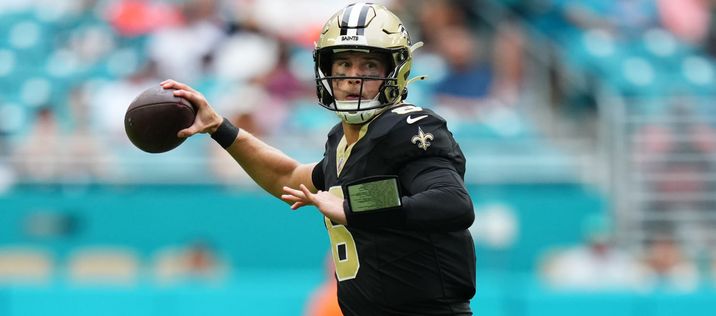
Tyler Shough (NO) | ADP: QB20
Shough was a league winner last year, ranking as the QB4 over the final six weeks, averaging 20.1 fantasy points per game. Furthermore, he had four top-12 weekly finishes during that stretch despite totaling 35 or fewer pass attempts in 66.7% of the contests. More importantly, the Saints made him a massive fantasy winner this offseason. They improved the offensive line by signing David Edwards. New Orleans also added Travis Etienne Jr., Jordyn Tyson and Bryce Lance to go with Chris Olave, giving Shough several options in the passing game.
Malik Willis (MIA) | ADP: QB21
While he has limited NFL experience, starting only six games in four years, Willis could become a fantasy star because of his legs. The veteran struggled in Tennessee. However, he was outstanding in his three starts with the Green Bay Packers, averaging 204 passing yards, a touchdown, seven rushing attempts for 58 yards, one score, and 23.3 fantasy points per game, totaling 25 or more twice. While the Dolphins lack proven pass catchers, expect Willis to be a starting option in superflex leagues because of his rushing abilities.
Daniel Jones (IND) | ADP: QB23
Unfortunately, Jones has bounced around the NFL, with up-and-down fantasy football success, partly because of injury. However, he was outstanding last season before tearing his Achilles. Thankfully, the veteran is expected to start in Week 1 without any limitations. Meanwhile, Jones was playing the best football of his career before getting hurt, ranking as the QB6 over the first eight weeks, averaging 1.6 passing touchdowns and 20.8 fantasy points per game, totaling 22.2 or more in 62.5% of the contests. He could be a massive steal at his QB23 ADP.
Geno Smith (NYJ) | ADP: QB36
Fantasy players will laugh at the thought of drafting Smith after the Las Vegas Raiders’ offense was a disaster last year. Yet, the belief around the league is that the veteran still has something left in the tank. Furthermore, he was productive as the Seattle Seahawks’ starter, averaging 17 fantasy points per game, finishing as a top-13 quarterback twice, including in 2024. The Jets quietly have one of the better offensive lines in the NFL and a talented receiving core. Smith could easily have a top-20 finish in New York.

Subscribe: YouTube | Spotify | Apple Podcasts | iHeart | Castbox | Amazon Music | Podcast Addict | TuneIn
Mike Fanelli is a featured writer at FantasyPros. For more from Mike, check out his archive and follow him @Mike_NFL2.