We are now three weeks removed from the conclusion of the 2026 NFL Draft, and the dust has settled enough that fantasy football managers can begin to parse through average draft position (ADP) data, discerning where their favorite rookies might go in their home leagues.
This year’s crop of offensive talent was considered middling by most analysts, with only a handful of true blue-chip prospects available. The general consensus amongst pundits was that this was a great draft for depth pieces — a third-string receiver or a work-in-progress tight end with athletic traits that might blossom in a few seasons. Bona fide instant-starters were few and far between.
- Fantasy Football Research & Advice
- Fantasy Football Expert Rankings
- Fantasy Football Real-Time ADP
- Fantasy Football Trade Tools
Entering draft season, rookies are constantly placed under a microscope and are often overvalued by managers. The “new shiny toy” effect is contagious — everyone wants to be the person to say that they drafted the next Saquon Barkley or Brock Bowers.
Rookies can make instant splashes in the NFL, but reaching for youth in drafts is typically a fool’s errand (I’m specifically referring to redraft, rather than dynasty leagues here).
Early ADP data has finally been released. You can find the rankings I use for this article here. Several rookies currently appear to be either reaches or bargains based on early returns. Here are my thoughts on a few notable players that stick out.
Fantasy Football Rookies to Target/Fade
Quarterbacks
Fade: Fernando Mendoza (QB – LV) | ADP: QB28
Fernando Mendoza currently sits as the QB28 off the board, sandwiched between Cam Ward and Geno Smith. I understand the skepticism from managers — Las Vegas was dead last in the league with a putrid 245 total yards of offense each week in 2025.
Ashton Jeanty was supposed to come in and ignite this ground game, but the Raiders averaged only 77.5 rushing yards per game — the next-closest team was Arizona at 93.1 each week.
A revamped offensive line will do wonders not only for Jeanty but for Mendoza as well, offering additional support in the passing game, while opening up holes for Jeanty and fellow rookie Mike Washington Jr. The rookie back should be used as the team’s change-of-pace option.
Wideouts Tre Tucker and Jalen Nailor aren’t going to scare off secondaries. Still, Mendoza has shown the ability to elevate the game of those around him, and I get the sneaky suspicion that his play-action acumen will make Tucker and Nailor FLEX options in deeper fantasy formats.
Las Vegas seems content to start the season with Kirk Cousins under center, and then make the switch to Mendoza later. Similar to what the New York Giants did with Russell Wilson and Jaxson Dart.
Since he doesn’t project as a major rushing threat (more of a scrambler when called upon), Mendoza will need to rely upon his arm to carry his fantasy value.
I’m leery of Mendoza being a valuable asset in 2026, but if the Raiders bring in some talent at wideout in 2027 (in what is projected to be an outstanding draft), his arrow will point upwards.
*Note: No other rookie quarterback is projected to make a major impact in 2026, with the next closest ADP option being Taylen Green at QB37. I’m fine passing on the rest for now.
Running Backs
Fade: Jeremiyah Love (RB – ARI) | ADP: RB14
I was crossing my fingers that Jeremiyah Love wouldn’t fall to Arizona, since it was by far the worst situation imaginable from a fantasy standpoint for teams that selected early on. So much for that.
Love enters a committee situation with veterans Tyler Allgeier and James Conner — two proven veterans who specialize in short-yardage and running between the tackles. It’s difficult to envision a scenario (barring injury) where Love usurps both Allgeier and Conner and becomes a true three-down workhorse for the Cardinals in 2026.
This isn’t a knock on his talent; it is simple math. Love can (and should) be used as an offensive weapon all over the field. He is already the best slot receiving option on the team, with Marvin Harrison Jr. and Michael Wilson working outside, and stud tight end Trey McBride working closer to the line of scrimmage.
Their presence also reduces the number of targets Love stands to inherit. So with both running and passing situations capped, what is left for Love?
Fans will go ballistic if Love doesn’t receive enough touches per week to satiate their hunger, especially if Arizona finishes anywhere close to their 3-14 record from last season.
With all that said, Love is currently being drafted as the RB14, ahead of more proven options like Breece Hall, Kyren Williams and Bucky Irving. That is way too rich for my tastes. I’ll pass on him at his draft cost.
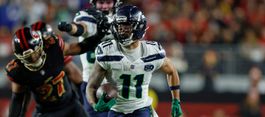
Target: Jadarian Price (RB – SEA) | ADP: RB24
Jadarian Price should immediately inherit a massive amount of touches, following the departure of Kenneth Walker III and Zach Charbonnet recovering from a torn ACL he suffered in the playoffs.
The hope for Seattle is that Charbonnet starts the season on the PUP (physically unable to perform) list and returns midseason. Even that sounds bullish. Price’s body type and running style as a thumper suit well for this offense, and one could easily argue that Price’s game is reminiscent of Charbonnet himself — just a younger and healthier version.
Currently off the board as the RB24, I’m happy to stock the pantry with Price shares for that cost. If others want to view him as a low-end RB2, so be it. However, it would be pure insanity to dismiss someone who is pegged for 15-18 touches per week out of the gate on an offense that has little trouble moving the ball.
Target: Kaytron Allen (RB – WSH) | ADP: RB61
As a Giants fan, watching Washington draft Kaytron Allen was a remote-throwing moment. How he slipped to the sixth round was a little befuddling, but I digress. Allen joins a backfield with Rachaad White and Jacory Croskey-Merritt — he could easily blow past both players on the depth chart by the end of the preseason.
White is the most adept receiver of the three, but neither he nor Croskey-Merritt has the upside or talent of Allen, who surpassed Saquon Barkley as Penn State’s all-time leading rusher.
Allen has incredible patience, allowing his blocks to develop before exploding through holes and constantly falling forward for positive yardage. Though he doesn’t possess elite speed, his vision makes up for a lack of top gear, and his tenacity in fighting through contact is notable.
Allen sits as the RB61 right now, in a similar tier of backup options like Kimani Vidal, Ray Davis and Brian Robinson Jr. I’d happily move him up 15-20 spots without blinking.

Wide Receivers
Target: Carnell Tate (WR – TEN) | ADP: WR24
Tennessee selecting Carnell Tate with the fourth overall pick in the draft was a massive shock to many, myself included. One of the few top-flight wide receivers available, the Titans made it a point to bring in weapons for second-year starter Cam Ward, feeling that was a key ingredient to unlocking his potential entering his sophomore season.
Tate immediately becomes Tennessee’s No. 1 WR, ahead of slot-specialist Wan’Dale Robinson and aging veteran Calvin Ridley. Efficiency is Tate’s top calling card. When you throw him the ball, expect him to catch it, especially in contested situations downfield.
At 6-foot-2 and 192 pounds, Tate has enough size to play either on the perimeter or inside if necessary, and he succeeded against both man coverage and zone as a member of the lethal Ohio State Buckeyes receiving corps.
The Titans’ offense was utterly abysmal in 2025, finishing 30th in scoring and passing yards per game. If they are to take a major step forward, Tate will be the catalyst to do so, along with fellow rookie Nicholas Singleton in the backfield. Tate is currently going off the board as the WR24, just ahead of Ladd McConkey and Mike Evans.
This territory feels just about right, all things considered. I expect new Titans offensive coordinator Brian Daboll to prioritize getting Tate the ball early and often, and turning him into his own version of an A.J. Brown or Terry McLaurin — players that haunted him during his tenure in New York.
Target: Jordyn Tyson (WR – NO) | ADP: WR31
From a pure athletic standpoint, it could be argued that Jordyn Tyson was the top receiver in the 2026 draft class. Still, a litany of injuries during his time at Arizona State capped his final statistics in two of his three college seasons.
Selected eighth overall by New Orleans, the Saints’ ownership has been glowing in their early praise of Tyson, stating that he has been “as advertised” during rookie camp so far. A 6-foot-2, 203-pound perimeter wideout, Tyson is similar to Carnell Tate above in his ability to work all over the field and be successful at every level.
Tyson’s elite ball skills make him a threat to win most contested catches, and he rarely has concentration lapses or drops. He doesn’t possess elite track star speed, but can separate from most defenders off the jump. Tyson will provide quarterback Tyler Shough with a large catch radius downfield.
The Arizona State product immediately inherits the No. 2 WR role opposite Chris Olave and should see moderate volume under new head coach Kellen Moore. Tyson is the WR31 in fantasy football ADP, sandwiched between Makai Lemon and Alec Pierce.
Since Tyson is a threat in all areas of the field, and his only real limitations are staying healthy and the play of Shough, he should flirt with upside WR3 numbers this year.
Fade: KC Concepcion (WR – CLE) | ADP: WR43
This was another case of “love the player, but hate the landing spot.” KC Concepcion sadly went off the board 24th overall to Cleveland, where he will join a crowded wide receiver stable with Jerry Jeudy, fellow rookie Denzel Boston, Cedric Tillman and Isaiah Bond.
Jeudy is penciled in as the team’s alpha option given his prior success in 2024, but I’d emphasize that the name should be written in pencil, not permanent marker. How the depth chart will ultimately shake out is anyone’s best guess, since so much depends on who will actually be throwing passes for the Browns.
Veteran Deshaun Watson is the presumed starter, but he hasn’t thrown a pass since 2024. Even when he was under center, Watson averaged 5.3 yards per attempt (yes, you read that correctly). During his prior two seasons as a Brown, Watson barely moved the needle (6.5 yards per attempt). These are utterly damning numbers for wideouts to work with.
During his time at NC State and Texas A&M, Concepcion was known for his versatility. Think Deebo Samuel-lite — capable of handling backfield touches as well as targets downfield and handling punt returns in a pinch.
Since Cleveland already has a fantastic 1-2 punch at running back with Quinshon Judkins and Dylan Sampson, I’m skeptical that the Browns would offer Conception many touches as a pure runner.
Muddied waters at quarterback and competition for targets have me avoiding Concepcion (and Boston as well). Both are too rich for my tastes, especially Concepcion’s WR43 ADP. He’s going ahead of Jakobi Meyers and Michael Pittman Jr., for example. No thanks.
Tight End
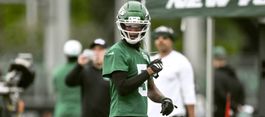
Target: Kenyon Sadiq (TE – NYJ) | ADP: TE18
The undisputed top tight end in this draft class was Kenyon Sadiq, who many pundits (myself included) compared to Vernon Davis. A 6-foot-3, 241-pound athletic freak hailing from the University of Oregon, Sadiq ran an eye-popping 4.40 40-yard dash at the NFL Scouting Combine. He jumped out of the gym, setting new NFL records in the long jump and vertical jump.
Lazy analysis would be to peg him as an oversized receiver — far from it. Sadiq is a former defensive player who is an exceptional blocker and takes pride in his ability to manhandle opponents when given the opportunity.
The landing spot in New York is a curious one, to be sure. Gang Green already has a “move” tight end in Mason Taylor, who played admirably well last year, considering the rotating carousel of ineptitude at quarterback with Justin Fields, Tyrod Taylor and Brady Cook. Veteran Geno Smith will look to have a positive impact on his return to New York in 2026, stabilizing the room until next year’s rookie steps in.
Sadiq’s ability to stretch the seam will provide Smith with a fantastic option on short-to-intermediate routes, and his presence will alleviate some of the defensive attention that wideout Garrett Wilson constantly commanded in the past. The Jets will operate with a run-first mentality, but on play-action passes, Sadiq can truly be deadly downfield.
From a pure upside standpoint, Sadiq has the capability of being a top-10 option out of the jump. At his TE18 ADP, he is the perfect option to select as your backup option alongside someone like Mark Andrews or Travis Kelce. He should ease into the speed of the NFL and learn the playbook before becoming a larger threat in the back half of the season.
*Note: Kenyon Sadiq is the only rookie tight end drafted as a fantasy starting option. The next closest player is Eli Stowers at TE26, followed by Justin Joly at TE36. I don’t anticipate either Stowers or Joly making an impact in 2026, barring injuries to the starters in front of them.

Subscribe: YouTube | Spotify | Apple Podcasts | iHeart | Castbox | Amazon Music | Podcast Addict | TuneIn