There are several strategies fantasy players can use when drafting their redraft teams. Yet, the only bad strategy is to draft without a plan and wing it. While Zero-RB and Hero-RB have become two of the more popular draft strategies, I still love using a Robust-RB strategy, even in PPR leagues.
- 2026 Fantasy Football Expert Rankings
- Fantasy Football Dynasty Rankings
- Fantasy Football Trade Analyzer
- Best Fantasy Football Rankings

Robust-RB Draft Strategy (2026 Fantasy Football)
What is Robust-RB?
When using the Robust-RB draft strategy, fantasy players want to invest early in the running back position. Ideally, fantasy players should have three running backs on their roster within their first four or five picks. Furthermore, fantasy players want to use their top two picks on running backs when using this draft strategy. The prime reason for using their draft strategy is to have plug-and-play guys for the RB1, RB2, and flex spots in your weekly lineup.
This draft strategy enables fantasy players to allocate most of their remaining draft picks and free agent acquisition budget (FAAB) to other positions. Fantasy players want to focus on the wide receiver position during the draft, knowing they can use their FAAB to stream quarterbacks and tight ends off the waiver wire during the season.
Scoring System Breakdown
Non-PPR or standard scoring will heavily favor running backs. Last year, Puka Nacua (15.4) and Jaxon Smith-Njigba (14.2) were the only wide receivers to average more than 12.2 non-PPR fantasy points per game, largely thanks to significant yardage and touchdown success. By comparison, 15 running backs averaged 12.2 or more non-PPR fantasy points per game in 2024, with Jonathan Taylor (18.6), Christian McCaffrey (18.5), Bijan Robinson (17.2), and Jahmyr Gibbs (17.1) all clearing the 17-point mark.
However, how much does half-point vs. full-point PPR scoring impact the top fantasy performers?
Half-Point PPR Scoring
|
Year |
# of RBs to Average 15+ FPPG* |
# of RBs to Average 20+ FPPG* |
# of WRs to Average 15+ FPPG* |
# of WRs to Average 20+ FPPG* |
|
2025 |
7 |
2 |
5 |
0 |
|
2024 |
11 |
1 |
5 |
1 |
|
2023 |
4 |
1 |
5 |
0 |
|
2022 |
7 |
0 |
7 |
0 |
|
2021 |
8 |
2 |
5 |
1 |
|
2020 |
8 |
3 |
4 |
1 |
|
Average |
7.5 per year |
1.5 per year |
5.2 per year |
0.5 per year |
* Minimum eight games played
It’s no surprise that running backs do better in half-point PPR scoring than wide receivers. Last year, seven running backs averaged at least 15 half-point PPR fantasy points per game, the second-highest total over the past four seasons, including nearly double the number from the 2023 season. By comparison, only five wide receivers averaged 15 or more half-point PPR fantasy points per game for the fourth time in the past five years.
While some of these players weren’t picked in the first three or four rounds of fantasy drafts, the majority had a top-24 preseason ADP. More importantly, Ja’Marr Chase is the only wide receiver to average 20 or more half-point PPR fantasy points per game over the past three seasons (2024). The only other wide receiver to average 20 or more half-point PPR fantasy points per game over the past five years was Cooper Kupp during his triple-crown season in 2021.
Full-Point PPR Scoring
|
Year |
# of RBs to Average 15+ FPPG* |
# of RBs to Average 20+ FPPG* |
# of WRs to Average 15+ FPPG* |
# of WRs to Average 20+ FPPG* |
|
2025 |
13 |
5 |
10 |
2 |
|
2024 |
17 |
3 |
17 |
1 |
|
2023 |
14 |
2 |
18 |
5 |
|
2022 |
9 |
2 |
14 |
4 |
|
2021 |
15 |
3 |
18 |
3 |
|
2020 |
13 |
3 |
19 |
3 |
|
Average |
13.5 per year |
3.0 per year |
16.0 per year |
3.0 per year |
* Minimum eight games played
Fantasy players know that PPR scoring benefits wide receivers more than running backs. However, the gap isn’t as significant as many would think, as NFL teams have used their running backs more in the passing game over the past few seasons.
Last year, 13 running backs and only 10 wide receivers averaged 15 or more PPR fantasy points per game. The 13 running backs were on par with the average over the previous three seasons (13.3). Meanwhile, the 10 wide receivers were by far the lowest total over the past six years, down 41.2% from 2024.
After having at least three wide receivers average 20 or more PPR fantasy points per game every season from 2020 through 2023, only three total have hit that mark over the past two years. Puka Nacua (23.4) and Jaxon Smith-Njigba (21.2) went over the 20-point mark in 2025, while Ja’Marr Chase (19.6) and Amon-Ra St. Brown (19.1) were the only other two wide receivers to average over 19 PPR fantasy points per game.
By comparison, Christian McCaffrey (24.5), Bijan Robinson (21.8), Jahmyr Gibbs (21.6), Jonathan Taylor (21.3), and De’Von Achane (20.2) all had over 20 PPR fantasy points per game last season. The reason why the elite running backs have become more valuable than the elite wide receivers in PPR scoring is because of their increased role in the passing game. The five running backs who averaged over 20 PPR fantasy points per game in 2025 averaged 74.2 receptions for the year, with Taylor being the only one totaling fewer than 67 (46).
What Type of RBs to Target?
The Robust-RB strategy calls for fantasy players to invest early and aggressively in the running back position, regardless of the scoring system. However, fantasy players want to draft certain running backs at every point in their draft. Let’s look at which type of running backs fantasy players want to target.
Safe Superstars in Round 1
Taking a running back with your first-round pick is a must when using the Robust-RB strategy. However, picking the wrong running back can ruin your season. Fantasy players want to target a running back with a safe floor in the first round, even if it means giving up some upside. Your team is in trouble if your first-round pick busts, no matter the draft strategy used. Yet, it can be a death sentence if your top running back flops when using the Robust-RB strategy.
Therefore, fantasy players want to draft Bijan Robinson and Jahmyr Gibbs over Christian McCaffrey if they have an early pick. While McCaffrey was far and away the top running back in fantasy football last year, he’s 30, is coming off a 450-touch season (including the playoffs), and has significant injury risk.
Similarly, fantasy players should draft James Cook over De’Von Achane and Aston Jeanty if they have a late pick in the first round. Achane and Jeanty play on questionable fantasy offenses with average at best offensive lines. By comparison, Cook has finished as a top-12 running back in PPR scoring for three consecutive seasons, including back-to-back top-eight finishes.
Proven Star Options in Round 2
If a first-round-caliber running back slides into the second round of your draft, fantasy players can weigh the risk of taking someone like De’Von Achane or Ashton Jeanty. However, they are unlikely to slide out of the top 15 picks, leaving fantasy players to focus on the next tier of running backs. These running backs don’t have the same upside as the top tier of options, but do have a featured workload with little competition for touches and a proven track record.
While they lack the elite-name appeal, these running backs have top-10 value because of their featured workload. Chase Brown and Derrick Henry are excellent second-round ADP running back targets when using a Robust-RB strategy. Both AFC North running backs have been consistent producers for fantasy players over the past couple of years. While they lack the upside of Omarion Hampton and Jeremiyah Love, Brown and Henry have less injury concern and more proven success.
Featured Guys with Limited Upside in Rounds 3/4
Fantasy players have some options when using the Robust-RB strategy after their first two picks. They can either select a third running back in the third round or their first wide receiver. Ideally, a wide receiver with top-five upside slips into the third round like Drake London and Nico Collins. Landing one of these two wide receivers with two stud running backs while using the Robust-RB draft strategy would be an excellent start to your fantasy draft.
Fantasy players should jump at the opportunity to draft a running back from the previous group mentioned if he slides to the third round. However, the third and fourth rounds are where the ADP has featured running backs on limited offenses.
Guys like Breece Hall, Cam Skattebo, Quinshon Judkins, and David Montgomery will come off the board in this range, with the latter three more likely fourth-round picks than third-round selections. Yet, all four running backs have lead roles with limited threats behind them on the depth chart. While their team’s offense limits their upside, these running backs have a secured starting role and will see meaningful touches.
Where to Sacrifice?
Every fantasy football draft strategy comes with drawbacks and negatives. Most of all is knowing where to sacrifice on your roster. Fantasy players who love drafting a superstar quarterback or tight end with one of their top three picks won’t want to use the Robust-RB strategy. Using this strategy requires fantasy players to focus on running backs and wide receivers early in their drafts.
The good news is that fantasy players should have no trouble finding appealing draft values at the quarterback and tight end in the double-digit rounds. Furthermore, streaming quarterbacks and tight ends off the waiver wire is easy enough in standard-size leagues. More importantly, fantasy players with an influx of talent at running back and wide receiver are in an excellent position to pull off a trade for a quarterback or tight end during the season.
Late-Round Quarterback & Tight End Targets
Fantasy players know that the quarterbacks and tight ends are streamable in most leagues because the positions are deep. Last year, Matthew Stafford finished as the QB3 but had an ADP of QB23. Similarly, Drake Maye and Trevor Lawrence finished as top-four guys but had an ADP outside the top 15 quarterbacks. Meanwhile, Kyle Pitts and Harold Fannin Jr. finished as top-six tight ends last season despite playing on subpar offenses. Yet, both players had an ADP outside the top-14 tight ends.
Therefore, let’s take a quick look at two quarterbacks and two tight ends outside the top-15 in the FantasyPros PPR ADP that fantasy players can target late in their drafts when using the Robust-RB strategy.
Tyler Shough (NO) – QB17
The second-year pro was a league winner last season, ranking as the QB4 over the final six weeks, averaging 20.1 fantasy points per game. More importantly, the Saints made Shough one of the biggest winners this offseason. They improved the offensive line by signing David Edwards. New Orleans also added Travis Etienne Jr., Jordyn Tyson, and Bryce Lance to go with Chris Olave and Juwan Johnson, giving him several options in the passing game.
Daniel Jones (IND) – QB25
Unfortunately, Jones tore his Achilles last season in the middle of a career year. He was a starting option before the injuries started to hit, averaging 1.6 passing touchdowns and 20.8 fantasy points per game over the first eight weeks. While the Colts traded away Michael Pittman Jr., they held onto Jones’ favorite two targets. The veteran won’t be a fantasy star, but he can be a serviceable streaming option for fantasy players if healthy.
Chig Okonkwo (WAS) – TE19
Okonkwo is an excellent sleeper candidate, as he is in line to finish second on the Commanders in targets. Last year, the veteran set career-highs in several categories despite playing on an awful Tennessee Titans offense. Furthermore, he thrived late in the season as Cam Ward developed, averaging 12.7 PPR fantasy points per game during the fantasy playoffs. Unless Antonio Williams is this year’s Amon-Ra St. Brown, Okonkwo should have his first career top-12 finish.
Dalton Schultz (HOU) – TE23
While Schultz isn’t a popular draft target, the veteran is one of the most consistent tight ends every year. He finished last season as the TE10, averaging 10.5 PPR fantasy points per game. It was the third time in the past four years that Schultz finished as a top-12 tight end. If neither Jayden Higgins nor Jaylin Noel has a sophomore-year breakout, Schultz will likely be the No. 2 target in the passing game behind Nico Collins.
Mid-Round Robust-RB Draft Targets
This might surprise fantasy players, but you can’t simply use your top three picks on running backs and call it a day. Ideally, a third of your roster or more should consist of running backs. While fantasy players need to spend most of their mid-round picks loading up on wide receivers, you must circle back to the running back position at some point.
Rico Dowdle, Kyle Monangai, Kenneth Gainwell, and Blake Corum are all appealing mid-round running back targets, especially when using a Robust-RB strategy. They are all part of a split backfield. However, they are an injury away from a featured role on a fantasy-appealing offense. Even without an injury to their backfield mate, these running backs have flex appeal even if everyone stays healthy.
Late-Round Robust-RB Draft Targets
After drafting four, fantasy players can wait until the last few rounds to add a fifth or even sixth running back. Ideally, fantasy players want to fill the rest of their roster needs, except D/ST and kicker, before adding one or two late-round dart-throw-type running backs.
Let’s look at four of my favorite late-round running back draft targets with an ADP outside the top-140 picks when using the Robust-RB strategy.
Tyler Allgeier (ARI): ADP 147.5 | RB45
Despite splitting the backfield work with Bijan Robinson last season, Allgeier finished as the RB39, averaging 7.2 PPR fantasy points per game. The veteran was the Atlanta Falcons’ go-to guy at the goal line, totaling eight rushing touchdowns, the 12th-most among running backs, despite having only 143 rushing attempts. While Jeremiyah Love is the Cardinals’ featured running back, Allgeier should have a role, especially near the goal line. Furthermore, he is an injury to Love away from having top-10 upside every week.
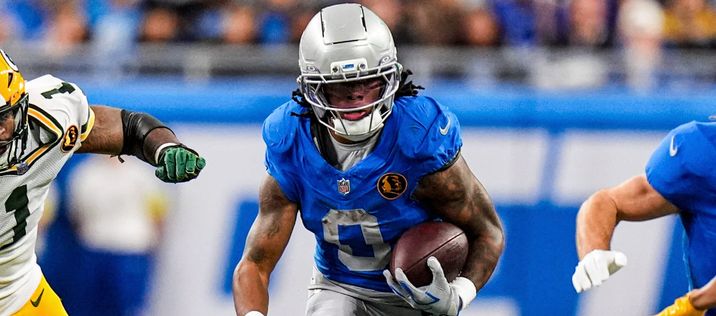
Isiah Pacheco (DET): ADP 151.5 | RB46
After a breakout sophomore year in 2023, Pacheco has had limited fantasy value. He has played in only 20 out of 34 regular-season games over the past two years because of injuries. Furthermore, Pacheco’s efficiency dropped, averaging 3.8 yards per rushing attempt over the past two seasons. However, he joined the Lions this offseason as the team’s David Montgomery replacement. The veteran had at least eight rushing touchdowns every year in Detroit despite playing alongside Jammy Gibbs. Pacheco could have similar success.
Emmett Johnson (KC): ADP 16.5 | RB52
Kansas City signed Kenneth Walker to a massive contract in free agency. Unfortunately, the star running back has missed time in nearly every year of his career because of injury, as he struggles to hold up under a featured workload. Therefore, Johnson will likely take some work off Walker’s plate to keep the star running back healthy. The rookie could have flex appeal with Walker healthy and top-20 upside if the veteran misses meaningful time with an injury, which is likely.
Kaytron Allen (WAS): ADP 184.5 | RB56
The Commanders have arguably the messiest backfield in the NFL. Jacory Croskey-Merritt played well at the end of last season but was a bust for most of the year. Meanwhile, the team added Rachaad White and Jerome Ford in free agency. Both veterans have had some positive moments, but aren’t ideal starting options. Despite being a sixth-round rookie, Allen had an outstanding college career at Penn State. The rookie has a real chance to be Washington’s starting running back early in the season.

Subscribe: Apple Podcasts | Spotify | Google Podcasts | SoundCloud | iHeartRadio
Mike Fanelli is a featured writer at FantasyPros. For more from Mike, check out his archive and follow him @Mike_NFL2.