How many times have you said, “That’s it! I’m never again drafting this guy!” with a few F-bombs thrown in there? For me, at least two or three dozen times. However, how many times have you changed your mind and drafted that player the following year?
Some players, once they burn you, you want nothing to do with them ever again. Yet, there are other players who you want to draft the following year despite a poor performance the previous season.
For example, if you refused to draft Joe Mixon after his injury-plagued 2020 season, you missed out on his top-five finish in 2021. Similarly, if you gave up on Deebo Samuel after back-to-back years outside the top-30 PPR wide receivers, you missed out on his top-three finish last year.
While it is hard sometimes, it’s in your best interest to forgive. So, here are seven players who had a lackluster 2021 season but deserve a second chance in 2022.

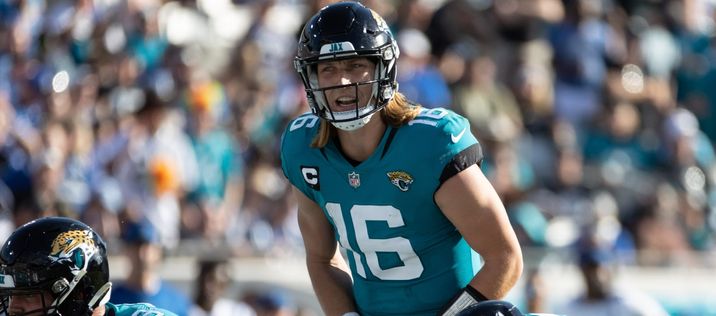
2021 Finish: QB23 | 2022 ADP: 152.1 (QB18)
After the impressive rookie year Justin Herbert had in 2020, many expected Lawrence to walk into the NFL and become a fantasy star. However, the former Clemson star struggled as a rookie, averaging only 11.7 fantasy points per game. He had only 12 passing touchdowns while leading the league in interceptions with 17. More importantly, Lawrence had only two games with over one passing touchdown last year.
While his rookie numbers were awful, fantasy players shouldn’t give up on him. The Jaguars added several new pieces on offense this offseason. Christian Kirk, Zay Jones and Evan Engram are far from an all-star squad. However, they are a massive upgrade over Laquon Treadwell, Jamal Agnew and James O’Shaughnessy. Furthermore, the Jaguars added former pro bowler Brandon Scherff to their offensive line. With Doug Pederson on the sidelines, Lawrence will take a massive step forward in his second year. A top-12 finish for Lawrence is not out of the question.
Christian McCaffrey (RB – CAR)
2021 Finish: RB38 | 2022 ADP: 2.6 (RB2)
The game of fantasy football has come a long way over the past several years. Unfortunately, we still haven’t found a way to turn off injuries like you can in the Madden video game. If we could get rid of them, McCaffrey might be on his way to becoming the best fantasy running back ever.
After playing in every game his first three years in the NFL, McCaffrey has missed 23 of the 33 games over the past two years (70%) because of injuries. It is frustrating to consistently see your No. 1 draft pick on the injury report. However, there is good news to take away from McCaffrey’s recent injury problems.
He has dealt with various issues. McCaffrey has missed time because of ankle sprains, a hamstring strain, a should joint sprain and a thigh strain. While that is far from ideal, fantasy players can feel good that McCaffrey hasn’t missed time because of a recurring back or knee issue.
After averaging 24.1 fantasy points per game in 2018 and 29.4 fantasy points per game in 2019, McCaffrey has averaged 21.8 fantasy points per game over the past 10 contests. However, removing the two games where he played under 40 percent of the snaps, McCaffrey has averaged 26.1 fantasy points per game over the past two years. His injuries have been a string of bad luck. If he stays healthy, McCaffrey will end the year as the RB1.
2021 Finish: RB62 | 2022 ADP: 122.8 (RB42)
Heading into last season, all the reports out of Tampa Bay were the Buccaneers preferred Jones over Leonard Fournette. Instead, Jones played only 19.2% of the snaps last season and didn’t get a chance to produce for fantasy teams until Fournette suffered an injury. Jones scored 16.1 PPR fantasy points and 0.73 fantasy points per touch in the one healthy game he played without Fournette last year.
More importantly, Jones was a productive fantasy running back in 2020 despite playing only 46.7% of the snaps. He averaged 5.1 yards per rushing attempt, 13.3 fantasy points per game and had a 3.6% touchdown rate that year, while his 192 rushing attempts were the 13th most in the NFL.
Despite missing two games that year, Jones was the RB20, averaging 13.3 PPR fantasy points per game. Now, as a member of the Chiefs, Jones could return to fantasy relevance given the status of the backfield.
Clyde Edwards-Helaire has struggled to stay healthy, missing 30.3% of the games in his career. He has averaged under 4.5 yards per rushing attempt both years in the NFL and has a career 3.1% touchdown rate. With Darrel Williams now in Arizona, many are hopeful Edwards-Helaire will earn more touches in the passing game. If he does, expect Jones to pick up the slack on the ground.
Last year, the Chiefs had two running backs finish in the top 48. Williams was the RB19, while Edwards-Helaire was the RB44. However, among running backs with nine games played, Edwards-Helaire was the RB23 (11.8 fantasy points per game), while Williams was the RB28 (11.5). Furthermore, with Tyreek Hill in Miami, the Chiefs will likely lean on their running backs a tad more this year.
Even if Jones and Edwards-Helaire have a similar split as Williams and Edwards-Helaire had last year, Jones is a steal at his current ADP. Don’t let last year’s disappointment sway you; draft Jones.
2021 Finish: WR81 | 2022 ADP: 70.4 (WR29)
There isn’t much everyone can agree on these days. However, everyone agrees Matt Nagy is an awful NFL head coach. Yet, many have let Nagy’s incompetence impact their opinion of Robinson. However, he has been a top-10 PPR wide receiver in two of the past three years despite Chicago’s dysfunctional offense. Furthermore, he had a top-seven finish in 2015 with Blake Bortles and the Jacksonville Jaguars. Now Robinson will play with the best quarterback of his career in Matthew Stafford.
Some have argued that Robinson is a volume receiver and won’t succeed in Los Angeles with Cooper Kupp. That’s partly accurate. Robinson averaged 152 targets per season and 9.5 targets per game in his three top-10 finish years. However, he was efficient with those targets, averaging 1.8 fantasy points per target. More importantly, Robinson had two top-10 finishes in his past three years in Chicago despite awful quarterback play.
In 2021, Robinson ranked 77th among wide receivers in target quality rating (4.71) and 72nd in catchable target rate (71.2%). He had similar numbers in 2020 and 2019, finishing outside the top-32 wide receivers in target quality rating both years. Robinson also finished outside the top-50 wide receivers in catchable target rate in 2019.
Last year Kupp had a career-high 31.7% target share. His previous career-high was 23.6%. While he remains one of the top wide receivers in the NFL, fantasy players should expect Kupp’s target share to regress in 2022. Meanwhile, Robert Woods and Odell Beckham Jr. never played a game together for Los Angeles. However, they played a combined 17 games for the Rams.
In those 17 games, the duo had a combined 72 receptions on 117 targets, a 19.5% target share, 30.7 routes run per game, 25 red zone targets, and nine receiving touchdowns. Stafford had 601 pass attempts last year. Let’s assume Stafford has another 600 pass attempts this season.
At his 1.8 fantasy points per target average, Robinson would have scored 216 PPR fantasy points last year on a 19.5% target share. He would have ended last season as the WR25 with 216 PPR fantasy points.
While he won’t return to his top-12 level of play this season, Robinson has a pathway to productive WR2 numbers. Last year was a total fluke for Robinson. He has plenty left in the tank for fantasy teams.
2021 Finish: WR46 | 2022 ADP: 80.8 (WR33)
Last year was a disappointment for Hopkins. He averaged 14.7 PPR fantasy points per game, his lowest average since 2016. Furthermore, his 57.2 receiving yards per game was the fewest of his career since his rookie season. Hopkins’ four-year streak of over 1,150 receiving yards got snapped last year as he had only 572 yards in 10 games. However, Hopkins should bounce back in 2022.
In the nine games Hopkins played at least 25% of the snaps, he averaged 6.9 targets and 15.4 fantasy points per game. He also averaged 2.24 fantasy points per target and had a 12.9% touchdown rate. Over a 17-game pace, Hopkins would have ended the year with 117 targets, the 26th most in the NFL, and 261.8 fantasy points, making him the WR10.
While Arizona adding Marquise Brown isn’t ideal for Hopkins’ fantasy value, it’s not the end of the world either. Last year, Kirk averaged 5.1 targets and 11.8 fantasy points per game in 10 games with Hopkins. He then averaged 7.4 targets and 12.9 fantasy points per game in the seven games without Hopkins. Brown is an upgrade over Kirk, but not enough of one to seriously impact Hopkins’ target share when healthy. While he is suspended for the first six weeks of the season, Hopkins could become a bargain at his current ADP.
2021 Finish: WR132 | 2022 ADP: 82.2 (WR35)
Early in his career, Smith-Schuster appeared like a fantasy star in the making. He was the WR20 in PPR as a rookie, followed by a WR8 finish in 2018. Ben Roethlisberger had a career-high in pass attempts that year. His 675 pass attempts in 2018 are the fifth most for a season in NFL history. Unfortunately, Roethlisberger suffered an elbow injury 1.5 games into the 2019 season and was never the same again.
The entire Pittsburgh offense struggled in 2019 without Big Ben. JuJu missed four games and ended the season as the WR65, averaging only 9.4 PPR fantasy points per game. When Roethlisberger returned in the following season, Smith-Schuster rebounded. He ended the 2020 season as the WR17, averaging 14.6 fantasy points per game with a 19.6% target share. For reference, his targets share as a rookie was 16.6%, and JuJu ended the year as a top-20 wide receiver. Unfortunately, JuJu suffered a shoulder injury in Week 5 last year that knocked him out for the rest of the regular season.
Some are worried JuJu has become a check-down slot receiver and not the same receiver he was years ago. That’s not accurate. In the two years before Roethlisberger’s injury, JuJu had an average depth of target (aDOT) of 10.3 yards. He had a 9.7 aDOT in 2019 without Big Ben. Then, Smith-Schuster had a 6.2 aDOT the past two years. By comparison, Keenan Allen has an aDOT of nine yards over the past five years. He has finished as a top-14 wide receiver every year during that span.
Meanwhile, Hill had a 10.7 aDOT last year, his lowest average since his rookie season. Yet, he was the WR6 last year despite barely playing in Week 17. Now, Smith-Schuster won’t replace Hill’s production and become a top-10 wide receiver. However, Hill had 159 targets last year, and JuJu is the most qualified to take on that target load on the team.
Marquez Valdes-Scantling has never put together a top-50 year in PPR scoring despite playing with Aaron Rodgers. Meanwhile, Skyy Moore is a second-round pick and will need time to transition to the NFL game after playing at Western Michigan.
Furthermore, some will say JuJu can’t be the No. 1 receiver. He had two of his three best fantasy seasons with Antonio Brown drawing the defense’s attention. The good news is that Smith-Schuster will have that same situation in Kansas City, thanks to Travis Kelce. JuJu won’t end the year as a WR1. However, he has a pathway to a massive bounce-back season.
2021 Finish: TE22 | 2022 ADP: 171.1 (TE19)
The last time Njoku was on the fantasy radar was in 2018. That year he was the TE9 in PPR, averaging nine fantasy points per game and had a 16.9% target share. However, he has been a fantasy disappointment over the past three years. Njoku has totaled 92 targets over the past three seasons after seeing 88 in 2018. Part of his fantasy decline was the addition of Austin Hooper. In the two years together in Cleveland, Hooper had 131 targets while Njoku saw only 82. Thankfully, Hooper is no longer with the Browns.
Despite struggling in his career, Njoku is one of the more popular breakout names at tight end this offseason. Last year, he played 63.4% of the snaps and had a route participation rate of 56.6% despite Hooper being on the team. Furthermore, Hooper led the Cleveland tight ends in red zone targets (12) and receptions (nine) last season. However, Njoku was just behind him with nine targets and five receptions in the red zone. More importantly, the Browns placed the franchise tag on Njoku this offseason before agreeing to a four-year contract worth over $54 million.
While Amari Cooper is the top pass catcher on the team, Njoku has a clear pathway to the No. 2 role. The Browns have several young pass catchers, including Donovan Peoples-Jones, Harrison Bryant, Anthony Schwartz and David Bell. However, those four players have a combined 103 receptions in their NFL careers. Regardless of how many games Deshaun Watson misses with the suspension, Njoku will breakout this year. Don’t let his struggles the past few years sway you away from drafting him.

Subscribe: Apple Podcasts | Spotify | Google Podcasts | Stitcher | SoundCloud | iHeartRadio
If you want to dive deeper into fantasy football, be sure to check out our award-winning slate of Fantasy Football Tools as you navigate your season. From our Start/Sit Assistant – which provides your optimal lineup, based on accurate consensus projections – to our Waiver Wire Assistant – that allows you to quickly see which available players will improve your team and by how much – we’ve got you covered this fantasy football season.
Mike Fanelli is a featured writer at FantasyPros. For more from Mike, check out his archive and follow him @Mike_NFL2.