The calendar has flipped to April. And that means the 2026 NFL Draft and rookie hype season have officially reached all-new heights, especially for those invested in dynasty and pre-draft best ball fantasy football formats.
The first-year talent that has entered the league over the past few seasons warrants excitement because players are hitting the ground running for fantasy football. The list is impressive and continues to grow:
- Ashton Jeanty
- Omarion Hampton
- Cam Skattebo
- Colston Loveland
- Tyler Warren
- Tetairoa McMillan
- Emeka Egbuka
- Jayden Daniels
- Drake Maye
- Malik Nabers
- Brian Thomas Jr.
- Bucky Irving
- Brock Bowers
- Xavier Worthy
- Ladd McConkey
- Jalen McMillan
- Tyrone Tracy Jr.
- C.J. Stroud
- Zay Flowers
- Sam LaPorta
- Puka Nacua
- Bijan Robinson
- Jahmyr Gibbs
- Breece Hall
- Garrett Wilson
- Chris Olave
- Drake London
- Justin Jefferson
- Ja’Marr Chase
- Tee Higgins
- Jonathan Taylor
- Jaylen Waddle
- Najee Harris
- Amon-Ra St. Brown
But there’s still some ambiguity with every prospect entering the league that should be considered when generating their fantasy value. And how the NFL thinks/views certain prospects based on their projected draft capital — and real draft capital post-draft — should be factored in.
Leveraging projected draft capital (provided by NFL Mock Draft Database) and using the historical rookie track record data from the late great Mike Tagliere to devise a value strategy is the best way to approach the 2026 rookie class. It will prepare you for dynasty rookie drafts, best ball drafts and season-long leagues after each newcomer finds their NFL landing spot. It will also provide an edge against early pre-draft best ball average draft position (ADP) on Underdog, DraftKings and FastDraft (along with some of the Discord rookie mocks using FantasyPros’ rookie mock draft simulator.
Again, shout-out to Tags for the 2021 version of this article, which I will be referring to ad nauseam. He provided the backbone for the first version of this article and for each subsequent article since 2022. It’s one of my favorite pieces to dive into every year because it captures the perception versus reality of what the expectations are for this class — even before we know our NFL landing spots.
Before reading, be sure to also check out the dedicated piece on this year’s running back class.
- Fantasy Football Research & Advice
- Fantasy Football Expert Rankings
- 2026 NFL Mock Drafts
- Fantasy Football Trade Tools

How to Value Rookie Wide Receivers in Fantasy Football (Pre-Draft)
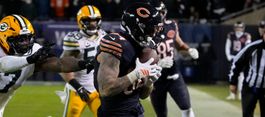
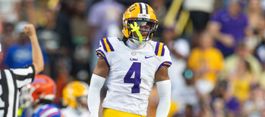
Ask anybody seven years ago how long it takes for a wide receiver to break out, and the typical response would usually be three seasons. But how the college game has evolved in recent years has influenced how impactful wide receivers can be from the start. LSU standouts Ja’Marr Chase, Justin Jefferson, Malik Nabers and Brian Thomas Jr. are the peak examples of the phenomenon, shattering record after record as first-year players.
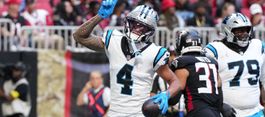
Ohio State wideouts Garrett Wilson, Chris Olave and Emeka Egbuka found similar success in their most recent rookie seasons. Last season, the trend continued. Tetairoa McMillan won the offensive rookie of the year award. Egbuka was the favorite in the first half of the season. And Luther Burden III finished the season on an extremely high note.
I do think there is some interesting insight into last year’s rookie receivers. The draft capital led to volume, but not WR1 production (lack of efficiency). Draft capital creates the floor; efficiency creates the ceiling:
- McMillan (Round 1): 122 targets (52% above average) | WR25 PPG
- Egbuka (Round 1): 127 targets (59% above average) | WR30 PPG
Both had elite volume; neither cracked the top 24 in points per game (PPG). But they have maintained their value (or even increased it) from this time last season.
Rookie Wide Receivers Since 2013
| Drafted | # | Targets (Average) | Fantasy Finish | WR1% | WR2% | WR3% | WR4% |
| 1st Round | 56 | 81 | 55 | 9% | 25% | 39% | 43% |
| 2nd Round | 62 | 61 | 77 | 5% | 10% | 26% | 31% |
| 3rd Round | 58 | 36 | 98 | 0% | 3% | 5% | 14% |
| 4th Round | 57 | 25 | 106 | 0% | 4% | 4% | 0% |
| 5th Round | 51 | 27 | 92 | 2% | 2% | 6% | 8% |
| 6th Round+ | 93 | 11 | 119 | 0% | 0% | 0% | 0% |
We have reached the point that if a receiver hasn’t hit by their second season, the panic button goes off as both real-life and fantasy teams look to move on.
And I can’t completely argue with that logic.
The track record of unproductive rookie receivers is bad. The most recent “success” story is Quentin Johnston, who bounced back after a god-awful rookie campaign. But before that, D.J. Chark was the last receiver to have a great sophomore year after virtually doing nothing as a rookie. Even so, Chark has done nothing since (and recently retired). And Johnston hardly feels like a stable asset, given how boom-or-bust he has been throughout his three-year NFL career.
However, compared to running backs, you can see a stark contrast in hit rates based on draft capital.
In terms of hit rate, 25% of first-round wide receivers finishing as top-24 options is more probable than a third-round running back ending as a top-24 option (16%).
The most fantasy-relevant rookie wide receivers are consistently drafted in the first two rounds:
- Forty-six rookie wide receivers have finished inside the top 36 (WR3 territory) over the last 13 years.
- Thirty-eight were drafted inside the top two rounds of the NFL Draft (83%).
- Round two or higher rookie wide receivers have combined for fantasy WR3 seasons at a 65% clip.
But similar to the running back position, there’s another drastic fall from round two to round three. Just four out of 58 third-round wide receivers have finished in the top 36 since 2013, including one hit over the past five seasons — Tank Dell as the WR37. He likely would have easily surpassed this rank had it not been for injuries.
There have been 35 wide receivers drafted in the fourth round from 2013 to 2020. Not a single one finished as a top-50 wide receiver in their rookie year.
Amon-Ra St. Brown is the only fourth-round receiver to buck the trend since 2013. He was the extreme outlier in this category in 2021, finishing as the WR21.
What I think is noteworthy is that the 2025 Tennessee Titans had two rookie fourth-round receivers last season who finished 51st and 52nd in 2025 among receivers (65th in PPG).
I briefly touched on Chimere Dike and Elic Ayomanor in my 2026 rookie sleepers article, reflecting on their college profiles and how that influenced their rookie campaigns.
They drastically outperformed their draft capital, but their situation wasn’t great in a broken Titans offense led by a rookie signal-caller. The production was mostly opportunity-driven by the lack of alternative pass-catching options in the Tennessee offense (that we are expecting them to add more to in the NFL Draft, as they have done through free agency).
The primary takeaway is to go aggressively after wide receivers with first- or second-round draft capital, but be extremely wary of those that go round three or later. St. Brown’s blazing 2021 season is not the norm. Fantasy managers should not chase the possibility because it will not be easily replicated.
And neither is Puka Nacua‘s unprecedented ascension to WR1 status in 2023. Jalen Coker was the biggest hit among the receivers drafted (or undrafted in Coker’s case) on Day 3 or later in 2024.
However, I do like the odds we get some Day 3 surprises this season because of the depth of the class (unlike in 2025). It’s much closer to the 2024 class (and even closer to the 2023 class).
The top is great even if there’s not a Tetairoa McMillan-level prospect at No. 1. But it’s definitely deeper.
Keep this in mind:
- In 2023, eight receivers went in the first two rounds.
- In 2024, 11 receivers went in the first two rounds.
- In 2025, eight receivers went in the first two rounds (seven if you don’t count Travis Hunter).
The current betting line for wide receivers to be selected in round one of the 2026 NFL Draft is set at 5.5 with heavy juice toward the under (-240).
In 2024, the line was set at 6.5 for first-round receivers drafted. A few more notes:
- According to Grinding the Mocks, six wide receivers have expected draft capital in the top 27 selections in the 2026 NFL Draft.
- Currently, there are six wideouts with top-50 projected draft capital (NFL Mock Draft Database). Seven with top-75 draft capital, and 18 inside the top 100.
- Tony Pauline has 25 receivers inside his top 100.
- Sports Info Solutions has 17 receivers in the top 10.
- Dane Brugler has 18 wideouts with at least a third- or fourth-round grade.
The Projected First-Rounders
How do the projected first-round receivers stack up in terms of their fantasy ADPs across several different platforms? Take a look below:
| Player | Blended ADP (Overall | WR Rank) | Underdog ADP (Overall | WR Rank) | DraftKings ADP (Overall | WR Rank) | Projected Pick (#) |
| Carnell Tate | 4 (WR1) | 57 (WR29) | 64 (WR21) | 8 |
| Makai Lemon | 4 (WR3) | 64 (WR32) | 73 (WR24) | 13 |
| Jordyn Tyson | 5 (WR2) | 71 (WR35) | 85 (WR28) | 15 |
| KC Concepcion | 8 (WR4) | 116 (WR50) | 128 (WR42) | 29 |
| Denzel Boston | 9 (WR5) | 140 (WR58) | 158 (WR53) | 31 |
| Omar Cooper Jr. | 9 (WR6) | 140 (WR59) | 153 (WR51) | 22 |
We have a clear-cut “Big Three” between Carnell Tate, Makai Lemon and Jordyn Tyson, followed by KC Concepion, Denzel Boston and Omar Cooper Jr.
The range for the rookie “Big Three” is firmly in fantasy WR3 territory (WR21-WR35). Same range where Tetairoa McMillan was going last year pre-draft.
The second group/tier ranges from WR42-WR59 — a similar range to Emeka Egbuka, Luther Burden III and Matthew Golden last season. Jayden Higgins was drafted in a similar range on Day 2 in the 2025 NFL Draft, but his pre-draft ADP was outside of the top-70 of receivers.
Both Higgins and Burden were fringe first-round receivers, and they averaged right around the target expectation of a second-round wideout (while exceeding fantasy expectations).
- Burden: 60 targets | WR58 (above average)
- Higgins: 68 targets | WR61 (above average)
It’s a slower burn for both second-round receivers, as they need to do more to earn their playing time.
Similar to last year’s group, I wouldn’t be surprised if we saw a projected first-round wideout fall to the second round. But that hardly means they are the “worst” of that group (see Burden versus Golden from 2025). I think there’s a strong arbitration opportunity to fade the late first-round receiver versus the early second-round wideout when you consider the pre-draft prospect profile/team fit.
Omar Cooper Jr. might be the most overvalued wideout based on his blended ADP as a fantasy WR6 versus his WR4 real-life ADP (NFL teams are high on him). However, this might just represent a case to get in on him now, and fade him when his price skyrockets after he earns first-round draft capital over someone like Denzel Boston.
As noted by Tony Pauline, Cooper has spoken to every team from picks 18 to 36. The Jets at pick No. 33 seems like his floor (if they don’t take him earlier at 16).
Keep this in mind as we value this year’s class based on previous seasons:
- There were 10 receivers pre-draft inside the top 34 in 2024.
- Thirteen receivers had expected draft positions inside the top 64 in the 2024 draft class.
As a result, rookie receivers in 2024 provided extreme value, outside Marvin Harrison Jr., of course. It’s crazy to look back on a “Big Three” of that class with these ADPs: Marvin Harrison Jr. (WR10), Malik Nabers (WR23) and Rome Odunze (WR31).
Our new “Big Three” is firmly back in the Nabers-Odunze fantasy WR3 territory. That’s completely fair value, in my estimation, with odds one returns a top-24 season in Year 1.
In a weaker 2023 wide receiver draft class, all non-Jaxon Smith-Njigba (WR30) rookies were selected after WR45. That’s close to our 2026 class, with the second tier falling inside this range. A few more notes:
- In 2022, the top six rookie wideouts were in the WR34-WR54 range. Cheaper. The good times when there was more fear about rookie receivers.
- Jaxon Smith-Njigba‘s pre-draft ADP was similar to the pre-draft ADP that Jaylen Waddle, Ja’Marr Chase and DeVonta Smith owned back in 2021.
- It was also right in line with Odunze’s from the 2024 class, despite the Washington product being a pre-draft projected top-10 pick.
Obviously, there’s always risk — especially with Jordyn Tyson. It seems like he has the widest range of outcomes with his injuries. If somebody falls closer to the second tier (or a second-tier receiver leaps into the first tier), that’s a recipe for a value shake-up.
I do find it interesting, though, that we are getting a “drop-off” after the “Big Three” in a similar fashion to the classes that featured Tetairoa McMillan and Jaxon Smith-Njigba as the favorites to be their respective No. 1 WRs.
For starters, this could suggest Carnell Tate isn’t going high enough as the favorite to be the first wideout drafted.
Again, the market priced Smith-Njigba as the sure-fire WR1 in that class despite coming off a final college season where he barely played. Obviously, the other wideouts in that 2023 class might have been viewed as weaker prospects, but the NFL viewed them much more tightly with Smith-Njigba, Quentin Johnston, Zay Flowers and Jordan Addison going within four picks of each other.
For whatever it’s worth, NFL.com’s Lance Zierlein had those receivers closely graded in 2023. His “Big Three” in 2024 were graded as such (well above the rest of the class). Last year’s grades didn’t age super well (closer between top-five receivers). But I think it’s noteworthy that his grade on Tate is well above every other wideout in this class by a pretty sizeable margin.
Second, it suggests the second tier of wide receivers is being undervalued if they are going to be drafted closer (or even leapfrog) the first tier. Keep in mind that those 2023 and 2025 classes featured receivers going past WR45 after the top option. It’s the same story here in 2026.
And those discounted players have resulted in several hits that we have already mentioned: Jordan Addison, Zay Flowers, Luther Burden III and Emeka Egbuka.
Even if you miss out on the “Big Three,” there’s still a lot of value in that second tier of wideouts. Especially if they are going/remain outside of the top 50 wide receiver picks. I’ve got them all ranked inside my top 50 in redraft and best ball rankings.
Recall, Egbuka/Burden were going ahead of this top-50 number last year because they were ranked higher relative to the class. But relative to the real-life projected raw draft capital, they are closer to this year’s wide receiver second tier. And being drafted close to similar first-round/second-round fringe receivers from 2024: Keon Coleman and Ladd McConkey.
As for the next group of WRs…
| Player | Blended ADP (Overall | WR Rank) | Underdog ADP (Overall | WR Rank) | DraftKings ADP (Overall | WR Rank) | NFL Round | Projected Pick (#) |
| Elijah Sarratt | 16 (WR8) | 206 (WR82) | 212 (WR70) | Round 3 | 80 |
| Chris Brazzell | 19 (WR7) | 204 (WR79) | 213 (WR71) | Round 2 | 51 |
| Germie Bernard | 20 (WR9) | 210 (WR83) | 219 (WR73) | Round 2 | 56 |
| Chris Bell | 22 (WR12) | 229 (WR91) | 228 (WR76) | Round 2 | 53 |
| Zachariah Branch | 23 (WR10) | 214 (WR87) | 221 (WR73) | Round 3 | 63 |
| Antonio Williams | 27 (WR13) | 234 (WR97) | 230 (WR76) | Round 3 | 70 |
| Skyler Bell | 28 (WR14) | 238 (WR106) | 231 (WR77) | Round 3 | 82 |
| Malachi Fields | 29 (WR15) | 239 (WR108) | 230 (WR76) | Round 3 | 69 |
| Ted Hurst | 31 (WR16) | 229 (WR92) | 227 (WR75) | Round 3 | 73 |
| Bryce Lance | 32 (WR17) | 239 (WR110) | 230 (WR76) | Round 3 | 85 |
| Deion Burks | 41 (WR18) | 240 (WR148) | — | Round 3 | 96 |
Every round two/round three projected rookie wideout is being drafted outside of the top 70 at the position. The same price as last season, although this class is viewed more favorably than the 2025 crop of wideouts.
As I have alluded to throughout this article, this class closely mirrors the 2024 class based on the sheer depth. But we are getting them cheaper after a down rookie season for wideouts. It was a down year for all receivers, not just rookies, with it becoming more difficult to find true difference-makers. This tier of rookie wide receivers is going nearly 20 picks later than 2024’s crop.
In 2024, the wide receivers drafted in this range with an ADP outside of the top 70 were Ja’Lynn Polk, Ricky Pearsall and Xavier Legette. And they all had strong draft capital.
There is no guarantee that any of the receivers above will go at the end of round one. But as was the case in 2024, two did sneak into the back end of the first round, despite a “Big Three” being present. Now it’s more difficult to bank on with another tier already being captured. But it just means that some of these early second-round receivers would be first-rounders in other drafts (like last season, etc.)
At least the third receiver tier is being more appropriately priced, especially with the Chris Brazzell II/Germie Bernard/Chris Bell tier.
USC’s Elijah Sarratt is the most expensive receiver based on his rookie-only blended ADP, but his draft capital suggests this is an overpay. Tony Pauline projects him closer to the end of round two to the middle of the third. When the dust settles, I’m not convinced Sarratt holds down the rookie WR7 slot, so I’m cool being underweight. It doesn’t mean he can’t out-produce his real-life draft slot, but this might not be the best time to “buy” him.
I’d rather go after Tennessee’s Chris Brazzell II. He’s more likely to be drafted in the second round. Sports Info Solutions and Tony Pauline have Brazzell as a top-32 overall player. Again, those rankings are subjective, but suggest the best-case scenario (draft-capital-wise) for Brazzell is higher than it is for Sarratt. Brazzell is also the WR9 on FastDraft. I like the value as a big-play specialist in best ball formats.
All the other rookie receivers are pretty closely ranked, so I don’t see any screaming values. It’s more about just picking/identifying the receivers that are actually good, if the draft capital is all the same.
That said, we do want second-round draft capital. Ideally. As the cost will increase post-draft based on draft capital.
Germie Bernard and Chris Bell seem like the most likely “locks” among second-round wideouts. The issue is that Bernard is more of a jack of all trades type of wideout, and Bell is coming off a torn ACL (although the reports are positive about his rehab and return to play for 2026). There’s an argument to be made that Bernard’s floor and versatility make him the better option in best ball, as he won’t necessarily log a bunch of zeroes. Bell is way more boom-or-bust.
Georgia’s Zachariah Branch is far from perfect, but it’s still very possible that he goes in the second round (late Day 2 pick, at worst). But with him more on the round two/round three cusp, you are better off waiting. There are so many more sleeper receivers I prefer in this class.
Day 3 Rookie Wide Receiver Sleepers
Another name to call out is Ole Misswideout De’Zhaun Stribling. He was highlighted as one of my rookie receiver sleepers. He’s going to be drafted much earlier than the consensus mocks have him pegged (WR20, Day 3), and he’s been gaining steam throughout the process.
This doesn’t mean he is destined for success in any way, but draft capital dictates opportunity. And sometimes that is all you need when somebody is free across the board (and not being drafted enough). Stribling is the WR25 on FastDraft, going around players who might go completely undrafted.
I highlighted more potential Day 3 receivers in my 2026 sleepers piece, but Stribling is my favorite just betting on “surprise draft capital” on Day 2.
Brenen Thompson is the other name to monitor, given that he ran a 4.26 40-yard dash at this year’s combine. The NFL overvalues speed every year. That makes Thompson an easy fade if he’s expensive, but right now, he is still super cheap on FastDraft (WR21).
Ja’Kobi Lane went to USC and seems very much on that late third-round/fourth-round cusp.
Kevin Coleman (WR22) rounds out the top five in the consensus mocks to be the next wideout drafted in round four. He can take the top off defenses, but projects to be more of a slot-only player. Coleman was one of the receivers recently discussed on the FantasyPros Dynasty YouTube feed:
Coleman has met extensively with the Patriots, Chiefs and Falcons — who desperately need a No. 2 WR behind Drake London. He also offers special teams ability.
Eric Rivers (WR34 on FastDraft) has also had a strong pre-draft process. He’s also basically undrafted across most formats.
Other receivers that deserve last-round consideration on FastDraft are Malik Benson, Barion Brown and Cyrus Allen.
All in all, there’s reason to be excited about this rookie wide receiver class. And even though the top options rarely slip out of the first two rounds, we will get some quality contributors in round three or round four this year. The depth of the position might make some talent slip more.

Subscribe: YouTube | Spotify | Apple Podcasts | iHeart | Castbox | Amazon Music | Podcast Addict | TuneIn