Oakland Raiders at Minnesota Vikings
Total: 42.5
Line: MIN by 7.5
QBs
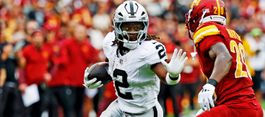
Derek Carr: After an impressive debut, Carr fell back into the same ol’ situation in Week 2, as he struggled against the lowly Chiefs secondary that allowed the combination of Nick Foles and Gardner Minshew to complete 27-of-33 passes for 350 yards and three touchdowns. This has been the story of Carr’s career to this point, as it’s been too up-and-down to rely on in fantasy football. Now heading into Minnesota to play against the Vikings who’ve been lights out at home? Matt Ryan was the first quarterback who walked into Minnesota and scored more than 12.0 fantasy points through the air (Josh Allen rushed for two touchdowns against them last year) since Week 3 of 2017. Seriously, over their last 15 home games, they’ve allowed a grand total of just eight passing touchdowns, with Ryan being the only one who threw more than one, and we know his touchdowns came in garbage time. If that’s something you want to rely on, be my guest, but Carr isn’t likely to finish as a top-20 quarterback in this game.
Kirk Cousins: After an efficient game in Week 1 where he was only forced to throw 10 times, Cousins’ issues were put out there for all to see in Week 2 against the Packers, as he completed just 14-of-32 passes against the Packers, though it’s important to mention he was under pressure a league-high 65.7 percent of his dropbacks in that game. Through two weeks, Cousins has been pressured on 60.9 percent of his dropbacks. The only quarterback who has been pressured on over 45 percent of his dropbacks is Deshaun Watson. Cousins doesn’t have the mobility to escape pressure. Fortunately for him, he plays the Raiders this week, who could only pressure Patrick Mahomes on 8-of-46 dropbacks despite him missing his starting left tackle for the entire game. If there’s a game for Cousins to get his confidence back up, it’s this one. The Raiders secondary looked atrocious trying to defend Courtland Sutton, Emmanuel Sanders, Demarcus Robinson, and Mecole Hardman, so what do you think is going to happen when they meet Diggs and Thielen? Sure, Mahomes beats everyone, but the Raiders even allowed Joe Flacco to average 8.6 yards per attempt. The downside is how dominant the defense has been while at home, as Cousins has actually averaged 2.8 less points per game at home since coming to the team. He should still be efficient enough on limited attempts to post high-end QB2 numbers and be a streaming option.
RBs
Josh Jacobs: It was an extremely disappointing week for Jacobs, and not because he ran for 99 yards on 12 carries (that’s really good), but more to the fact that the Raiders split up the work much more than in Week 1 when he totaled 24 of the 27 running back touches. In Week 2, he totaled just 12 of the 21 touches. He also didn’t see a single target, which is worrisome for his fantasy floor. The Vikings may have just allowed a massive game to Aaron Jones, but they’re not a bad unit by any means. They allowed a pedestrian 4.03 yards per carry to running backs last year, while allowing a touchdown every 36.6 carries, both much better than the league averages. We have to search for continuity in Jacobs’ numbers and all we know right now is that he totaled 12 touches in their loss and 24 touches in their win. Oddsmakers have this as one of the more lopsided spreads on the slate, which doesn’t bode well for our small sample size on Jacobs. He’s still in the low-end RB2/high-end RB3 conversation as their goal-line back, but his floor is much lower than we’d hoped after Week 1. *Update* Jacobs is dealing with a groin injury that had him limited at practice this week. This may have contributed to the split in Week 2. If he stays limited, there’s added concern.
Dalvin Cook: If there’s a fantasy MVP through two weeks, Cook is certainly in the conversation. His 265 rushing yards leads the NFL, while his three touchdowns are also tied for the best in the league. The new zone-blocking scheme has fit both him and the offensive line very well. With the Vikings at home and struggling to block for Kirk Cousins, the Cook Express shouldn’t stop now. The Raiders may have slowed down the Chiefs running backs last week, but it came at big price, allowing the receivers to essentially do whatever they wanted. The addition of Vontaze Burfict has clearly done a lot of good for that defense, though the scheme and most of the unit stems from the one that allowed 4.77 yards per attempt last year, which ranked as the seventh highest mark in the league. The bottom line here is that the Raiders will struggle to score points in Minnesota (everyone does), which means the Vikings will feed Cook as they have in the first two weeks. Any time you have a running back getting 20-plus touches in a home game where they’re favored by more than a touchdown, you want to get as much exposure as possible. Cook is an elite RB1 play this week and definitely usable in cash lineups.
WRs
Tyrell Williams: The Raiders offense came back down to earth in Week 2, though Williams was still able to salvage some value, hauling in five balls for 46 yards and a touchdown. He’s amassed 47.4 of the Raiders’ air yards this year, which is truly elite territory, as there were just two receivers who totaled more than 38 percent of their team’s air yards last year. Because of that, he should remain in the WR2/3 conversation most weeks. This week, however, it’s going to be a bit more difficult, as the Vikings secondary is no joke. While Xavier Rhodes has looked beatable at times, it’s hard to see the Vikings using him to shadow Williams. It would make sense to simply play sides, as Trae Waynes has more than enough speed to go stride-for-stride with Williams. The Vikings allowed just 12.01 yards per reception last year, which was one of the lower marks in the league. A large part was due to the fact that they allowed just 43 plays of 20-plus yards last year, the sixth-fewest in the league. Playing in Minnesota is no easy task for anyone, especially wide receivers. Williams is a risky low-end WR3 in this matchup. *Update* Williams has a hip pointer that he suffered in Week 2. He was limited in practice throughout the week, but appears to be on the right side of questionable.
Ryan Grant: He was out there as the No. 2 receiver again last week, though his five targets netted just one catch for negative yards. In the end, if Carr struggles, he’s not doing anything. Knowing we’re fully anticipating Carr to struggle on the road in Minnesota, he’s not a recommended play anywhere.
Hunter Renfrow: After a very quiet debut, Renfrow suddenly racked-up eight targets in Week 2. He’s playing the slot role for the Raiders and will likely become the check-down option for Carr when he’s under duress. Knowing Carr’s pressure-rate went from 18 percent in Week 1 to 30 percent in Week 2, there’s some correlation. The Vikings were able to sack Matt Ryan four times and then Aaron Rodgers two times (though he was pressured a massive 54 percent of the time), so they’ll get to Carr. The Vikings had to turn to Jayron Kearse in the slot with Mackensie Alexander out last week, and he did a solid job in coverage. The touchdown allowed to Geronimo Allison wasn’t his assignment. Through two weeks, Kearse has allowed 7/49/0 on 10 targets in coverage, so he’s keeping the play in front of him. Renfrow took a step in the right direction last week but isn’t trustworthy in fantasy just yet.
Stefon Diggs: The good news is that he saw seven targets last week. The bad news is that just two of them were catchable, while two other ones were intercepted. It was a bad game from Kirk Cousins, though Diggs wasn’t on his A-game, either. Fortunately, they should bounce back together this week against a Raiders squad that’s allowed 104.9 PPR points to wide receivers over the first two weeks. While one of those teams they played were the Chiefs, the other was the Broncos. Fellow undersized route-runner Emmanuel Sanders converted eight targets into seven catches for 120 yards in Week 1 while playing the majority of his snaps on the perimeter. There hasn’t been a bright spot among the Raiders cornerbacks, as Gareon Conley and Daryl Worley have combined to allow over 200 yards and two touchdowns on just 19 targets in coverage. Conley is the better of the two but it’s important to note that the route he struggled with the most in 2018 was the out-route where he allowed a 156.2 QB Rating. It just so happens that the out-route was tied for Diggs’ most-targeted route in 2018. You must keep trotting Diggs out there as a WR2. He’s a solid tournament option this week with how down people seem to be on the Vikings pass-attack.
Adam Thielen: I’ve received a lot of panic in regard to Thielen over the last few days, but this is me telling you to relax. He caught all three of his targets for 43 yards and a touchdown in a Week 1 game the Vikings threw the ball 10 times. He then caught 5-of-8 targets for 75 yards against the Packers much improved defense on a day Cousins clearly didn’t have it. The Raiders have Lamarcus Joyner covering the slot for them and let’s just say it hasn’t worked that well. He’s now allowed 14-of-15 passing for 119 yards in his coverage, though he’s the one cornerback who hasn’t allowed a touchdown. He actually did allow a long 74-yard touchdown to Mecole Hardman last week, but it was called back due to a holding penalty. Joyner is a converted safety, so he’s not used to playing this much in coverage, and it shows. The Vikings have multiple ways to attack the Raiders defense, though this is one of the safest. Thielen should be back into lineups as a safe low-end WR1/high-end WR2.
TEs
Darren Waller: He’s currently the No. 8 fantasy tight end through two weeks and he hasn’t even scored a touchdown. That shows the floor for Waller, who has now seen 15 targets in two games. If there’s a matchup the Raiders might like against this Vikings secondary, it’s the athletic Waller against Harrison Smith. The Vikings play a physical defense but did allow four different tight ends to rack up 69 or more yards against them last year. Those tight ends were Zach Ertz, George Kittle, Ricky Seals-Jones, and Jimmy Graham. There were just six tight ends who saw more than four targets against the Vikings last year, and all but one of them finished with at least 11.9 PPR points. That list extended to Austin Hooper, who, in Week 1, finished with nine catches for 77 yards against the Vikings. With Waller seeing the targets he is, it’s hard to say he’s not a middling to low-end TE1 in this matchup, even if Carr is likely to struggle.
Kyle Rudolph: Through two games in the new offense, Rudolph has a miniscule nine yards. We’re also seeing rookie Irv Smith eat into his routes, as Rudolph has run 33 routes to Smith’s 18 routes. Neither have been fantasy options to this point and Smith actually has negative yardage. It’s disappointing because the matchup in Week 3 is a great one. After allowing a ridiculous 10.29 yards per target to tight ends last year, the Raiders have opened 2019 by allowing 9.71 yards per target. It surely didn’t help that they had to play Travis Kelce last week, who tagged them for 7/107/1 but it shows they’re vulnerable, especially after Johnathan Abram was hurt, leading to the Raiders playing backup Curtis Riley in his place. He was in coverage on just three pass attempts last week, though they netted 50 yards and a touchdown. Rudolph isn’t the worst “looking for a surprise get-back-on-the-map” performance, but his six targets and nine yards through two weeks is far from ideal.
Baltimore Ravens at Kansas City Chiefs
Total: 55.0
Line: KC by 6.5
QBs
Lamar Jackson: It’s possible that Jackson has had the dream schedule to start the season, and it continues this week against the Chiefs. While having one of the best pass-rush’s in the league last year, the Chiefs defense allowed more than 400 yards passing on three separate occasions and allowed multiple passing touchdowns in 10-of-16 games. That led to them moving to a 4-3 scheme instead of the 3-4 they’d been. It’s safe to say their defense is far from fixed now that they’ve allowed a 70.4 percent completion-rate though two weeks. Jackson played against them in Week 14, throwing the ball just 24 times for 147 yards and two touchdowns while rushing for another 71 yards. Similar to the Cardinals, they’re another defense who runs a lot of man coverage, which should open the rushing gates for Jackson in a game that has the highest total on the slate. We’ve watched Jackson throw the ball 57 times in the first two weeks in games they were clearly ahead in and he hasn’t disappointed when throwing the ball, completing 71.9 percent of his passes at 10.5 yards per attempt with a 7:0 touchdown to interception ratio. I said before the season that if Jackson could develop as a passer, he’d be the cheat code in fantasy football. Here we are, entering Week 3, and he’s the No. 1 quarterback. Start him as an elite option and one who’s worth the cost of admission in DFS.
Patrick Mahomes: The Chiefs didn’t score a single point in the first quarter against the Raiders. Thoughts started to wonder about what Tyreek Hill meant to the offense. Just 15 short minutes later, Mahomes had thrown four touchdowns. He’s playing on a different level right now and matchup-be-damned, he’s the QB1 every single week. Oddly enough, the man on the other sideline has more fantasy points through two games. Mahomes is playing one of the elite defenses in the game this week, as the Ravens are continually limiting the ceiling of opposing quarterbacks. There were just six quarterbacks who threw for more than 219 yards against them last year, while just seven quarterbacks threw multiple touchdowns. Mahomes himself played them and finished with 377 yards and two touchdowns in Week 14, which wound-up as the No. 6 performance that week. This is a bit of a different team, though, as they lost Za’Darius Smith, Terrell Suggs, C.J. Mosley, and Eric Weddle on defense this offseason. They are also likely going to be without cornerbacks Jimmy Smith (knee) and Tavon Young (IR). After watching Kyler Murray throw for 349 yards against them, you should feel better about Mahomes. He’s in lineups, period. The question becomes: which quarterback do you play in DFS, as Lamar Jackson‘s price is a tad lower. Fade Mahomes at your own risk. It’s worth noting he’s likely going to be without his starting left tackle Eric Fisher in this game.
RBs
Mark Ingram and Justice Hill: This is the first week we could see a different timeshare in the Ravens backfield, as they’re projected to be playing from behind, and that’s where many expected Hill to get work in. Through two weeks, the snaps have been Ingram 70, Gus Edwards 45, and Hill 37, but again, the Ravens have been on cruise control in their two wins. Oddsmakers view that much differently in Week 3, as they’re almost a full touchdown underdog. When going to the passing attack, Ingram has run 23 routes to 20 routes for Hill, which is what’s important here. The Chiefs allowed a league-leading 1.87 PPR points per target to running backs last year. Them moving to a 4-3 defense seems to have helped out a bit through two weeks, as they’ve allowed exactly four receptions for 28 yards to running backs in each game. They’ve still yet to allow a running back touchdown as well, so it’s possible they’ve turned a corner, though it’s more likely that it’s lack of touches, as they’ve allowed 5.94 yards per carry to this point, the highest mark in the league. In what’s projected to be a high-scoring affair, Ingram should be played as a high-floor RB2 while Hill is an intriguing upside RB4 option due to his prowess in the passing game, though he’s far from a sure thing given his two receptions for 10 yards through two games.
LeSean McCoy and Darwin Thompson: There will be no Damien Williams for the Chiefs this weekend, as he was ruled out on Friday. The Chiefs have declared McCoy healthy and he backed that up with a full practice on Friday. He’ll be the starter out there against the Ravens this week, though it’s hardly a prize. Through two weeks, the Ravens have allowed just 28 rushing yards on 18 carries. Leonard Fournette had more than double that in Week 3, and we know his week was bad. The Chiefs have a much better run-game than the Dolphins or Cardinals, though you wouldn’t guess that after they tallied just 32 yards on 21 carries against the Raiders last week. Even though it was on a different team, McCoy was only able to rush for 22 yards on seven carries against the Ravens defense last year. Knowing he can aggravate his ankle at any time, combined with the fact that he’s in a tough matchup, he shouldn’t be trusted as anything more than a high-end RB3 who’ll share work with Thompson, and maybe even Darrel Williams. Some may gravitate towards Thompson, though it’s not an easy matchup for him, either. The Ravens allowed just 3.92 yards per target to running backs last year, which was the worst mark in the NFL, and it wasn’t even that close. Thompson is on the RB4 radar, as he has breakaway speed/potential, but it’d likely require one big, electric play to pay off in fantasy lineups.
WRs
Marquise Brown: After approaching last week with caution, it’s time to get excited about Brown. He played just 14 snaps in Week 1, which was worrisome, but that number shot up to 50 snaps in Week 2 and he was targeted a team-high 13 times. Not only is he the type of player who can hit WR3 value on one play, but now he’s getting elite volume? This is like DeSean Jackson getting double-digit targets in his prime. Can you imagine? The Chiefs are going to have issues containing him, as they allowed a league-high 65 passing plays that went for 20-plus yards last year, while no other team allowed more than 61 such plays. Their starting cornerback duo on the perimeter is Bashaud Breeland (runs a 4.62) and Charvarius Ward (runs a 4.49). This is your reminder that Brown has low 4.2-to-4.3-second speed. The Chiefs also have a brand-new safety duo of Tyrann Mathieu and Juan Thornhill. While the Raiders failed to exploit that, the Ravens will. Brown should be in lineups as a high-upside WR3 this week who could explode again.
Miles Boykin: After a mediocre start to the season playing limited snaps, it seems the Ravens started to unleash their rookie wide receivers in Week 2, as Boykin played 37 snaps, over double the snaps he played in Week 1 (18). Unfortunately for Boykin, he dropped a pass and finished with one catch for 11 yards in a great matchup against the Cardinals. Boykin plays nearly all his snaps on the perimeter and will see a lot of Charvarius Ward, who has been a competent cornerback since taking over the starting job late last year. He’s allowed a middling 64 percent completion-rate in his coverage with 13.2 yards per catch, but no touchdowns over a span of 45 targets. He did intercept his first pass against the Raiders last week, too. Boykin is someone you can probably wait-and-see on before trusting in fantasy lineups, though his snaps are trending in the right direction.
Sammy Watkins: If you were to know that Patrick Mahomes would throw for 443 yards and four touchdowns in Week 2, and that Tyreek Hill was out, you’d have to figure that Watkins had a massive game, right? What about if I told you he had 13 targets? His 10.9 PPR points was obviously a letdown, but there will be better days for him. The Ravens have one of the more talented cornerback groups in the league, but they’re likely going to be missing two starters (at least one) at the position. They were without Jimmy Smith last week, and it let to the Cardinals throwing for 349 yards, though there were no touchdowns. Watkins will see a mixture of Brandon Carr, Marlon Humphrey, and Anthony Averett in coverage, so there’s no one matchup we can look at. What we do know is that Watkins has played 69 percent of his snaps in the slot, and we just saw the slot duo of Larry Fitzgerald and Christian Kirk tally a combined 11 receptions for 218 yards on 19 targets last week. You’ll want to keep Watkins in lineups, especially with the way Mahomes is throwing the ball right now. He may not be a locked-in WR1 but he’s a solid upside WR2.
Mecole Hardman: His four-catch, 61-yard, one-touchdown performance last week could’ve easily been a five-catch, 145-yard, two-touchdown performance, as his 74-yard touchdown was called back due to a holding penalty, though he simply out-ran the coverage. While many will flock to Demarcus Robinson, Hardman is the one who has still yet to show his full potential. He’s moved into the slot on over half of his snaps, which is Andy Reid’s way of hiding him throughout the offense and preventing the defense from being able to shade coverage to his side of the field. His speed is game-changing. The Ravens cornerbacks are much better than the ones the Raiders had to offer, though they lost on of their starting cornerbacks in the preseason, and are likely to be without another (Jimmy Smith) in this game. They still have solid depth and while Hardman is far from a sure thing, not many receivers in the WR4 range are. Not many can offer his upside, though, so if you’re deciding between Hardman and someone else in that territory, you should lean the rookie’s way.
Demarcus Robinson: Most want to hear that he’s a must-start after his breakout performance against the Raiders, but you won’t hear me say that. While the Ravens secondary is dinged-up, the combination of Marlon Humphrey and Anthony Averett is still solid. Robinson is the one who rarely plays in the slot for the Chiefs, which is usually the spot that offers the most production. Averett has struggled more than Humphrey, so it’s possible the Chiefs attempt to keep Robinson on the left side of the field more often this week, though it’s hardly a sure thing. The Ravens allowed a league-low 6.91 yards per target and 54.3 percent catch-rate to wide receivers last year, so it’s not a great spot to be in, though it definitely helps when Mahomes is your quarterback. Because the run-game is struggling so much, they’ll be leaning on the receivers quite a bit, so you can’t move Robinson outside of WR4 range, but it’s not a great matchup.
TEs
Mark Andrews: Yes, Andrews ranks third among tight ends on his team in snaps. No, it doesn’t seem to matter. He’s averaging a ridiculous 4.68 yards per target, which leads all tight ends who’ve seen more than five targets. That’s what I call a sticky stat, as the leaders in that stat are typically the best in the game. Last year it was George Kittle, Travis Kelce, O.J. Howard (buy-low), Andrews, and Zach Ertz as the leaders in that category. In a game they’ll be throwing more than normal (is 31.5 pass attempts the new normal for them?), Andrews’ value should remain strong. The Chiefs newly-installed defense has allowed 17-of-21 passing for 145 yards to tight ends over the first two weeks, which includes James O’Shaughnessy, Geoff Swaim, Darren Waller, and Derek Carrier. Those 17 receptions allowed to tight ends are the most of any team in the league after two weeks. That 81 percent catch-rate combined with Andrews’ 94.1 percent catch-rate equal big things in a game that has the highest total of the week. He’s locked in as a high-end TE1 this week and one who can even be considered for cash games.
Travis Kelce: Those who invested a late-first or early-second round pick on Kelce have received solid returns early on, as he’s totaled 195 yards and a touchdown through two weeks. Knowing where Mahomes sits after two weeks, I’m actually surprised his totals aren’t bigger. The Ravens have been really good against tight ends to this point, but what do you expect when they play the Dolphins and Cardinals, two teams who don’t utilize tight ends at all. In 2018, the Ravens finished as the 19th-best defense against tight ends, so below average. They allowed a rather-high 70.9 percent completion-rate and 8.25 yards per target to them, and those are numbers Kelce himself helped contribute to, as he totaled seven catches for 77 yards and a touchdown in their Week 14 matchup last year. Tony Jefferson is who the Ravens trust with tight ends and he’s allowed a rather-high 107.4 QB Rating in his coverage over the course of his career. Kelce should be in lineups as an elite TE1 who should continue to build on his strong start.
Denver Broncos at Green Bay Packers
Total: 43.0
Line: GB by 8.0
QBs
Joe Flacco: Through two games, the Flacco experiment isn’t much different than many of us thought, though the overall numbers aren’t as bad as some might think. He’s completed 69.1 percent of his passes for 6.9 yards per attempt and has a 2:1 touchdown to interception ratio. The Bears shut down many passing games, so to see him struggle there should’ve been expected. The surprising part is that he’s turned into a check-down quarterback, as he’s averaged just 6.0 intended air yards per attempt, the third-lowest mark in football behind only Sam Darnold and Jacoby Brissett. Against the Packers, he’ll likely have similar numbers, as they’ve brought the pressure to opposing quarterbacks. The combination of Mitch Trubisky and Kirk Cousins were pressured on 44-of-88 dropbacks, or 50 percent of the time. To give you an idea of how incredible that is, just two quarterbacks in the NFL have been pressured on more than 44 percent of their dropbacks. Projected for just 17.5 points while on the road as a big underdog, Flacco shouldn’t even be considered as a streamer, even in 2QB formats.
Aaron Rodgers: The Packers offense looked really good to start Week 2 but trailed off as the game went on. Was it the scripted plays that worked and then there were no in-game adjustments, or was there more? While watching the game, I saw Rodgers grimace in pain multiple times while shaking his right arm. From that moment forward, he wasn’t throwing the ball down the field, and the offense failed to score any more points. It could be something. It could be nothing. It’s something you definitely need to monitor. After failing to get any sort of pressure on Derek Carr in Week 1 (didn’t touch him once), Vic Fangio’s defense went another game without a sack against the Bears in Week 2. They pressured Trubisky on just five of his 27 dropbacks. It’s clear the Broncos won’t be the next Bears defense due to Fangio’s arrival. They’ve allowed just 3.47 yards per carry to running backs, so it may be up to Rodgers to move the ball down the field. Carr had a very respectable game in Week 1 when he completed 84.6 percent of his passes while averaging 10.0 yards per attempt against them, though the limited pass attempts are likely going to be a trend against the Broncos, as they’ve faced just 53 attempts in the two games combined. Provided Rodgers practices in full this week and there’s nothing going on with him, he should be able to pick apart their secondary while facing minimal pressure. Start him as a solid QB1 this week, though it’s safe to say I wouldn’t play him in cash lineups until I see him bounce back from whatever was going on with his arm last week.
RBs
Phillip Lindsay and Royce Freeman: This is officially a full-blown timeshare and one that’s difficult to dissect. Through two weeks, Lindsay has 32 touches while Freeman has 27 of them. Lindsay has played 72 snaps while Freeman has played 71 snaps. Lindsay has run 41 routes while Freeman has run 37 of them (the odd part is that both rank top-18 in routes run among running backs). As you can see, it’s a 50/50 split right now. While Dalvin Cook went bananas against the Packers last week (20/154/1), the Packers shut down the Bears run-game the prior week, allowing just 37 yards on 11 carries. The Packers said after the game that they knew if they made Mitch Trubisky beat them, they’d win, which allowed them to key-in on the run. You must wonder if they treat the Broncos and Flacco the same way. Whatever the case, the Broncos are eight-point underdogs while on the road and projected to score just 17 points. When there’s a 50/50 timeshare mixed-in, it’s hard to say anyone is more than an iffy RB3. A touchdown would likely be the deciding factor, and it’s not any clearer there, as Lindsay has four red zone carries, while Freeman has three of them. Consider both just low-end RB3s in this game.
Aaron Jones and Jamaal Williams: I don’t care what the box score says about Williams last week – this was the Aaron Jones show against the Vikings. He showed everything you want in a feature back – the ability to kill the clock, muscle for extra yardage, ability to pass-block, and ability to catch – something it only took Matt LaFleur one regular season game to see. He’s leading a 59/41 split according to their snap counts, but it’s a 68/32 split according to their touch counts. The Broncos haven’t done much right as a defense over the first two weeks, though they have held running backs to just 3.47 yards per carry through two weeks. They’ve also shut down running backs in the passing game, allowing just four catches for 41 yards through two weeks. Keep in mind that’s without inside linebacker Todd Davis, who’s got a shot to play in this game after returning to practice this week. They did play against Derek Carr and Mitch Trubisky, so it’s not as if they needed to load up the secondary. Rodgers forces defenses to remain honest, which is why Jones was able to do what he did against the Vikings last week. Jones is a big home favorite who leads a 68/32 timeshare against a defense that’s allowed three rushing touchdowns through two weeks. He may not put up the yardage total he did last week, but he has a solid shot to score, making him a solid RB2, even in a tough matchup. Williams is going to have more value in games the Packers fall behind, as he’s nearly even in routes (31 to 30) with Jones, but this shouldn’t be one of those games. He does, however, remain a solid handcuff to keep on fantasy benches.
WRs
Emmanuel Sanders: I won’t ever stop commenting on how remarkable what Sanders has done just 10 months removed from a torn Achilles. Through two weeks, he is the No. 3 receiver in fantasy football with Joe Flacco as his quarterback. His 20 targets rank top-10 at the position, so it’s not due to some fluke plays, either. His touchdown in the corner of the end zone last week was a thing of beauty. He’s only running 26 percent of his routes from the slot, so he’s winning on the perimeter, against the opponent’s top cornerbacks. When he does move into the slot, he’s targeted heavily, though. On 22 slot routes, he’s been targeted nine times, which has led to eight receptions for 77 yards. That’s significant because the Packers are likely to stick Jaire Alexander on him, and he doesn’t travel into the slot. That’s where he’d see Tramon Williams, who can be beat at his advanced age. Sanders is playing too well to bench right now, even if his matchup against Alexander is a tough one. Consider him a mediocre WR3 in this matchup, but one who should come with a somewhat stable floor.
Courtland Sutton: If there’s someone who benefits from Emmanuel Sanders playing as well as he has, it’s Sutton, as it likely means Sanders will receive the shadow treatment while Sutton then sees the No. 2 cornerback in those situations. That’d be Kevin King for the Packers, their former 2017 second-round pick who has dealt with injuries in his first two seasons but seems to be good right now. He’s allowed just 59 yards on seven targets in coverage this year, with nearly all of it coming on a 45-yard touchdown to Stefon Diggs who simply outran him. It’s safe to say Sutton isn’t outrunning anyone with his 4.54-second speed, but rather relies on his big frame. He’s now seen 15 targets through two weeks, which does present a solid floor, and it’s unlikely the gamescript is friendly for the Broncos run-game. King has allowed five touchdowns on 74 career targets, but do you want to bet on that? He should be considered a middling WR4 with a somewhat stable floor considering his targets through two weeks but would likely need a touchdown to get into WR3 territory.
DaeSean Hamilton: He’s clearly the No. 3 option among the Broncos receivers, though it’s also apparent that the slot role doesn’t have as much value without Case Keenum as the quarterback. He’s seen 10 targets through two weeks but has managed just four catches for 20 yards on them. He had the best matchup on the field last week among Broncos receivers, but it didn’t amount to much. The Packers have Tramon Williams covering the slot, a seasoned veteran who will struggle with speed, though Hamilton isn’t a speed guy. We need to see him develop chemistry with Flacco before trusting him, though that’s unlikely to happen this week, as the Broncos are projected for just 17 points, and the Packers have held each quarterback they’ve played to 230 passing yards or less. Hamilton should be on the waiver wire in fantasy leagues.
Davante Adams: I’m convinced Adams can get open against anyone. Watching him run routes is poetry in motion, as he made Xavier Rhodes look like a slow, washed-up cornerback at times last week. He’ll have another shadow situation in Week 3 as the Broncos are using Chris Harris in that role. He’s a former slot cornerback who’s transitioned under Vic Fangio. He held Allen Robinson to just four catches for 41 yards last week, though it’s not fair to compare a receiver who has Mitch Trubisky throwing him the ball to someone who has Aaron Rodgers throwing him the ball. The Broncos haven’t had him tail receivers into the slot, though, which is where Adams plays 30 percent of the time. Again, Adams can win in man coverage on the perimeter against any cornerback in the league, so you’re not fading him regardless. He should always be in lineups as a WR1 and this week is no different. He’s not a must-play in cash-games, however, as the matchup isn’t as easy as you’d like it to be.
Marquez Valdes-Scantling: He had a tough matchup last week, as Trae Waynes has just as much athleticism as he does. The Broncos have been forced to lean on Isaac Yiadom at right cornerback, which is where Valdes-Scantling plays the most of his snaps. He’s a second-year cornerback who’s now allowed 12-of-13 passing for 148 yards through two games. It’s not the scheme, either, as he struggled in coverage last year, allowing a 104.9 QB Rating in his coverage. Knowing that Davante Adams has to mix it up with Chris Harris this week, Valdes-Scantling could be a breakout at home. He should be considered a low-end WR3 who has a chance to bounce-back in a big way. He’s one of my favorites in tournaments this week.
Geronimo Allison: Many dropped Allison after a zero-target Week 1, though he bounced back in Week 2 in a matchup against the Vikings, who were without their starting slot cornerback. Allison skied over defenders for his touchdown in that game, highlighting what he’s capable of in his big-slot role. The Broncos have Kareem Jackson covering the slot now that Chris Harris is perimeter-only, and that’s not a great thing for Allison. Jackson has allowed just a 64 percent completion-rate (this is very good for a slot cornerback) and 11.4 yards per reception over his last 18 games, while not allowing a single touchdown on 98 targets in coverage. If there’s any positives, it’s that Jackson is just 5-foot-10 and 185 pounds while Allison is 6-foot-3 and 202 pounds. While I liked Allison as a sneaky play last week, he’s more of a touchdown-or-bust option this week, leaving him on the WR5 radar. *Update* Slot cornerback Bryce Callahan returned to a limited practice, so he may be able to play this week. That would downgrade Allison’s matchup a bit more.
TEs
Noah Fant: He’s now seen eight targets through the first two weeks, though they haven’t amounted to much. It was a brutal matchup against the Bears last week, though the Raiders matchup was one of the best he’ll have all year. The Packers were one of the best in the NFL at slowing down tight ends last year, allowing just 67 receptions for 776 yards and four touchdowns on the year. There were just six tight ends who hit double-digit PPR points against them last year, with five of the six hitting at least seven targets, so volume was essentially a must to do well. Knowing that Jeff Heuerman out-targeted him in Week 2, it’s unlikely we’ll see any volume out of Fant worthy of starting him. He’s not someone you need to hang onto in redraft leagues.
Jimmy Graham: After a promising debut where he caught three balls for 30 yards and a touchdown, Graham posted a donut in Week 2 against the Vikings. The Broncos haven’t allowed a massive game to any tight ends, but they have allowed success when targeted. They’ve allowed 16-of-19 passing for 143 yards but no touchdowns. Justin Simmons is the one in coverage most of the time, a safety who’s allowed nine touchdowns on his last 108 targets in coverage, so he can be scored upon. Knowing the high completion percentage they’ve allowed through two weeks, the Packers might start their gameplan with some targets to Graham, who had just two targets all of last week. In a world full of uncertainty at tight end, Graham plays with an elite quarterback and is in a good matchup, making him worthy of streaming consideration in Week 3. In the end, you’re looking for a touchdown from most streamers, so why not target a tight end who’s attached to a quarterback who might throw three touchdowns?
Detroit Lions at Philadelphia Eagles
Total: 48.0
Line: PHI by 7.0
QBs
Matthew Stafford: It seemed like Stafford was back on track to being his old self in Week 1 when he threw for 385 yards and three touchdowns, but he came back down to earth a bit in Week 2 as the Lions scored just 13 points. Still, he finished as a top-18 quarterback for the second straight week, which is something he couldn’t say very often during the 2018 season. With a healthy Kenny Golladay, Marvin Jones, Kerryon Johnson, and T.J. Hockenson, he should be a sturdy option more often than not. Against the Eagles, both Case Keenum and Matt Ryan have both finished as top-10 options, each throwing for at least 320 yards and three touchdowns (though Ryan also had three interceptions). The Eagles have held those quarterbacks to an average of 8.05 yards per attempt, which is not too astronomical, so how did the yardage get so out of control? Pass attempts. The 87 attempts they’ve faced through two weeks ranks as the second-most in football, behind… the Lions. This game could feature a whole lot of pass attempts because both teams stop the run extremely well. This is apparently a trend with the Eagles, as they faced 624 pass attempts last year, which ranked as the third most in football. That amounts to 39.0 attempts per game and this pass-rush already lost Malik Jackson after Week 1. Stafford should rack up the attempts en route to a high-end QB2 day with top-six upside.
Carson Wentz: It appears that Wentz will be without at least Alshon Jeffery, and it’s possible he’s without DeSean Jackson, who missed practically the whole game last week with a groin injury. Knowing it’s a soft tissue injury and that they play three games in a span of 10 days (Thursday night game in Week 4), they may play it safe. That would leave Wentz with Mack Hollins, J.J. Arcega-Whiteside, and Nelson Agholor as his starting receivers for this game. That’s an issue for any quarterback, including Wentz, who threw for just 5.4 yards per attempt, one touchdown, and two interceptions against a very beatable Falcons defense. He salvaged his fantasy day with a rushing touchdown, but it wasn’t pretty. It should help that he has a full week to prepare with the backups. The Lions defense is stronger against the run than they are the pass and the best asset they have in the secondary is Darius Slay who shadows opposing No. 1 receivers. The Eagles don’t have that, which makes Slay worth a bit less in this matchup. 10-of-16 quarterbacks threw multiple touchdowns against the Lions last year, but just three quarterbacks threw for more than 255 yards. Kyler Murray was able to accomplish both feats in Week 1 (308 yards, two touchdowns), though Philip Rivers‘ 293 yards net zero touchdowns in Week 2. Knowing Wentz is missing two of his top three weapons has me a bit spooked for this game, making him more of a high-end QB2 than a can’t-miss QB1. It shouldn’t surprise anyone if the Eagles try to get the run-game going while at home and shorthanded in the passing game.
RBs
Kerryon Johnson and Ty Johnson: Not only did the Eagles lose defensive lineman Malik Jackson after Week 1, but they just lost interior lineman Timmy Jernigan after Week 2. That should surely help the Lions run-game, though the Eagles have solid depth on their front seven. Johnson has his own obstacles to overcome, as the Lions insist on having a three-way timeshare between him, Anderson, and Ty Johnson. Why? No one knows, as Johnson has been the most efficient running back for them over the last two years. Johnson has 32 touches through two weeks, while Anderson and Ty Johnson have combined for 24 touches. The Eagles have started out this year the way they did last year against the run, allowing just 82 yards on 28 carries in both games combined. However, they have allowed 15 receptions for 143 yards through the air to running backs, which is the sixth most fantasy points through the air through two weeks. Johnson has totaled five targets while Anderson and Ty Johnson have combined for four targets, so he’s got the clear-cut edge in that department. The Eagles defense should make Anderson obsolete (he was just released from the team), which should give Johnson a bit more snaps/touches this week as more of a dual-threat running back. Still, he’s stuck in the middling to low-end RB2 conversation until they trust him in a role that would net 18-plus touches per week. As for Ty Johnson, he’s someone who should be added to your bench in case he gets that Theo Riddick role. He does have sub-4.3 speed.
Miles Sanders, Darren Sproles, and Jordan Howard: The timeshare still exists in Philadelphia, though something has to give, as no running back has been given the opportunity to establish any momentum. The snaps look like this through two weeks: Sanders 70, Sproles 50, Howard 35. The touch count: Sanders 25, Howard 17, Sproles 14. While I’ve said that Sanders is the one to own here, he’s also got to play better. His 53 yards on 21 carries is not good. Fortunately, Howard hasn’t been the answer, either, and offers little-to-nothing in the passing game. The Lions were a dominant run defense upon acquiring defensive tackle Damon Harrison last year, though their run defense appears to have taken a step back in 2019. Through two weeks, they’ve allowed 212 yards and a touchdown on 43 carries (4.93 yards per carry) to the Cardinals and Chargers backfields, who both have struggling offensive lines with injuries. They’ve also allowed a rather-high 13 receptions for 132 yards and a touchdown through the air. All that amounts to the sixth most fantasy points allowed to the running back position. Knowing the Eagles are at home as seven-point favorites with limited options at receiver, this should be a run-heavy gameplan for them. Sanders should continue to be trotted out as a high-end RB3 who can have a breakout week at any point. Meanwhile, Howard is nothing more than a touchdown-or-bust type play, though the Eagles are likely to have more rushing attempts in this game. He’s an RB4. After Sproles netted just two touches in a game against the Falcons, it’s clear he cannot be trusted in fantasy leagues.
WRs
Kenny Golladay: Coming off his big day against the Chargers, Golladay will head into a matchup against the Eagles secondary that’s already allowed three 23-plus point fantasy games to wide receivers, including five touchdowns through two weeks. The combination of Ronald Darby and Rasul Douglas are responsible for four of those touchdowns on just 26 targets in their coverage. To be fair, Julio Jones and Calvin Ridley are the best wide receiver duo in football, but Golladay and Marvin Jones aren’t bad in their own right. Those are the cornerbacks Golladay will be seeing in coverage, as he’s only run 16 percent of his routes from the slot. Knowing that Darby and Douglas have allowed an average of 15.8 yards per catch, and that Golladay’s average depth of target is 15.5 yards seems like fate. Knowing how well the Eagles stop the run, Golladay and the passing game should be active in this one. He should be in lineups as a mid-to-high-end WR2.
Marvin Jones: His stat sheet may not look nearly as good as Golladay’s from last week, but Jones played a good game. He’s now caught 9-of-10 balls this season for 99 yards, which is as efficient as you can hope. Will it amount to more fantasy production this week? Knowing the Eagles have allowed five wide receiver touchdowns through two weeks surely helps. They’ve allowed a touchdown every 10.2 targets to wide receivers, which ranks the sixth most often. Yes, they played the Falcons, but they also played against the Redskins. It’s not just touchdowns, either, as they’ve allowed 32 receptions to wide receivers alone, or 16.0 per game. There are two teams who’ve still yet to allow 16 receptions to wide receivers on the season. While Golladay has two touchdowns through two weeks, some of those touchdowns should start floating Jones’ way and it could be this week. Don’t give up on him yet, as he’s a low-end WR3/high-end WR4 in this game.
Danny Amendola: Welcome back to earth, Mr. Amendola. You were warned that last week’s matchup was a brutal one for him, though I wouldn’t have expected just one target. The matchup this week is much different, as Amendola will see a whole lot of Avonte Maddox, and that’s a good thing. Through two weeks, he’s been peppered with 16 targets, allowing 13 receptions for 135 yards and a touchdown with almost all of it coming in the slot. Once Amendola arrived in Detroit, they cut back the slot routes of both Golladay and Jones, and in this matchup that’s a good thing for Amendola. He’s not a high-upside streaming play, but if you’re looking for someone who can contribute in PPR formats as a WR5, he’s not a bad choice given the matchup.
DeSean Jackson: I’m not anticipating Jackson playing this week. If he’s expected to play, I’ll come back and update the Eagles wide receivers. Update: He’s been ruled out.
Mack Hollins: He’s someone I wanted in dynasty leagues a few years back, as it seemed like the Eagles had a shallow depth chart and that he might find his way onto the field with just an injury or two, though he suffered some injuries of his own. He’s now seen 30 targets in his career, amounting to 21/276/1, which is solid production. He’s going to be on the field for most of the snaps this week, though it’s likely the Lions don’t have Darius Slay shadow anyone, which means it’ll be up to the Eagles which side of the field they attack. Judging by the way he and Arcega-Whiteside were used last week, Hollins should see more of Rashaan Melvin in coverage, though it will be mixed. Melvin is now a veteran who’s been around the block, so it’s unlikely Hollins has much of an advantage over him. He’s allowed just a 44.4 percent completion-rate in his coverage, but the receptions he’s allowed have gone for an average of 19.4 yards. Still, the Lions secondary has allowed the second-fewest fantasy points per target (1.26 PPR points per target) in the league. Hollins is nothing more than a hail-mary WR5 option.
J.J. Arcega-Whiteside: He played the most snaps in Alshon Jeffery‘s absence, though it didn’t amount to much. He caught just one pass for four yards, while Carson Wentz was intercepted on one of the passes intended for him. It was a badly underthrown ball and Arcega-Whiteside did everything he could to break it up, so it shouldn’t affect the confidence Wentz has in him. He’s someone Wentz will look to in the red zone as Jeffery’s replacement, as he excelled in boxing out defenders in college, playing like a basketball player in that area of the field. He’s a bit rough around the edges inside the 20’s, but if there were percentages placed on which wide receiver Wentz throws a touchdown to this week (if he threw one), I’d say Arcega-Whiteside should be close to 40 percent. The bad news is that Darius Slay is a very good NFL cornerback who kept Keenan Allen in check last week. He’s not likely to follow Arcega-Whiteside around, but this still looks like a touchdown-or-bust week for him, making him a middling WR5.
Nelson Agholor: He walked into a lot of targets last week, and had a big game, which will make most think he’s a target magnet without Alshon Jeffery and DeSean Jackson. Well, yeah, but Week 2 was elevated by the matchup. The Falcons had been playing converted safety in the slot and he’s been the weakest link. This week, he’ll have to match-up with newly-acquired slot cornerback Justin Coleman. He’s allowed just 45 yards on 17 targets in coverage through two weeks, though one of the receptions he allowed was a touchdown. It seemed like he was the missing piece for the Lions secondary, as they went from a team who allowed the sixth-most fantasy points per target to wide receivers last year but are allowing the second-fewest this year. Keep in mind they’ve played two potent pass attacks with the Chargers and Cardinals. He’s the top receiver play on the Eagles from a pure projection standpoint, though it doesn’t make him a must-play. He should be looked at as a middling WR4 here.
TEs
T.J. Hockenson: After lighting the fantasy world on fire in his NFL debut, Hockenson came back down to earth in Week 2, where most rookie tight ends live. The odd part is that the Lions gave more targets to Jesse James than him. Even Logan Thomas got a target, putting Hockenson’s target share at just 37.5 percent among the tight ends in Week 2. Hockenson leads the tight ends with 59 routes run but James has run 26 routes as well, making this another semi-timeshare. That’s unfortunate. The Eagles are a team that’s completely shut down the tight end position since Doug Pederson came to town and have allowed just 10 tight end touchdowns over the last 50 regular season games. With the matchups available to their wide receivers, Hockenson isn’t likely going to be a necessity. He’s back in the middling TE2 conversation.
Zach Ertz: Whenever Alshon Jeffery misses time, you’d better chalk Ertz up for a whole lot of targets. There have been four games since Jeffery joined the team where he’s missed, and Ertz has averaged 12.3 targets per game in them. It’s important to note his efficiency goes way down, averaging just 1.18 PPR points per target without Jeffery, compared to 1.89 PPR points per target with Jeffery. The Lions were considered pretty good against tight ends last year, allowing the 15th fewest fantasy points to the position. What most don’t see is that they faced the sixth fewest targets to the position. On a per target basis, the 1.94 PPR points per target they allowed ranked as the eighth highest mark in the league. Give me the targets at tight end and let the rest fall as it may. Ertz is an elite, high-floor TE1 option this week.